
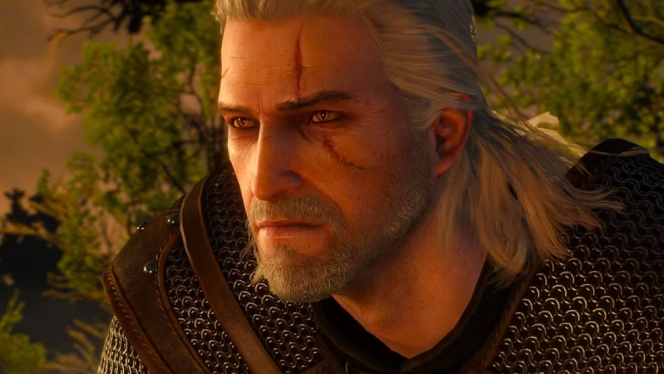
Ahead of its 2015 release, CD Projekt RED faced a notable challenge in bringing its ambitious role-playing game, The Witcher 3: Wild Hunt, to market. The Polish developer reportedly feared being overshadowed by the highly anticipated Batman: Arkham Knight from Rocksteady Studios, a concern driven by limited retail space and marketing opportunities.Internal anxieties, as revealed by CD Projekt RED co-president Michał Nowakowski, centered on competing with a larger publisher-Warner bros., which also distributed Arkham Knight-for crucial placement on store shelves and in advertising campaigns.ultimately, a delay in Arkham Knight’s release proved pivotal for The Witcher 3’s success.
Before its release, CD Projekt RED feared *Batman: Arkham Knight* would overshadow *The Witcher 3: Wild Hunt*.
Now considered a landmark title in the role-playing game genre, *The Witcher 3: Wild Hunt* wasn’t guaranteed success before its 2015 launch. CD Projekt RED, the Polish studio behind the game, was concerned that another highly anticipated release that same year – Rocksteady’s *Batman: Arkham Knight* – could steal its thunder and limit retail space.
The concern stemmed not only from *Arkham Knight* being a major release, but from a perceived disadvantage in securing prominent placement in stores. Michał Nowakowski, co-president of CD Projekt, described how retailers often allocated marketing focus and shelf space to a limited number of titles, potentially leaving others in the shadows.
Distributing *The Witcher 3* in the United States and Europe was handled by Warner Bros. CD Projekt RED actively lobbied retailers, traveling throughout the UK and Europe to showcase the game to partners like Walmart and GameStop. Despite their efforts, they frequently encountered skepticism, with responses like, “You’re not Bethesda.” The situation worsened when the studio realized *Arkham Knight* was slated for release around the same time, creating direct competition. Warner Bros.’ dual role as both distributor and publisher of *Arkham Knight* further amplified the challenge, giving them a strong incentive to prioritize Rocksteady’s title.
Nowakowski explained that the key to success hinged on their ability to execute a marketing strategy that could compete with larger publishers. “A big question was the execution of marketing, whether we could compete with the biggest players. We had huge discussions, especially with American retail, but also in the UK, in the main markets, Germany and elsewhere, because we had to convince them to actually let us spend money on these channels,” he said. “Let’s say GameStop has a window, the main window, where they sell a product. For two weeks someone, then for two weeks someone else. That’s their decision, their call.”
He added that retailers were essentially making a calculated gamble when deciding which game to feature. “Whether they give that slot to this game or that game is a kind of bet, and their decision can make or break a game. Naturally, they wanted to make the right decision to sell as many copies as possible.” Nowakowski also recalled the disappointment when it became clear that Rocksteady was planning to release *Batman: Arkham Knight* – “the one with the car” – during the same timeframe as *The Witcher 3*. “They were with us on one of the tours. They came to our presentation. We went to theirs. We thought these guys are really on top of their game. They’re just gonna roll over us. It’s going to be tough.”
However, a shift in the release schedule ultimately altered the landscape. The launch of *Batman: Arkham Knight* was delayed from its original May date to June 23rd. This gave *The Witcher 3: Wild Hunt* a period of greater visibility upon its release – and the rest, as they say, is history. The success of *The Witcher 3* demonstrated the growing potential for large-scale, narrative-driven open-world games.
Source: PCGamer
