

Tomodachi Life: Living the Dream Launches on Nintendo Switch
Nintendo has released Tomodachi Life: Living the Dream for the Nintendo Switch system, marking the third entry in the Tomodachi Life series. The game launched worldwide on April 16, 2026, succeeding Tomodachi Collection (2009) and Tomodachi Life (2013).
Developed and published by Nintendo EPD, the social simulation title centers on user-customizable Mii characters who live on an island overseen by the player. As more Mii characters appear, the island grows, and residents begin to interact with one another based on their relationships, and personalities.
Players can populate their island with Mii characters based on themselves, family, friends, or original creations. Through gameplay, users learn about their characters’ likes and dislikes, relationships, and daily interactions. Miis may start as acquaintances and progress to friendships or even dating, depending on how the player influences their connections.
To keep residents comfortable, players must creatively customize the island. Different shops will move in over time, but users can enhance surrounding areas using Quick Build amenities. For more personalized creations, Palette House allows players to freely draw and design food, clothing, buildings, and even pets. These creations can be given to residents or used as decorations around the island.
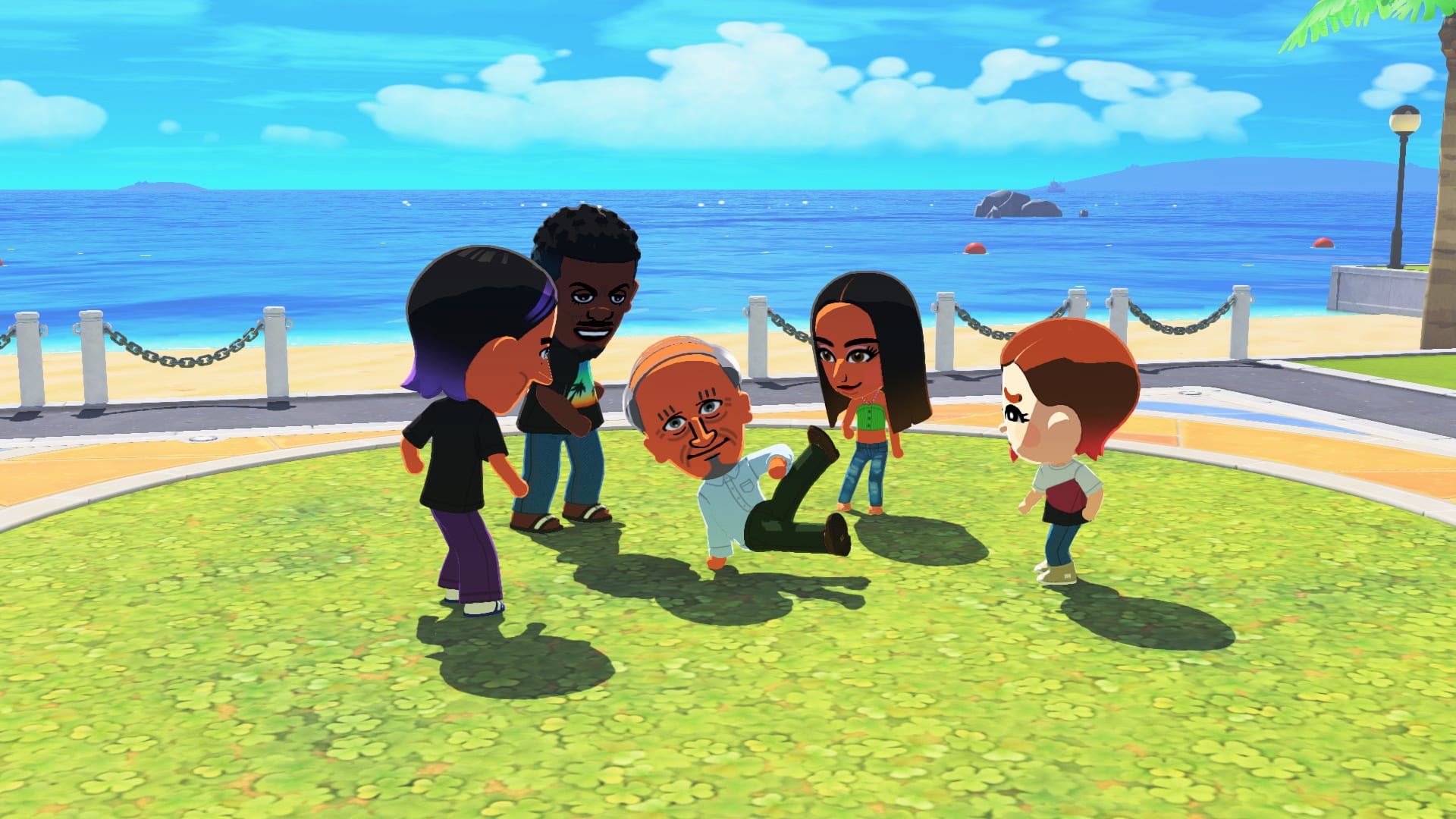
Anything created in the game can be exchanged with other players on their devices via local wireless. A free demo is available for download, letting users create three Mii characters to start. Completing the demo rewards a Hamster Costume that can be given to Mii characters; those who skip the demo will eventually unlock the costume through regular play.
The game’s development began in 2017, shortly after the conclusion of Miitomo (2016). Director Ryutaro Takahashi and producer Yoshio Sakamoto aimed to overcome the technical limitations of the Nintendo 3DS that had constrained the scale of previous entries. Their goal was to create avenues for user-generated content to promote near-infinite replayability.
For this installment, the Miis were redesigned to appear more cartoonish while retaining their robotic voices from earlier games to maintain their distinct character. Leading up to release, fans and critics praised the game’s elevated inclusivity for LGBTQ people, particularly the addition of same-sex relationships, which was not available in prior installments.
Tomodachi Life: Living the Dream received positive reviews for its gameplay, art style, customization options, and humor. However, it faced criticism for its lack of online functionality, especially regarding screenshot and Mii sharing capabilities.
The title is available exclusively on the Nintendo Switch platform and continues the series’ tradition of open-ended, life-simulation gameplay that encourages long-term engagement through creativity and social experimentation.
