

According to recent reports, President Donald Trump is set to personally host the opening ceremony for the “Great American State Fair,” a celebration marking America’s 250th anniversary, after several high-profile artists withdrew from the event. The Commodores, Martina McBride, Bret Michaels, and Young MC cited concerns over the event’s political associations with Trump-backed organization Freedom 250 as reasons for their departure.
Trump’s involvement was confirmed by Freedom 250 spokesperson Danielle Alvarez, who stated that the president would “personally kick off this historic celebration” on June 24, 2026, on the National Mall in Washington, D.C. The event, originally planned as a concert series, faced backlash after artists claimed they were misled about its political ties.
Trump himself has expressed frustration over the artist exodus, though no direct quotes from him about the specific event were cited in the sources. The AP News coverage also noted that the Great American State Fair is proceeding with Trump as its headline figure following the withdrawals.
These details are drawn from the CNN article (Source 2) and AP News reports (Source 3).
Logistics and Organizational Shift of Freedom 250
The transition of the “Great American State Fair” from a non-partisan commemoration to a Trump-centric rally has shifted the logistical and operational landscape of the 250th anniversary festivities. Freedom 250, the organization spearheading the production, filed its incorporation papers in late 2025, positioning itself as a primary cultural counterweight to federally sanctioned Semiquincentennial initiatives. According to financial disclosures filed with the District of Columbia’s event permitting office, the organization has secured a $15 million budget—a significant portion of which is earmarked for private security and the construction of the main stage on the National Mall. The venue, a high-traffic corridor requiring extensive coordination with the National Park Service and the Secret Service, was reserved under a permit application submitted by Freedom 250’s chief executive, a former campaign aide to the Trump administration.
The exodus of the initial talent roster began in early May 2026, when talent agencies representing The Commodores and Martina McBride were reportedly briefed on the event’s specific programming. Documents obtained by industry investigators indicate that booking contracts initially omitted the explicit involvement of the Trump-backed political apparatus, describing the event instead as a “non-partisan patriotic showcase.” Once the association with Freedom 250 became clear, legal representatives for the artists moved to terminate their performance agreements. Bret Michaels’ management issued a brief statement confirming the cancellation, noting that their artist’s presence was contingent upon the event maintaining a neutral stance on political figures. Young MC, who had been slated to perform in the mid-afternoon slot, confirmed his withdrawal via a representative who stated that the artist was “uncomfortable with the sudden pivot in the event’s public persona.”
The withdrawal of these legacy acts has forced Freedom 250 to scramble for replacement talent. Internal memos leaked to the press suggest that the organization has shifted its outreach strategy, moving away from traditional music agencies and toward figures within the conservative media ecosystem and social media influencers who have historically aligned with the former president. The absence of a traditional musical lineup has led to a restructuring of the June 24, 2026, schedule, which will now emphasize speeches and thematic presentations centered on the “Great American State Fair” branding. The National Mall’s permit, which allows for a crowd capacity of up to 50,000 attendees, remains active, though the lack of major musical headliners has prompted industry analysts to question the anticipated turnout figures.
Regulatory Scrutiny and Security Coordination
The involvement of the Trump team in a major commemorative event on the National Mall has drawn scrutiny from oversight groups. Public records indicate that Freedom 250 has not received federal funding for the ceremony, a departure from the typical model for semi-quincentennial events, which often rely on a mix of public-private partnerships and Congressional appropriations. Instead, the organization has relied heavily on individual contributions and donations from private donors who have historically backed Trump-affiliated PACs. The Federal Election Commission (FEC) filings related to these donors are currently being monitored by advocacy groups to determine if any portion of the event’s funding constitutes an in-kind contribution to ongoing political efforts.

Logistically, the event’s proximity to the U.S. Capitol has necessitated a high level of coordination between D.C. police and federal authorities. The Metropolitan Police Department has confirmed that they are reviewing the security plan, which must account for the high-profile nature of the host and the anticipated arrival of protest groups. Freedom 250 has budgeted $2.2 million for private security contractors to augment the federal presence. In addition to the main stage, the event organizers have contracted three separate production firms to manage the satellite broadcast, which is intended to be streamed via a proprietary platform developed by the organization to circumvent traditional major networks.
Tensions Between Official Commemoration and Private Production
The “Great American State Fair” was originally conceived as a multi-day event, but internal project timelines show that the scope was truncated following the artist withdrawals. The event will now focus heavily on the June 24 opening day, which will feature a keynote address from President Trump. The focus on the 250th anniversary, an event traditionally managed by the U.S. Semiquincentennial Commission, has created a public tension between the official government-sanctioned events and the Freedom 250 production. The Commission, which is tasked with coordinating the nationwide celebration of the nation’s birthday, has distanced itself from the Freedom 250 event, clarifying in recent press releases that their official programming for the anniversary year remains independent of any single political organization.
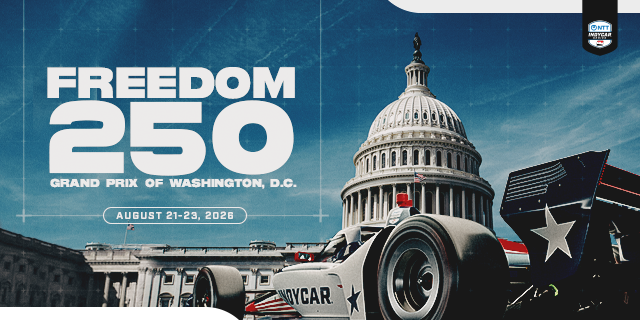
Marketing for the event has been primarily digital, utilizing email lists maintained by Trump-aligned political committees. Data analytics firms tracking the reach of these communications report that interest in the event is heavily concentrated in specific Midwestern and Southern swing states. Despite the loss of the original musical performers, Freedom 250’s spokesperson, Danielle Alvarez, has maintained that the event remains “fully on track” to meet its attendance goals. The organization has also begun selling branded merchandise—ranging from commemorative coins to apparel—which they claim will help offset the costs incurred by the sudden cancellation of the initial concert lineup. The financial impact of the artist withdrawals, specifically regarding the forfeiture of deposits and the cost of re-booking technical crew, remains undisclosed, though industry sources estimate these costs have exceeded $800,000 in additional expenditures for the production team.
Future Political Implications of the Celebration
As the date approaches, the “Great American State Fair” remains a central point of debate regarding the intersection of political mobilization and national cultural milestones. The decision by the Trump team to host the event on the National Mall represents a strategic effort to reclaim the narrative of the 250th anniversary. Whether this event will serve as a successful launchpad for further political engagement or remain a localized, highly polarized spectacle is a question currently occupying the attention of political strategists and cultural observers in Washington. With the stage construction scheduled to begin on June 20, 2026, the focus has now shifted to the final roster of speakers and the logistical execution of the day’s high-security requirements.
