
Russia Launches Widespread Attacks on Ukrainian Cities, Targeting Energy Infrastructure
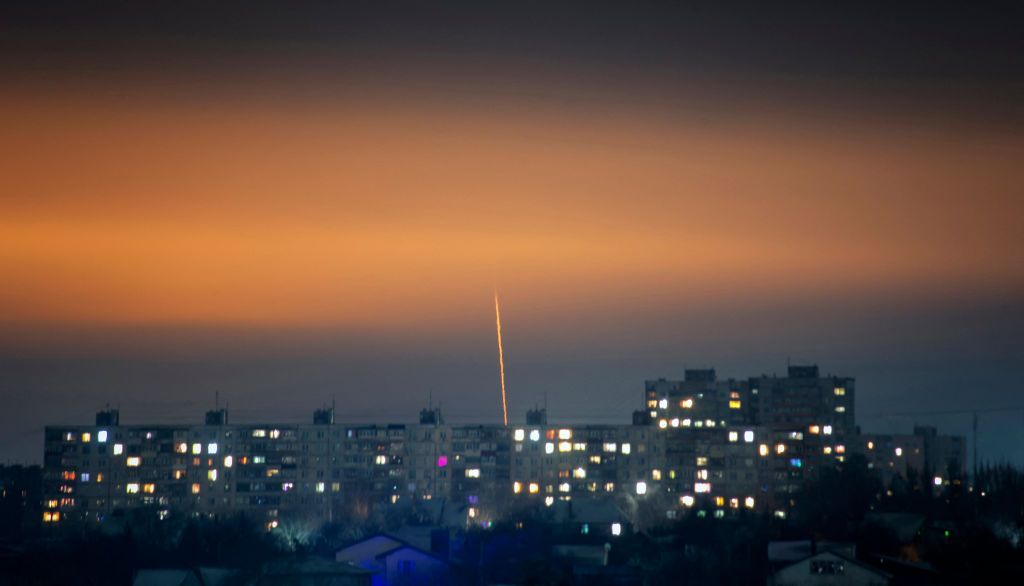
Russia launched a large-scale attack on multiple Ukrainian cities today, November 8, 2025, employing a combination of drones and missiles, including Kinzhal hypersonic missiles, resulting in power outages and reported damage to critical infrastructure.
Explosions were reported in Kyiv just before 4:30 a.m. local time, with officials activating air defenses in response to a drone attack on the capital. Kyiv Mayor Vitali Klitschko reported a fire in the Pechersky district caused by falling drone debris, which was later extinguished. The State Emergency Service reported four small trucks, two structures, and nearby parked cars were damaged, though the extent of casualties remains unknown.
Beyond the capital, attacks targeted Kremenchuk, Dnipro, Kharkiv, and Chernihiv, as well as communities in Dnipropetrovsk, Kharkiv, and Poltava oblasts, with reports of explosions also reaching Sumy and Odesa Oblast. Ukraine’s Energy Minister Svitlana Hrynchuk stated the “massive” attack deliberately targeted Ukraine’s energy infrastructure, leading to emergency power outages. Damage to energy facilities in Odesa Oblast was confirmed by the State Emergency Service. This escalation in attacks on energy infrastructure mirrors Russia’s strategy of attempting to weaken Ukraine ahead of the winter months; previous strikes on October 3 and 5 eliminated approximately 60% of the nation’s gas production capabilities. The Council on Foreign Relations provides ongoing analysis of the conflict.
Earlier in the night, a drone strike hit a residential building in Dnipro, injuring at least seven people, including two children, according to officials. Ukrainian President Volodymyr Zelenskyy has publicly blamed a former energy chief for the grid’s vulnerability, sparking discussion about accountability. Officials are currently assessing the full extent of the damage and working to restore power, with Hrynchuk stating outages will be addressed “once the situation in the energy system stabilizes.” The U.S. State Department continues to monitor the situation closely.
