
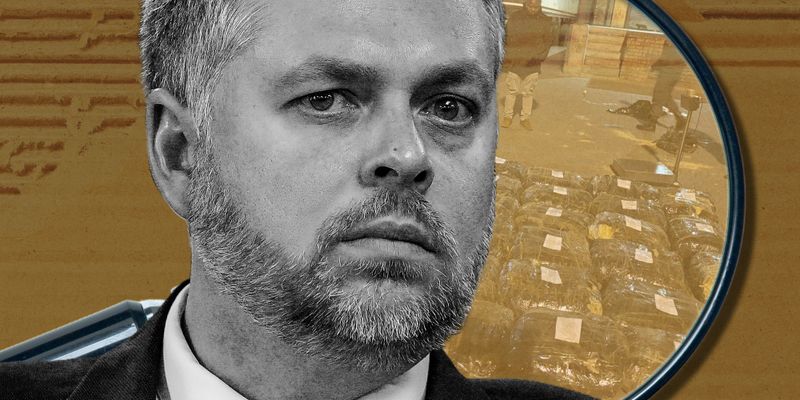
A Malawian-registered truck carrying 713 kilograms of methaqualone—valued at nearly R1 billion by South African officials—was intercepted at the Beitbridge Border Post on May 27, 2026, sparking a political victory lap and a storm of skepticism over the seizure’s true scale. The Border Management Authority (BMA) and Home Affairs Minister Leon Schreiber hailed it as a historic breakthrough, but court filings later revealed the prosecutor valued the drugs at just R34 million, raising questions about how the original figure was calculated and whether the bust is as transformative as claimed.
How the R1 Billion Claim Collapsed in Court
The discrepancy between the government’s R998.2 million valuation and the prosecutor’s R34 million assessment in court has become the defining controversy of the bust. According to Eyewitness News, the three suspects—two Malawian nationals and one Zambian—appeared in Musina Magistrate’s Court on May 29, where the prosecutor’s figure was disclosed. The BMA and Schreiber, however, had previously described the methaqualone as a precursor chemical for Mandrax, a potent sedative-hypnotic, and suggested its street value could exceed R1 billion if processed into tablets.

But experts consulted by Daily Maverick questioned how the R1 billion figure was arrived at. They pointed out that methaqualone’s value depends on its conversion rate into Mandrax tablets and the final product’s purity and market price. Without laboratory confirmation of the substance’s composition or a clear formula for its street value, the R1 billion claim rests on assumptions that may not hold up under scrutiny.
The BMA and Schreiber have not yet explained the discrepancy. When reached for comment by EWN, the Hawks referred inquiries back to the BMA, which has not issued a follow-up statement. The silence has fueled speculation that the initial valuation may have been inflated for political messaging, particularly given the Democratic Alliance’s (DA) timing of the announcement amid election-year rhetoric.
The DA’s Political Playbook
The DA’s swift claim of credit for the bust—with Schreiber tweeting that the BMA had achieved “what is likely the single biggest breakthrough against the drug trade in South African history”—was met with skepticism from opposition parties. The DA’s Home Affairs Minister posted on X that the seizure was proof of their border security reforms, but the court’s lower valuation undermines that narrative.
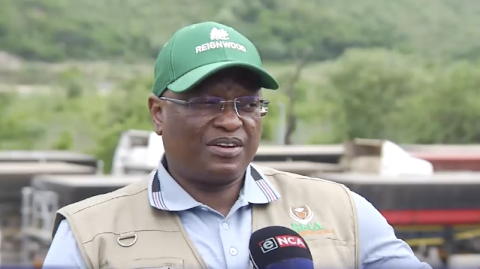
“The DA is securing our borders, protecting all our communities,” Schreiber declared in a statement, a claim that now faces legal and factual challenges. The party’s framing of the bust as a victory for their intelligence-driven border strategy—highlighted in IOL’s coverage—contrasts sharply with the prosecutor’s valuation, which suggests the actual economic impact may be far less dramatic.
Opposition parties have seized on the discrepancy to question the DA’s competence in managing border security. The African National Congress (ANC) and Economic Freedom Fighters (EFF) have accused the DA of exaggerating the bust’s significance to distract from broader failures in law enforcement. The EFF, in particular, has argued that the R1 billion figure was a deliberate overstatement to justify increased funding for the BMA, which has faced criticism for slow progress in reducing drug smuggling.
What the Bust Reveals About South Africa’s Drug Trade
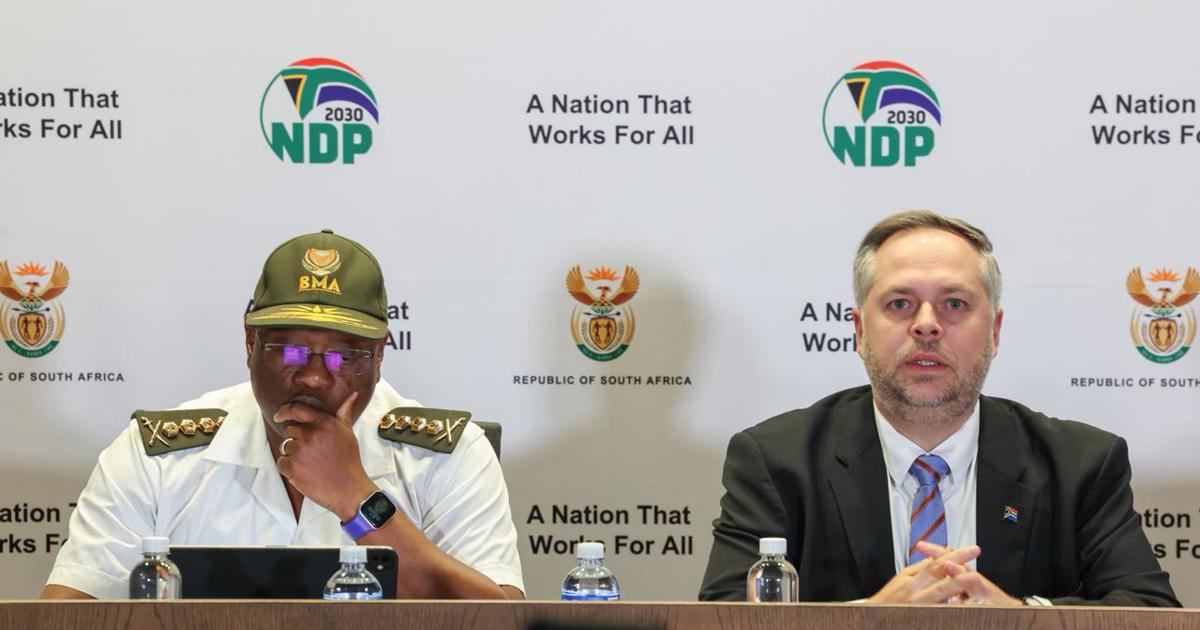
Beyond the political posturing, the bust exposes the sophistication of the drug trade operating through South Africa’s northern borders. BMA Commissioner Dr. Michael Masiapato described the operation as “a very serious, sophisticated enterprise,” noting that the methaqualone was concealed in a “false compartment” sealed with “very serious steel.” eNCA reported that the truck underwent an eight-hour inspection using advanced cargo scanning technology before the drugs were discovered.
Masiapato emphasized that the BMA is now adopting a “layered screening” approach, combining biometric technology, facial recognition, and inter-agency coordination to target drug syndicates. The agency’s National Border Targeting Centre, described as the “brains” behind operations, uses data analytics to predict and intercept shipments before they reach South African ports. However, the discrepancy in valuations raises questions about whether the BMA’s intelligence efforts are being undermined by political overreach.
Experts interviewed by News24 described South Africa’s drug economy as a “billion-rand industry,” with Mandrax and other synthetic drugs flooding the market through porous borders. The Beitbridge bust, while significant, may be just one piece of a much larger puzzle. The BMA’s claim that the interception could disrupt transnational organized crime networks remains unproven, and without further arrests or dismantling of smuggling routes, the impact of the bust could be limited.
The Technology Behind the Bust—and Its Limits
The BMA’s reliance on advanced technology—including SARS scanners and facial recognition—was a key factor in the bust’s success. Schreiber highlighted the agency’s shift from random inspections to intelligence-led enforcement, with the National Targeting Centre identifying the truck before it reached the border. IOL reported that the BMA is expanding its use of biometric verification, with plans to install facial recognition cameras at major airports as part of a broader digital transformation.
Yet, the technology’s effectiveness depends on accurate data and real-time intelligence. The R34 million court valuation suggests that the BMA’s estimates may have been based on incomplete or speculative information. Without laboratory analysis to confirm the methaqualone’s purity and potential yield, the R1 billion figure appears to be a projection rather than a verified street value.
Schreiber acknowledged the challenges ahead, stating, “We are not saying that the journey is over, we are not saying that the work is complete, but what we are saying is that we are making rapid and meaningful progress.” The bust’s true significance may lie not in the R1 billion headline, but in the BMA’s ability to leverage technology and intelligence to disrupt smuggling operations over time.
What Happens Next?
The next 30 days will be critical in determining whether the bust lives up to its political hype. The BMA and prosecutors must resolve the valuation discrepancy, and authorities must identify the origin of the methaqualone and any links to transnational crime networks. As eNCA reported, Masiapato vowed that the BMA would “stop at nothing” to dismantle drug syndicates, but the agency’s credibility is now on the line.
If the R34 million valuation holds, the bust may still be a major blow to drug traffickers, but its political impact will be diminished. The DA’s border security narrative could unravel if further investigations reveal inconsistencies in the BMA’s claims. Meanwhile, opposition parties will likely use the discrepancy to argue that the DA’s reforms are either ineffective or prone to exaggeration.
For now, the bust remains a symbol of both promise and controversy. The BMA’s technology and intelligence capabilities are undeniably advancing, but without transparency and accountability, the R1 billion claim risks overshadowing the real progress being made at South Africa’s borders.
