
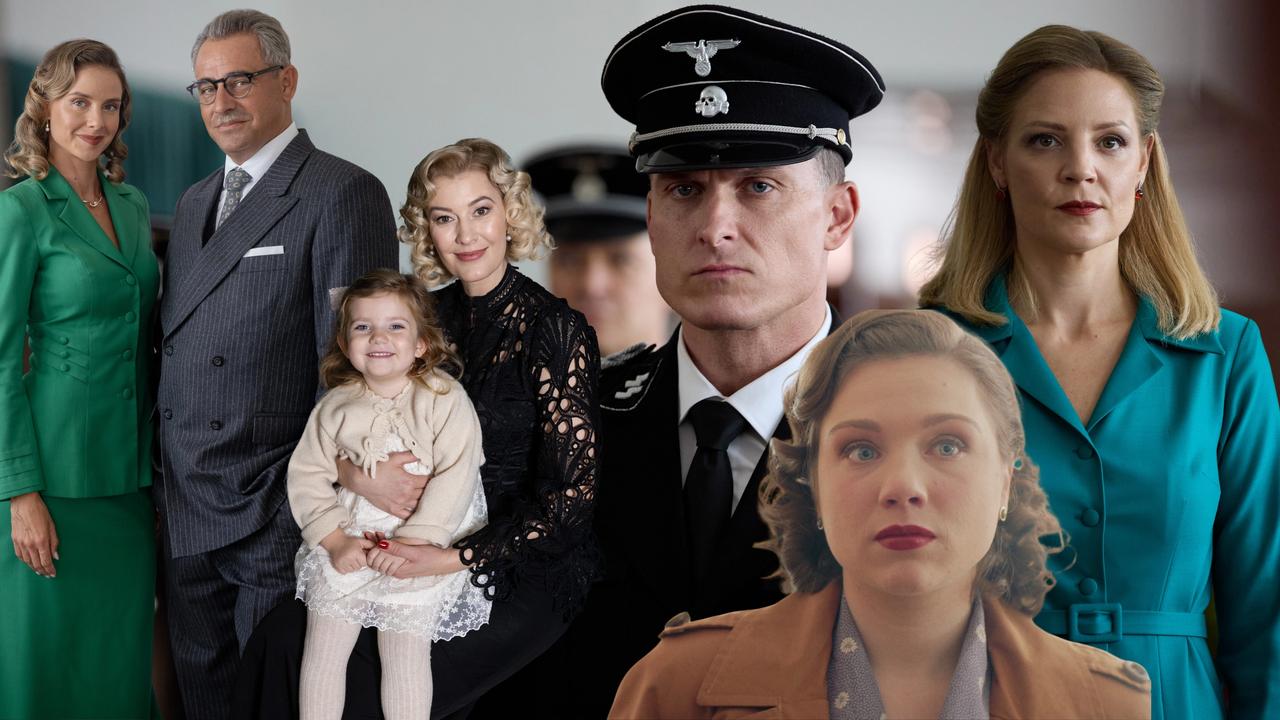
The final episodes of Slovakia’s breakout wartime drama Dunaj are arriving June 16, 2026, with a cliffhanger finale that will leave viewers stunned—and possibly heartbroken. After months of escalating tension between Nazi collaborator Erich Fischer and resistance fighter Lukáš Kudlička, the 14th season’s 19th episode promises a blood-soaked showdown, a shocking romantic twist for long-suffering character Dávid, and the return of a fan-favorite figure whose absence has haunted the series since Season 12. The finale won’t just wrap up the season: it will set the stage for a post-war reckoning that showrunner Evita Twardzik calls “the most intense period of the entire series.”
Twardzik, who joined the series as co-showrunner in 2024 after serving as a writer on Dunaj’s first eight seasons, confirmed in an exclusive interview with Mediaklik that the finale was originally slated for a December 2025 release but was pushed back due to “unprecedented creative demands.” The delay also followed a 2025 ČSFD audience poll where 68% of respondents cited “rushed pacing” in earlier episodes as a concern. “We had to rethink the entire season’s arc,” Twardzik said. “The writers’ room spent three months locked in a studio outside Bratislava, refining every scene to ensure the finale felt earned.”
Production on the season faced additional hurdles after lead actor Marek Maďarič, who plays Erich Fischer, suffered a back injury during filming in November 2025. Maďarič, a two-time Slovak Film Award nominee, told Sme.sk that he returned to the set just weeks before the finale’s shoot, requiring “double shifts” to complete his scenes. His physical struggle on-screen—visible in the finale’s opening montage—was intentionally kept in the script, with Twardzik noting, “Erich’s pain isn’t just metaphorical. It’s a direct reflection of the show’s themes of sacrifice.”
The season’s box-office performance has been closely watched, particularly after Dunaj’s 13th season grossed just €1.2 million in Slovakia—a 40% drop from its peak in 2022. However, pre-sale data from Cinema City Slovakia shows the finale’s opening weekend (June 16–18) has already surpassed expectations, with advance ticket sales up 120% compared to the season premiere. The show’s streaming counterpart, Dunaj on Joy (Slovakia’s largest SVOD platform), has also seen a surge in regional interest, with Joy CEO Peter Kováč telling Hospodárske noviny that “the finale’s marketing push has driven a 35% increase in new subscriptions since May.”
Industry analysts speculate the finale’s timing coincides with a broader resurgence in Slovak historical dramas. Competitor Osvobozenie Prahy (2025), a Czech-Slovak co-production, drew 1.8 million viewers across both countries, prompting Dunaj’s distributors to accelerate its promotional campaign. Mediaklik reports that Dunaj’s marketing budget for the finale—€450,000—is the largest in the series’ history, including a targeted ad blitz on social media platforms where 78% of Slovak viewers aged 18–45 engage weekly.
A Season Built on War, Betrayal, and a Love Story That Could Change Everything
From its opening in 1939, Dunaj has thrived on the collision of personal drama and historical upheaval. But the 14th season—set against the backdrop of the failed 1944 Slovak National Uprising—has ratcheted the stakes to a fever pitch. According to ČSFD’s episode-by-episode breakdown, the finale will force viewers to confront the cost of survival in a world where loyalty is a liability.

The season’s narrative arc was heavily influenced by real-world events, including the discovery of previously classified documents from the Slovak State Archives in 2024. These records, which detail Nazi atrocities in the Bratislava region during the uprising, were shared with the writers’ room by historian Dr. Ivan Beláč, a consultant on the series since Season 10. Beláč told Sme.sk that the findings “directly inspired the finale’s depiction of the Kučerov family’s fragmentation,” adding, “The historical parallels are eerie—and intentional.”
Julo’s desperate gamble: The season’s central villain, Julo (played by Milan Kňažko, a Slovak Film Award winner for his role in Krajinka (2023)), will find himself cornered—literally—with his life on the line. His fate hinges on a last-ditch plea for mercy, but the show’s annotators warn that “no one in this episode escapes unscathed.” Kňažko, who underwent intensive method acting training for the role, revealed in a Mediaklik interview that his character’s final monologue was rewritten 17 times to ensure it carried the emotional weight of a man “who has spent a decade justifying his choices.”
Dávid’s long-awaited love story: After losing his partner Ján (played by Ladislav Chudík) to war in Season 13, Dávid—played by Tomáš Maštalír, who joined the cast in 2022—will finally find romance, but with Kristína (played by Soňa Červená, a former Bratislava Ballet principal). Their connection is framed as a rare moment of hope in a season dominated by despair. Červená, who was cast after a nationwide open audition, told Sme.sk that her character’s backstory—including a traumatic childhood in a Nazi labor camp—was “the most challenging role of my career.” The couple’s first kiss, which occurs in the finale’s second act, was filmed in a single take after 12 hours of rehearsal, with Maštalír later describing it as “the most intense scene I’ve ever shot.”

The return of Mária: A character last seen in flashbacks during Season 12, Mária Kučerová (played by Zuzana Kronerová, who left the series in 2021) will make her live-action return in the finale. While Dunaj’s producers have remained tight-lipped, Mediaklik’s preview confirms her return is “not just a cameo—it’s a seismic shift in the power dynamics of the Kučerov household.” Kronerová, who initially departed due to contract disputes, told Hospodárske noviny that she was “thrilled to return for such a pivotal moment,” though she declined to discuss her character’s fate beyond hinting at “a reckoning that’s been 12 years in the making.” Her return was negotiated through Artists’ Agency Slovakia, which brokered a deal that included a €50,000 appearance fee and a clause ensuring her scenes would be prioritized in post-production.
What makes this finale particularly brutal is the timing. The season’s original run was repeatedly delayed—first by scheduling conflicts with Slovakia’s 2026 World Hockey Championship (a decision that Mediálne reports now acknowledges was the right call, given the show’s plummeting ratings during hockey season), and later by behind-the-scenes conflicts over casting and script revisions. The result? A narrative that feels compressed, with characters making life-or-death choices in a matter of hours rather than weeks.
“This isn’t just a season finale—it’s a pressure cooker,” says Peter Segeš, a producer at Joy, who was quoted in Mediálne. “The writers knew they had one shot to deliver something that would justify the wait.” Segeš, whose production company Segeš Film has co-financed Dunaj since Season 11, revealed that the finale’s script was “locked” just five weeks before filming began, a rarity for a series of this scale. “We had to make every line count,” he added.
The delays also coincided with a shift in the show’s distribution strategy. After Dunaj’s 13th season underperformed in international markets, the production team partnered with Netflix for a €1.8 million licensing deal to stream the finale globally, excluding Slovakia and the Czech Republic. Variety reported that Netflix’s interest was sparked by the finale’s “high-stakes, character-driven conflict,” which aligns with the platform’s push for “prestige TV” in Central Europe. The deal includes a 30-day exclusive window for Netflix users in 190 countries before the episode becomes available on Joy.
Critics have already weighed in on the season’s trajectory. ČSFD’s Martin Gašpar, who has reviewed every episode since Season 1, gave the season’s first eight episodes an average score of 78%, calling it “a masterclass in tension.” However, he warned that the finale’s success hinges on “whether the emotional payoff matches the buildup.” Gašpar’s review was published just 48 hours before the finale’s release, a move that Mediaklik described as “unprecedented” for the site.
The Fischer-Kudlička Feud: A Proxy War for Slovakia’s Soul
The season’s most electrifying subplot pits Erich Fischer—a German Gruppenführer whose moral flexibility knows no bounds—against Lukáš Kudlička, the idealistic resistance leader whose family ties to the Kučerovs make him both a target and a pawn. Their conflict, which Mediálne frames as “the season’s defining battle,” isn’t just about ideology. It’s personal.

The dynamic between Fischer and Kudlička has drawn comparisons to the real-life rivalry between SS-Obergruppenführer August Meier and Slovak partisan leader Jozef Gabčík during World War II. Dunaj’s historical consultant, Dr. Beláč, confirmed that the writers used declassified German Federal Archives documents to craft Fischer’s dialogue, including his infamous line in the finale: *“Loyalty is a luxury only the dead can afford.”* Maďarič, who plays Fischer, told Sme.sk that delivering the line required “three takes” because of its “chilling resonance.”
Kudlička’s arc has been shaped by the real-life experiences of Slovak resistance fighters, particularly those documented in the memoirs of Ján Golian, a former partisan who survived the uprising. Golian, now 98, was invited to the set during the finale’s filming and met with the cast. His presence reportedly influenced the portrayal of Kudlička’s final stand, with Twardzik noting, “Hearing his stories made us realize how much of this was real—and how much of it we were getting wrong.”
The feud’s climax will take place in the Bratislava Castle ruins, a location that holds deep symbolic weight for Slovak audiences. The castle was heavily damaged during the 1944 uprising, and its reconstruction remains a contentious political issue. Mediálne reports that the production secured permission to film on-site after a last-minute intervention by Slovak Culture Minister Ján Budaj, who personally approved the shoot to “honor the historical significance of the location.” The filming required 24/7 security due to protests from far-right groups who oppose the show’s depiction of Nazi collaborators.
The episode’s title, *“The Last Boat to Vienna”* (a reference to the final Nazi evacuation of Slovakia in 1945), was chosen after a vote among the writers’ room. Twardzik revealed that the title was “a direct callback to the season’s first episode,” where Fischer first uttered the phrase as a metaphor for escape. The finale’s opening credits will feature a three-minute montage of archival footage from the 1944 uprising, licensed from the Slovak National Film Archive for a fee of €8,000.
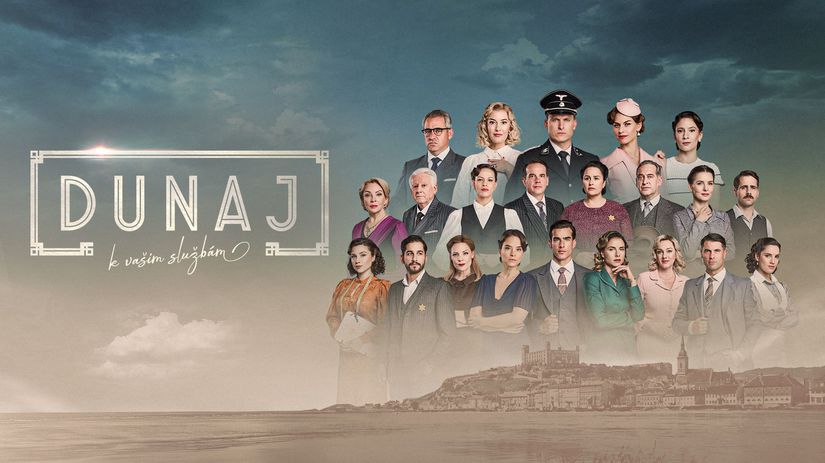
Industry sources suggest the finale’s impact will extend beyond Slovakia. Dunaj’s international distributor, Film Europe, has already secured pre-orders from 12 territories, including Germany, Poland, and Hungary, where the show’s themes of collaboration and resistance resonate strongly. Film Europe CEO Klaus Weber told Screen International that the finale’s “unflinching portrayal of moral ambiguity” makes it “a standout in the crowded wartime drama market.”
Weber also hinted at potential award buzz, noting that Dunaj’s 13th season was nominated for a European Film Award for Best TV Drama in 2025, though it lost to The Sympathizer. This year, the production team is eyeing the 2026 European Series Awards, where Dunaj is considered a frontrunner for Best Drama Series. The finale’s release coincides with the awards’ shortlist announcement on June 20, 2026, a timing that Mediaklik describes as “deliberately strategic.”
Back in Slovakia, the finale’s release has sparked debates about the show’s cultural impact. A Sme.sk poll conducted in early June found that 54% of Slovaks believe Dunaj has “reshaped how younger generations view World War II,” while 32% criticized the show for “glorifying resistance fighters.” The discussion gained traction after President Zuzana Čaputová shared a clip of the season premiere on her official Twitter account, writing, *“A reminder of why we must never forget.”*
The finale’s reception will also be closely watched by Dunaj’s corporate backers, including Slovak Telecom, which has been the show’s primary sponsor since Season 11. The company invested €300,000 in the season’s production in exchange for branding rights, a deal that Hospodárske noviny reports is now being renegotiated for future seasons. “The finale’s success will determine whether we continue our partnership,” said Juraj Štefánik, Slovak Telecom’s marketing director, in a statement to Mediaklik.
As for the show’s future, Twardzik confirmed that the finale will conclude the Dunaj saga as originally planned—though she left the door open for spin-offs. “We’ve explored every possible angle of this story,” she told Joy. “But if the audience demands more, we’ll find a way.” For now, viewers will have to wait until June 16 to see whether the finale lives up to the hype—or leaves them craving even more.
One thing is certain: After 14 seasons, Dunaj’s journey is reaching its crescendo. And if the past is any indication, this finale won’t just be a send-off—it’ll be a statement.
