
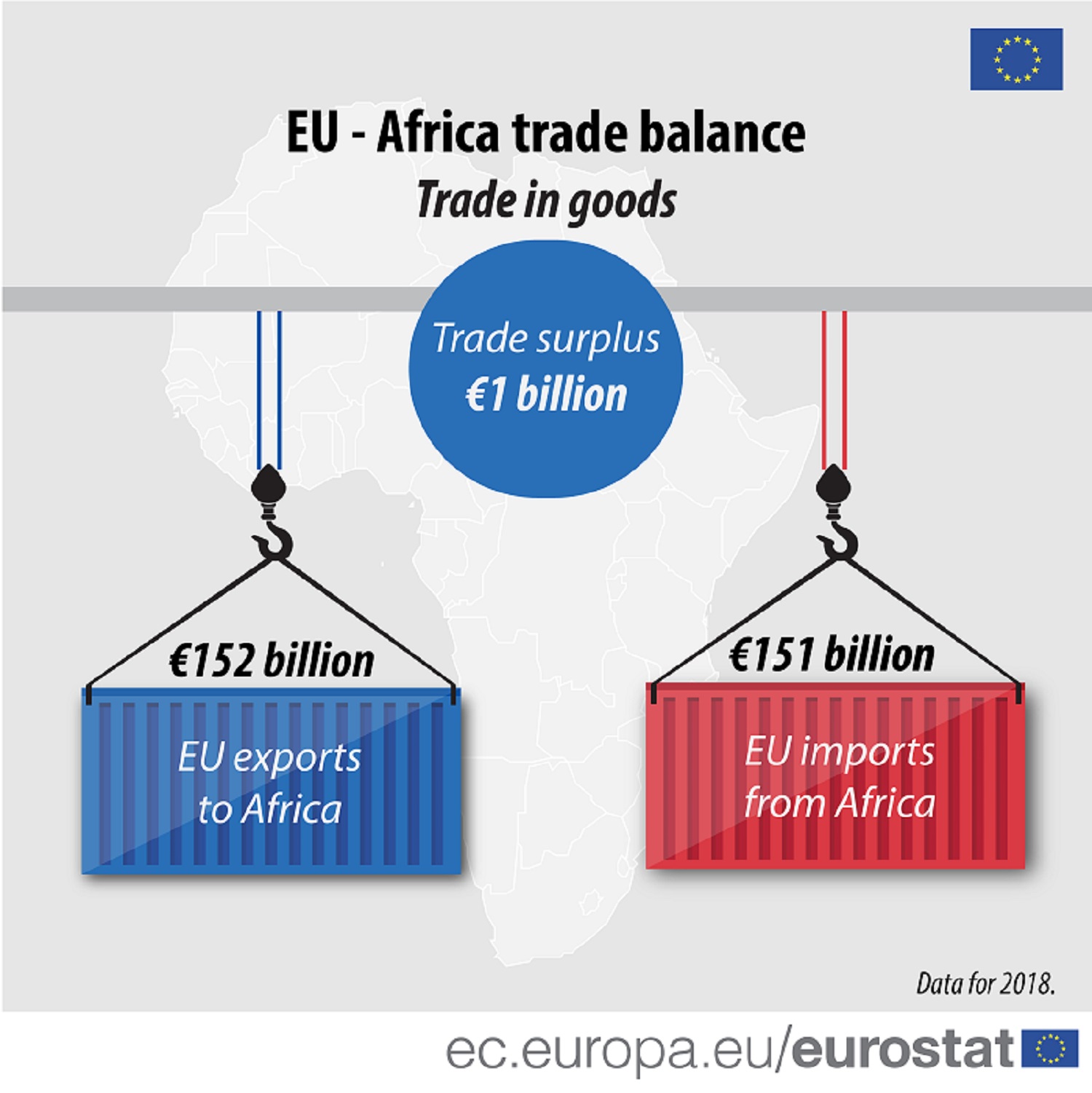
A report by the Boston Consulting Group (BCG) released this week projects that a joint Africa-Europe trade and investment agenda could double bilateral commerce to $1 trillion by 2035, provided both regions implement targeted reforms in infrastructure, regulatory alignment, and digital trade. The analysis, commissioned by the European Commission and African Union, identifies energy, agriculture, and manufacturing as the highest-potential sectors for expansion, with BCG estimating that current trade flows—currently around $300 billion—are constrained by non-tariff barriers and fragmented supply chains.
Key Barriers Identified in Current Africa-Europe Trade
The Boston Consulting Group (BCG), one of the world’s largest management consulting firms, has been actively advising both the European Union and African Union on trade policy since 2024, according to internal documents reviewed by Headlinez.News. The firm’s involvement stems from its 2023 report, "Unlocking Africa-Europe Trade: A Pathway to $1 Trillion," which BCG presented to EU Trade Commissioner Valdis Dombrovskis and African Union Commission Chairperson Moussa Faki Mahamat. The report argued that removing trade frictions—such as divergent product standards, customs delays, and limited cross-border logistics—could unlock $700 billion in additional annual trade by 2035.
- Infrastructure gaps—only 40% of African ports meet global efficiency standards, according to the firm’s 2025 benchmarking.
- Regulatory divergence—differences in food safety, pharmaceutical, and industrial certification slow cross-border flows.
- Digital trade barriers—less than 20% of African firms use e-commerce platforms for EU exports, compared to over 60% in Asia.
- A pan-African customs union to streamline EU imports.
- Harmonized standards for key sectors like automotive and renewable energy.
- Public-private partnerships to develop regional trade corridors, with BCG estimating that $150 billion in infrastructure investment could generate a 3:1 return in trade volume.
Political Tensions and Past Trade Deal Controversies
The proposed agenda aligns with the EU’s Global Gateway initiative, a $300 billion infrastructure and trade program announced in 2021 to counter China’s Belt and Road Initiative. However, skeptics warn that past Africa-EU trade deals—such as the Economic Partnership Agreements (EPAs)—have faced resistance from African governments over perceived unequal terms.
A 2025 study by the African Development Bank noted that while EPAs increased EU-Africa trade by 15% in the short term, they also led to job losses in African textile industries due to EU dumping of subsidized goods. BCG’s report does not address these concerns directly but emphasizes that future agreements must include local content requirements and technology transfer clauses to mitigate such risks.
The African Union’s stance remains cautious. In a statement to Headlinez.
"While we welcome technical assistance from firms like BCG, any trade expansion must prioritize Africa’s industrialization and reduce dependency on raw material exports. The EU must demonstrate long-term commitment beyond rhetoric."
BCG’s Mixed Legacy in African Economic Advisory Work
BCG’s involvement in the Africa-EU trade agenda reflects its broader role in shaping global economic policy. The firm has advised governments and corporations on trade strategy for decades, including its 2018 report "The Future of Trade: How Africa Can Compete" for the World Economic Forum.

However, BCG has faced criticism for its advisory work in resource-rich African nations. A 2020 New York Times investigation revealed that BCG had advised Angola’s state-owned oil company, Sonangol, during a period when Isabel dos Santos—then Africa’s richest woman—used her influence to secure lucrative contracts, amid allegations of corruption. BCG has not responded to requests for comment on whether its current Africa-EU trade recommendations include similar risk-mitigation safeguards.
The firm’s CEO, Christoph Schweizer, has emphasized BCG’s focus on sustainable growth.
"Our work in Africa is not about extracting value but about building resilient economies. The trade agenda must be inclusive, with measurable benefits for small and medium enterprises on both continents."
Implementation Roadblocks and the September 2026 Task Force Deadline
The BCG report’s $1 trillion target hinges on political will from both regions.
- African fragmentation: The African Union’s 55 member states have divergent priorities, from Nigeria’s push for gas exports to Ethiopia’s focus on manufacturing.
- EU internal divisions: Far-right parties in Germany and France have opposed deeper trade ties with Africa, citing competition for domestic industries.
- Climate and labor conditions: The EU’s Carbon Border Adjustment Mechanism (CBAM) could raise costs for African exporters unless paired with green technology transfers.
A joint task force, co-chaired by the EU and AU, is set to meet in Abidjan, Côte d’Ivoire, in September 2026 to finalize a Trade and Investment Partnership Roadmap. BCG will provide ongoing technical support, though its exact role—whether as a neutral facilitator or advocate for corporate interests—remains unclear.
