
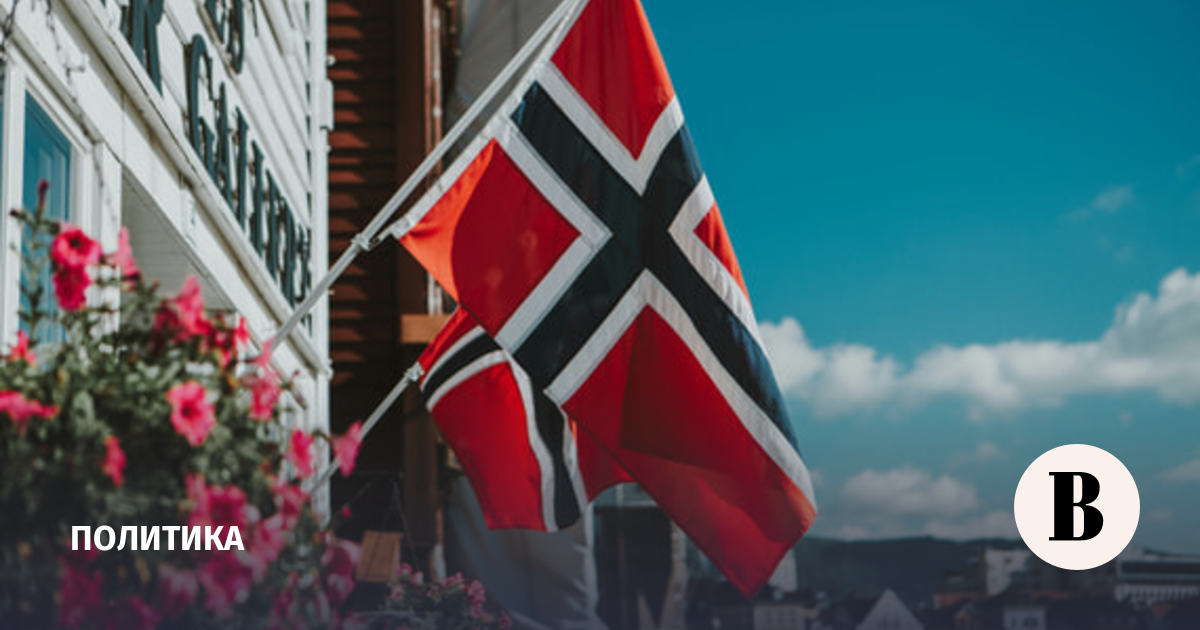
Norwegian Foreign Minister Espen Barth Eide confirmed on June 1, 2026, that Norway is reassessing its relationship with the European Union. Citing a volatile global environment, Eide noted that the geopolitical stability that previously allowed Norway to remain outside the bloc has vanished, forcing a re-evaluation of the country’s integration strategy.
The announcement follows a closed-door meeting of the Storting’s Standing Committee on Foreign Affairs and Defense. According to official minutes released by the Norwegian Parliament, the discussion centered on the “strategic autonomy” of European nations in light of the May 2026 breakdown in trans-Atlantic trade negotiations. Government spokesperson Ingrid Holm clarified in a press briefing that while the reassessment is underway, it does not constitute an immediate application for accession, but rather a “comprehensive audit of current EEA protocols” to determine if Norway’s interests are adequately protected in a fractured global market.
A Shifting Geopolitical Landscape
For over three decades, Norway has maintained a unique position in Europe: participating in the single market through the European Economic Area (EEA) agreement established in 1994, while remaining outside the formal EU structure. According to reporting from Fontanka, the Norwegian government previously felt comfortable maintaining this distance during more predictable international eras. However, Foreign Minister Eide now characterizes the current international environment as a “crazy world,” driven by unpredictable shifts in the policies of major powers including the United States and China.

This assessment is echoed by Vedemosti, which highlights that the very tools of trade policy and customs regulation that Norway once deemed unnecessary are becoming increasingly vital. As the global economy fragments, the specific EU mechanisms that Oslo opted out of—particularly those related to common trade and defense policies—are gaining renewed significance in the eyes of Norwegian leadership. The European Commission, responding to Eide’s remarks, issued a statement through spokesperson Eric Mamer, noting that “the door remains open” but that any deeper integration would require “full alignment with the acquis communautaire,” a condition that has historically been the primary sticking point for Norwegian sovereignty advocates.
The diplomatic implications are being felt across the Nordic region. In Helsinki, the Finnish Ministry for Foreign Affairs released a brief note on June 2, 2026, welcoming “closer cooperation” but cautioning that regional security architectures—specifically the Nordic Defense Cooperation (NORDEFCO)—must not be undermined by a shift in Norway’s EU stance. Meanwhile, Russian state media outlets have framed Eide’s comments as a capitulation to Brussels, with the Russian Foreign Ministry’s European Department head, Yuri Pilipson, warning that “any further entanglement of Norway in EU-led security initiatives will necessitate a recalibration of our own border security posture in the High North.”
The Legacy of Past Referendums
The hesitation to join the EU is deeply rooted in Norwegian political history, characterized by two unsuccessful national referendums. In 1972, 53.5% of voters rejected membership, followed by a second rejection in 1994 where 52.2% of the electorate voted against joining. The primary drivers behind these results were consistent: the protection of Norway’s domestic fishing and agricultural sectors.
Eide acknowledged the intense emotional toll these debates took on the nation, noting that the arguments surrounding those votes were so divisive that they “destroyed marriages and families,” as Life.ru reported. This historical trauma continues to influence the contemporary discourse, making the topic of EU membership a sensitive issue that still triggers painful reactions across segments of society. The Center Party, a key coalition partner in the current government, has already signaled its opposition to any deviation from the EEA model. Party leader Trygve Slagsvold Vedum stated on June 2 that “the mandate of the 1994 referendum remains the bedrock of our democratic sovereignty,” effectively placing a hard limit on how far the Labour-led government can push the integration agenda.
Internal Politics and Public Sentiment
Despite the Foreign Minister’s admission that the current model of interaction is no longer as sustainable as it once was, there is no immediate path toward a new referendum. The ruling Labour Party, led by Prime Minister Jonas Gahr Støre, has not announced plans to formalize a new application for membership. As INFOX.ru explains, while Støre and Eide have expressed personal support for the idea of EU membership, the administration remains constrained by public opinion.

Recent polling continues to show that a majority of the Norwegian public remains opposed to joining the European Union. Data published on May 30, 2026, by the Norwegian Centre for Research Data (NSD) indicates that 58% of respondents favor maintaining the current EEA agreement, while only 27% support full accession. This creates a significant gap between the pragmatic, security-oriented outlook of the foreign policy establishment and the prevailing sentiment of the electorate. As VFocus Mail noted, the government is tasked with navigating these complex international realities while acknowledging that the “quiet era” of domestic consensus on this issue has firmly come to an end.
European Union officials in Brussels have maintained a cautious silence regarding the internal Norwegian debate, mindful of the potential for a third referendum to fail. An unnamed senior EU diplomat speaking to the press on June 3, 2026, suggested that “a Norway that is more involved in EU defense procurement is more valuable than a Norway that remains on the outside due to a failed accession bid.” This sentiment reflects a growing preference within the European Council for “variable geometry” integration, where non-members can participate in specific pillars of EU policy without the political baggage of full membership. For the foreseeable future, Norway’s status remains fixed in the European Economic Area. However, the explicit recognition by its top diplomat that the “favorable world” of the past has disappeared suggests that Oslo will likely seek deeper informal alignment with Brussels, even if the formal political hurdles to full membership remain insurmountable in the current climate.
