

Four days before Austria’s World Cup opener, the national team faces lingering questions over star player David Alaba’s fitness and head coach Ralf Rangnick’s future, as preparations in California proceed under heightened scrutiny.
Alaba’s Fitness Concerns and Team Uncertainties
David Alaba’s absence from recent training sessions has raised concerns, with the ÖFB citing “load management” as the official reason. The Bayern Munich defender, who played just 16 matches in the 2024/25 season due to recurring muscle issues, is undergoing individual care under team doctor Michael Fiedler. “We don’t want to take any risks,” Fiedler stated, per sport.ORF.at. This follows Alaba’s complaints after Austria’s 1-0 friendly win against Tunisia, where he reportedly experienced discomfort.
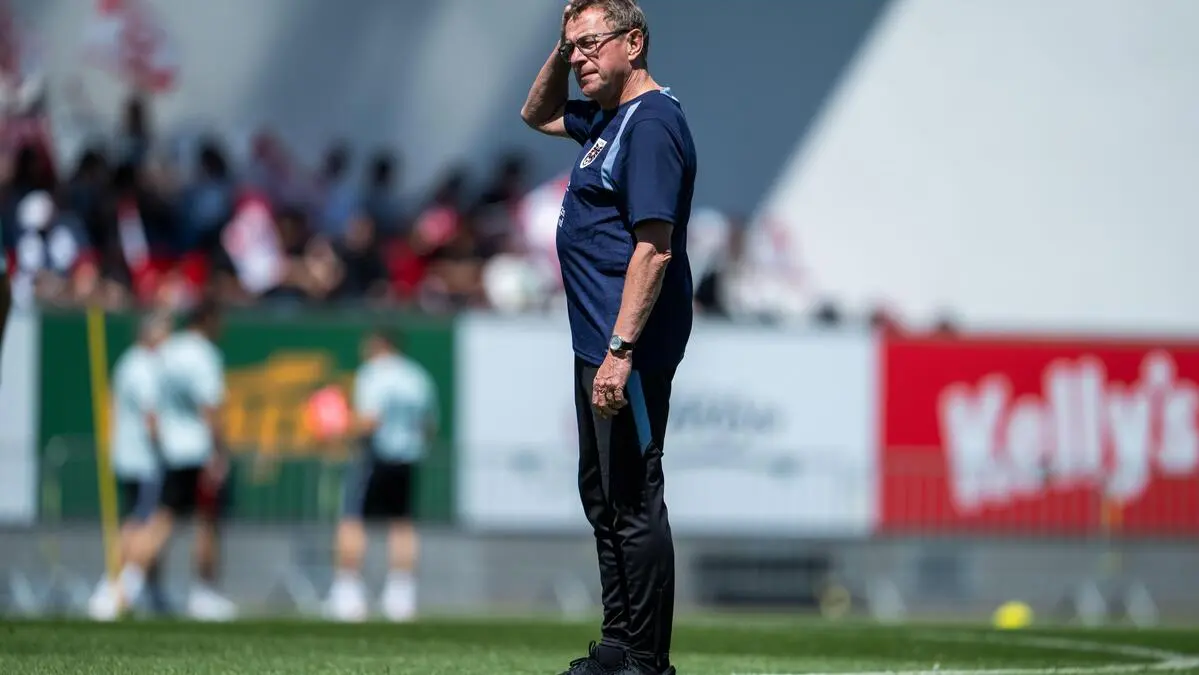
The medical staff is monitoring a lingering adductor strain that has plagued Alaba since the conclusion of the Bundesliga campaign. According to internal reports, the decision to hold him out of team drills is intended to prevent a tear that would rule him out of the group stage entirely. He is scheduled for a final fitness evaluation on the morning of the team’s departure for the tournament host city. If he fails to complete a full-contact training session by Wednesday, the coaching staff will likely transition him to a bench role for the opening fixture to preserve him for the subsequent knockout-round qualification matches.
The absences extend beyond Alaba. Marko Arnautovic, Marcel Sabitzer, Patrick Wimmer, and Florian Grillitsch also skipped training for similar reasons. Coach Ralf Rangnick has emphasized cautious preparation, particularly with the team’s first World Cup appearance since 2016. “We’re focused on ensuring everyone is ready for the physical demands ahead,” Rangnick said, according to DiePresse.com.
The collective fatigue of the squad is a direct result of an condensed club season, with Sabitzer and Laimer logging over 3,000 minutes each for their respective clubs. Team physiotherapists have implemented a strict 48-hour recovery protocol for these players, utilizing cryotherapy and specialized load-monitoring software. This protocol has limited the team’s ability to conduct high-intensity tactical drills, forcing Rangnick to rely heavily on video analysis sessions held in the team hotel rather than on-pitch rehearsals.
Rangnick’s Contract and Milan Interest
Uncertainty surrounds Rangnick’s future, with the Austrian Football Association (ÖFB) seeking clarity before the tournament. While ÖFB supervisory board chairman Josef Pröll expressed support for Rangnick’s potential contract extension, the coach himself has not yet made a decision. sport.ORF.at reports that AC Milan has shown interest in Rangnick, with recent meetings between Milan representatives and ÖFB technical director Oliver Glasner. This development adds tension to a squad already dealing with injuries, as Rangnick’s departure could disrupt the team’s momentum.
The interest from the Serie A giants is reportedly centered on a multi-year project that would grant Rangnick broader control over the club’s sporting structure, a role similar to the one he held at Red Bull. Sources close to the ÖFB indicate that while a contract extension offer remains on the table, the delay in signing is linked to demands for increased investment in the Austrian youth development infrastructure. With the World Cup looming, the ÖFB has requested a final answer from Rangnick by the conclusion of the group stage to avoid a prolonged coaching search during the transfer window.
Rangnick’s impact on the national team is undeniable. Since taking charge in 2022, he transformed Austria from a struggling side into a cohesive unit that qualified for the 2024 European Championship and now faces its first World Cup since 2016. “He’s created a culture of discipline and unity,” said midfielder Konrad Laimer, per Oberösterreichische Nachrichten. However, his potential exit leaves questions about continuity as the team enters the global stage.
Training in California: A New Routine
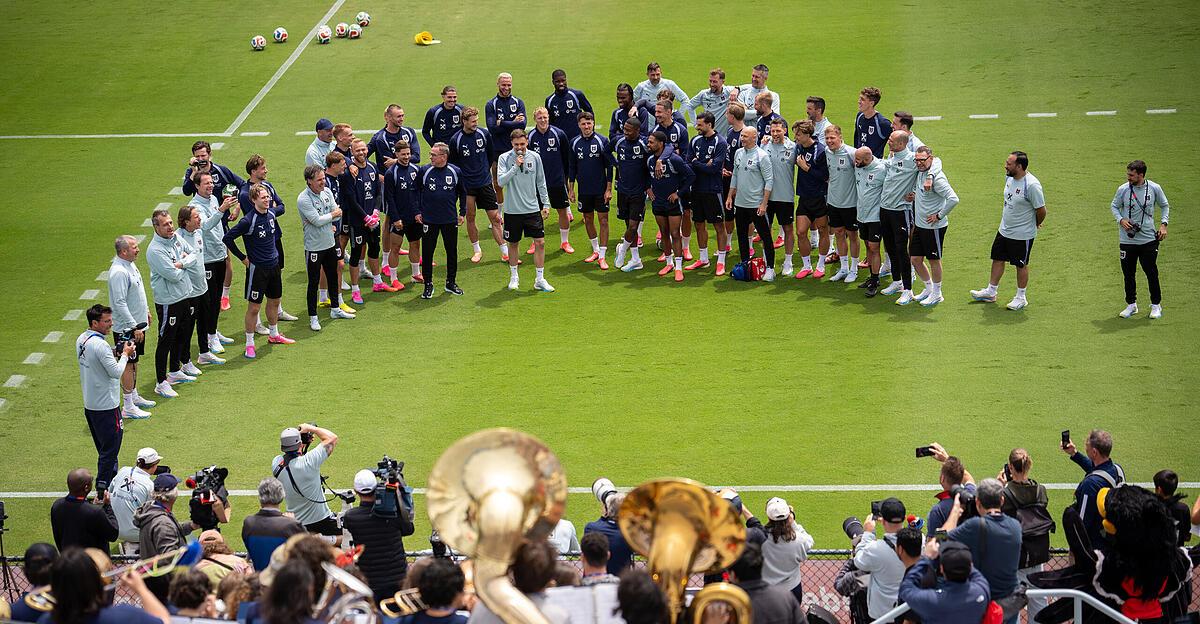
The team’s training camp in Santa Barbara has shifted to closed-door sessions, with Rangnick prioritizing focus over media exposure. “The goal is to build intensity without distractions,” said a team official, according to Oberösterreichische Nachrichten. The 20°C climate has been praised as ideal for preparation, though some players, like Laimer, expected warmer temperatures. “It’s a new experience, but the focus is on performance,” Laimer noted.
The decision to host the camp in California was driven by the need to acclimate the squad to travel fatigue and potential time-zone shifts, mirroring the logistical challenges expected during the group stage. The facility has been outfitted with high-altitude simulation equipment to prepare the players for the specific environmental conditions of the host venues. Despite the isolation, the team has maintained a strict schedule of two-a-day sessions, focusing on defensive transition and high-press mechanics, which are the hallmarks of the “Rangnick system.”
Despite the challenges, morale remains high. Midfielder Romano Schmid described the U.S. as “unforgettable,” while Laimer emphasized the team’s determination. “We’re here to make history,” he said, per sport.ORF.at. The camaraderie has been bolstered by team-building exercises in the evenings, which have become a staple of the current camp to mitigate the pressure of the impending tournament start.
The Absence of Baumgartner and Tactical Adjustments
Another setback comes in the form of Christoph Baumgartner, whose severe muscle injury forced him to miss the camp. However, the striker remains optimistic, telling Laimer, “I want to be here to support the team.” Laimer added, “He’s irreplaceable, but we have options.” The team is expected to finalize its lineup in the coming days, with potential replacements for Baumgartner under consideration.

Baumgartner’s absence creates a significant hole in the attacking third, as he accounted for 20% of the team’s goals during the qualifying campaign. Rangnick is currently testing various formations, including a 4-2-3-1 that shifts into a 4-4-2 during defensive phases to compensate for the loss of Baumgartner’s mobility. The coaching staff is looking at youth prospects who have been called up to fill the void, emphasizing that the tactical structure will rely more on collective movement than individual brilliance.
Rangnick has also adjusted the training schedule, replacing a planned friendly against Guatemala with an internal 11v11 drill. This change allows for more controlled preparation, though it limits opportunities to test against external opponents. The internal scrimmage focused heavily on set-piece delivery and defensive organization, with Rangnick personally overseeing the positioning of the backline. This decision underscores the priority placed on minimizing injury risk while maximizing tactical cohesion in a controlled environment.
What Comes Next?
The coming week will be critical for Austria. A decision on Rangnick’s future is expected, while Alaba’s fitness will determine his role in the opening match. The team’s ability to adapt to these challenges will shape its World Cup campaign. As Rangnick noted in 2022, “We have the potential to surprise.” Now, with the world watching, Austria must prove it can deliver on that promise. The squad is set to depart for the tournament venue on Thursday, with the final roster submission due to FIFA shortly thereafter. The opening match will serve as the first true test of this revamped squad’s depth in the face of significant personnel adversity.
