
Iran’s national soccer team will travel from Mexico to the United States for its 2026 World Cup matches after U.S. authorities refused to allow the squad to stay in the country, Mexican President Claudia Sheinbaum confirmed on June 5, 2026. The decision, linked to heightened tensions between the U.S. and Iran, has forced Iran to relocate its base to Tijuana, with direct flights to Mexico City to avoid visa complications. The team is set to play New Zealand, Belgium, and Egypt in Los Angeles and Seattle, but the logistical shift underscores the broader geopolitical rifts impacting the tournament.
Iran’s Soccer Team Relocates to Mexico Amid U.S. Visa Disputes
Iran’s World Cup participation has been entangled in diplomatic friction since March, when U.S. President Donald Trump expressed concerns about the team’s safety, stating it was “not appropriate” for Iran to be in the U.S. “for their own life and safety,” according to a statement cited by CBC News. The U.S. government reportedly denied Iran’s request to host the team for the entire tournament, leading FIFA to negotiate with Mexico, where the squad will now base itself. “We have no reason to deny them the possibility of staying in Mexico,” Sheinbaum said during a press conference, as reported by CBC.

The Iranian Football Federation’s head, Mehdi Taj, confirmed the move to Tijuana, emphasizing that it would “avoid visa-related complications and allow direct Iran Air flights to Mexico.” The decision comes amid a war between the U.S. and Iran, which began in late February after Israel joined U.S. attacks on Iranian targets. The conflict has raised questions about the safety of Iranian athletes and officials, though Taj insisted the team’s participation was “non-negotiable.” “We are here to play, not to be intimidated,” he said in a statement, per CBC.
Humanitarian Crisis in Lebanon Intensifies as Aid Appeals Double
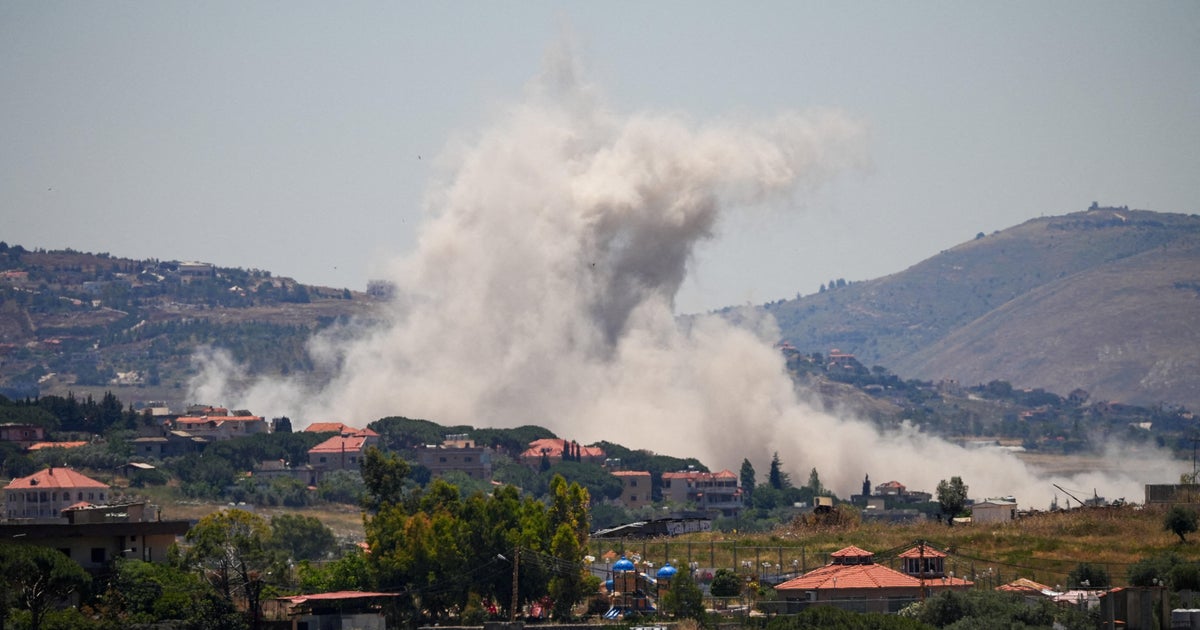
While Iran’s soccer team navigates diplomatic hurdles, the broader Middle East faces a deepening humanitarian crisis. The U.N. has more than doubled its aid appeal for Lebanon, citing “severe and deteriorating” conditions following Israeli strikes on Iran-backed Hezbollah targets. As of June 5, 2026, the U.N. Humanitarian Agency OCHA estimated that nearly $640 million would be needed over six months to support 1.4 million people in need, up from $308 million in March, CBS News reported.
For more on this story, see Iran’s World Cup visa crisis exposes U.S.-Tehran tensions ahead of LA opener.
The crisis has been exacerbated by repeated displacements, with over 1 million people fleeing their homes and 1.2 million facing acute food insecurity. OCHA warned that “affected people are rapidly exhausting their coping capacities, and essential services are under increasing strain.” The U.N. has received only $185 million of the initial $308 million appeal, leaving many families without access to clean water, shelter, or medical care. “The humanitarian situation is catastrophic,” said a U.N. spokesperson, as quoted by CBS.
Hezbollah’s involvement in the conflict has further complicated efforts. The group’s attacks on Israel since March have drawn retaliatory strikes, killing over 3,500 people in Lebanon. The U.N. has called for an immediate ceasefire, but Lebanon’s government has rejected proposals, citing concerns over security and sovereignty. “We cannot accept a deal that leaves our people vulnerable,” said a Lebanese official, per CBS.
Nuclear Talks with Iran Remain Stuck as IAEA Seeks Verification
Amid the regional tensions, the International Atomic Energy Agency (IAEA) continues to grapple with unresolved questions about Iran’s nuclear program. IAEA Director General Rafael Grossi indicated that discussions with Iran may be moving toward a “preliminary nuclear framework,” but progress remains uncertain. “The main obstacle is the lack of consistent access for inspectors following recent disruptions,” Grossi said during a press conference, as reported by ABC News.

Iran’s enrichment of uranium to 60% has raised alarms, with Grossi noting that “no arrangement can proceed without first re-establishing a verified baseline of material on the ground.” The IAEA has not independently confirmed the status of Iran’s enriched uranium, which could be exported, diluted, or kept under agency control. “These are ultimately political decisions,” Grossi added, per ABC.
The situation highlights the fragile balance between diplomacy and security. While Iran has maintained it is legally bound to cooperate with the IAEA, recent attacks on its facilities have disrupted inspections. “We are committed to transparency, but we cannot allow our nuclear facilities to be targeted,” said an Iranian official, as quoted by ABC.
What Comes Next? Geopolitical Tensions and Global Implications
The interplay of these issues underscores the complex web of challenges facing the 2026 World Cup and the broader Middle East. For Iran’s soccer team, the logistical shift to Mexico is a practical solution, but it also symbolizes the country’s isolation in the international arena. “This is not just about football,” said a sports analyst. “It’s a reflection of the broader geopolitical tensions that are reshaping the region.”
The humanitarian crisis in Lebanon, meanwhile, risks spilling over into neighboring countries, with the U.N.
