
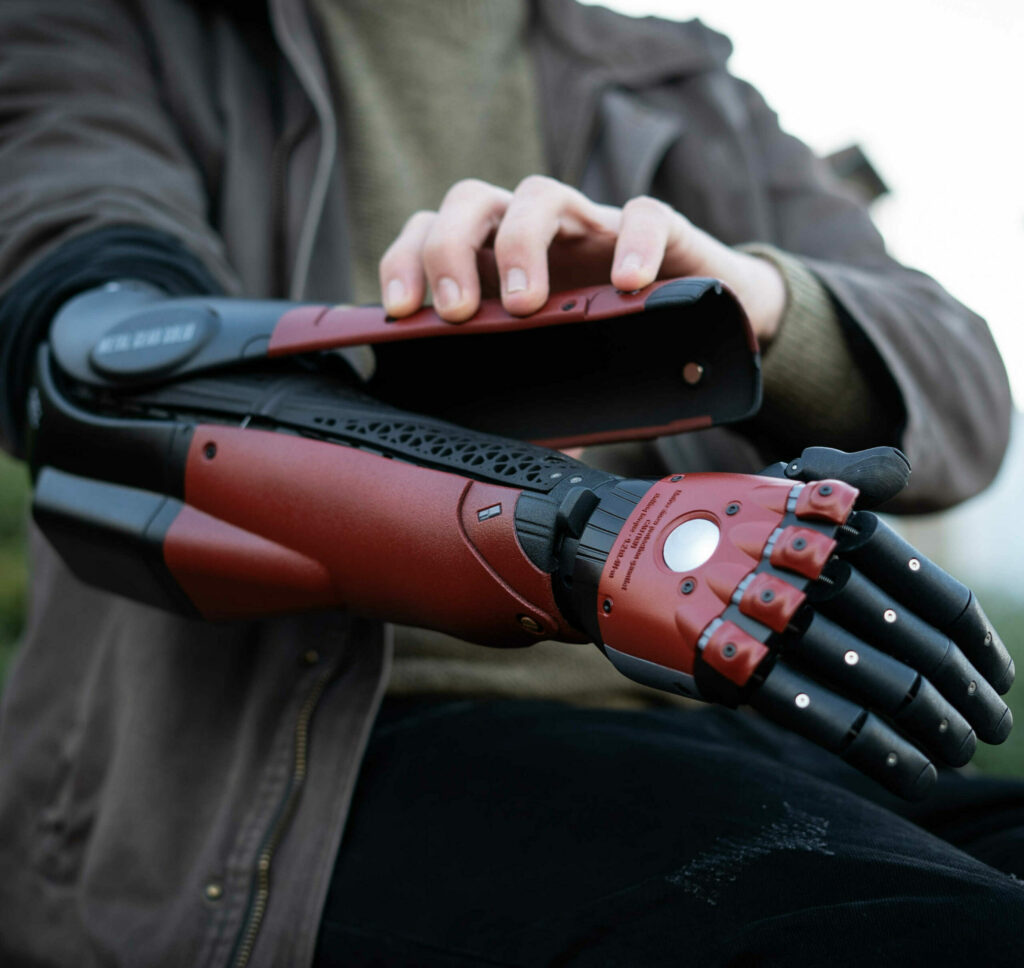
A New York-based physicist has become the first person globally to be fitted with a full-length, 3D-printed bionic arm designed for above-elbow amputees. Developed by the UK-based company Open Bionics, the Hero FLEX system offers a lightweight, modular solution that allows users to perform daily tasks with greater precision and comfort.
A Breakthrough in Prosthetic Accessibility
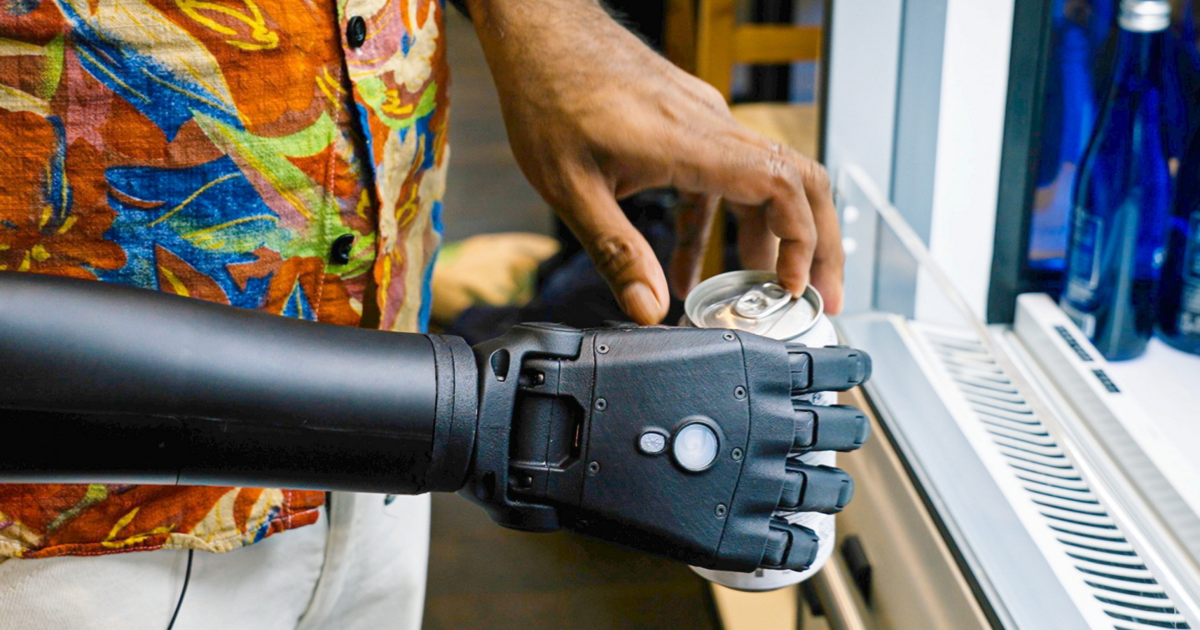
Praveen Gowtham, a 43-year-old physicist from the Bronx, New York, received the historic fitting this week at the Open Bionics clinic in Midtown Manhattan. Born with an amputation following a circulatory complication just eight days after his birth, Gowtham had spent most of his life without a functional prosthetic. His search for a viable device led him to contact Open Bionics, a firm known for its 3D-printed bionic limb technology, though he initially discovered the company had not yet adapted its Hero FLEX system for above-elbow users. After waiting a year for the technology to mature, Gowtham became the first recipient of the newly adapted socket. The impact was immediate. Within an hour of his fitting, he was able to perform tasks that had previously been difficult or impossible, such as gripping tools at his workbench, walking his dog while carrying a coffee, and opening a soda can without assistance.“I’m so excited to use this daily. Even giving my dog a treat is easier, and because the whole solution is lightweight, I don’t feel the strain on my shoulder,” said Gowtham, via The Rochester Sentinel.
Engineering the Hero FLEX System
The Hero FLEX represents a departure from conventional prosthetic fabrication, which often relies on heavy materials and restrictive designs. Each system begins with a 3D scan of the user’s limb to manufacture a bespoke socket using Nylon 12. This material is designed to be breathable, adjustable, and compressible, effectively removing the geometric constraints found in traditional prosthetics. The device is controlled through myoelectric sensors that detect muscle movements in the user’s residual limb. These signals are translated into precise hand movements, with users reporting no perceptible delay. According to Bristol Post reporting, the system’s modular nature is a core feature, allowing users to swap between activity-specific attachments for hobbies or chores and a standard bionic hand for two-handed tasks. The technology also includes a posable thumb and wrist capable of 180 degrees of rotation, along with six selectable grip modes—including a freeze mode for static holding. For Gowtham, the lightness of the device is its defining quality.“This system is the lightest option I have ever worn. It’s so different from anything I have tried before. I love that it’s modular,” Gowtham noted, as reported by The Rochester Sentinel.
Clinical Implications and Future Availability
The successful fitting in New York marks a significant expansion for the Hero FLEX, which is now accessible across more than 800 clinical locations in the USA, UK, Europe, Australia, and New Zealand. Daniel Green, an upper limb prosthetist at the Open Bionics clinic in New York, emphasized the significance of the achievement.“Seeing Praveen walk down the street confident, coffee in one hand and dog leash in the other, after being fitted at our Midtown Manhattan clinic, is exactly what drives the work we do here at Open Bionics,” said Daniel Green.

“There are moments in my work where I could really do with three arms,” Gowtham remarked, reflecting on the utility of the device in his professional and personal life.
The expansion of the Hero FLEX into the above-elbow market serves as a practical application of 3D-printing technology to address the “prosthetics access gap,” a persistent challenge where high costs and limited customization have historically hindered patient outcomes. By prioritizing a modular, lightweight design, the company aims to make advanced, life-like bionic functionality a standard option rather than a rare luxury.