
U.S. Defense Secretary Reaffirms Partnership with Vietnam, Returns Wartime Artifacts
U.S. Defense Secretary Pete Hegseth yesterday reaffirmed the U.S.’s commitment to a strengthened partnership with Vietnam, marked by the return of wartime artifacts and continued collaboration on addressing the lingering effects of the Vietnam War – a move seen as crucial for maintaining influence in the Indo-Pacific region.
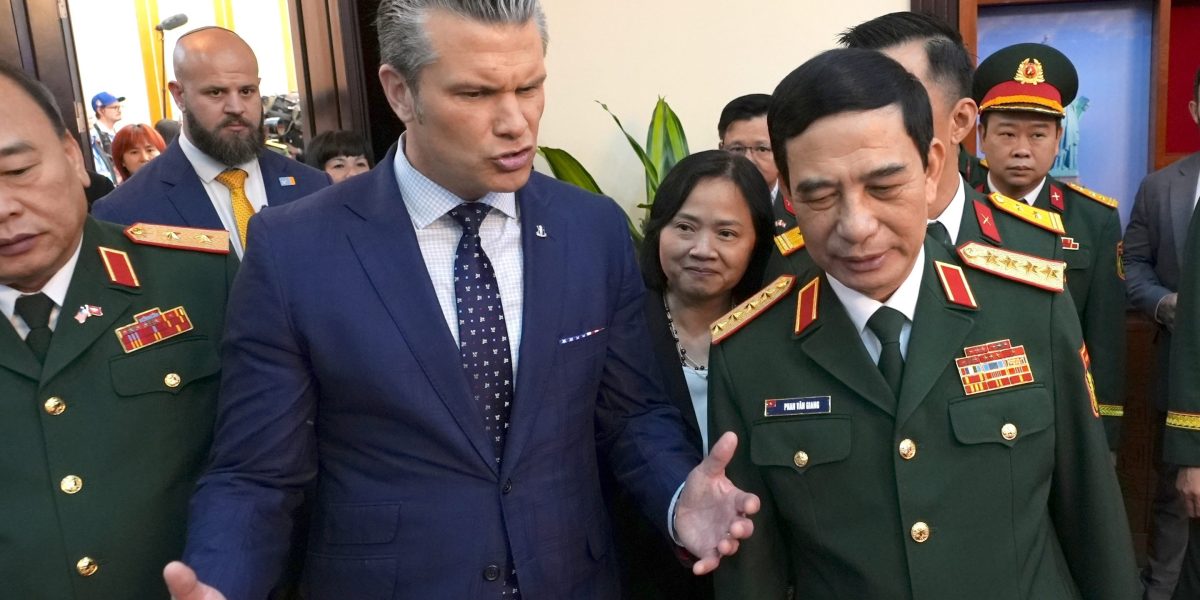
During talks with Vietnamese Defense Minister Phan Van Giang in Hanoi, Hegseth presented a leather box, belt, and small knife – items taken by U.S. soldiers during the conflict. These exchanges are part of ongoing reconciliation efforts, mirroring previous returns of letters, identification tags, and photographs from both sides. “Today we will exchange artifacts and information from the war with the goal of helping family members in both countries find peace,” Hegseth said. The visit coincides with the 30th anniversary of diplomatic ties and the second anniversary of the countries’ elevation to a Comprehensive Strategic Partnership, Vietnam’s highest level of diplomatic recognition.
Cooperation on postwar issues, including the removal of unexploded ordnance, recovery of missing service members, and cleanup of Agent Orange contamination, remains central to the relationship. While U.S. funding for some programs was temporarily reduced, causing delays, the recommitment to these projects is viewed as vital for fostering deeper defense cooperation. Experts at the ISEAS–Yusof Ishak Institute suggest this demonstrates U.S. responsibility and provides political cover for Hanoi to expand ties with a former adversary.
Hegseth’s visit follows a recent trip by Vietnam’s Communist Party chief to North Korea and reports of potential interest in purchasing Russian Su-35 fighter jets, signaling Vietnam’s strategic hedging. Concerns remain about potential financial workarounds between Moscow and Hanoi despite U.S. sanctions related to the war in Ukraine, as detailed in Associated Press reporting. Officials stated that continued dialogue and collaboration will be essential to navigating these complex geopolitical dynamics.
