
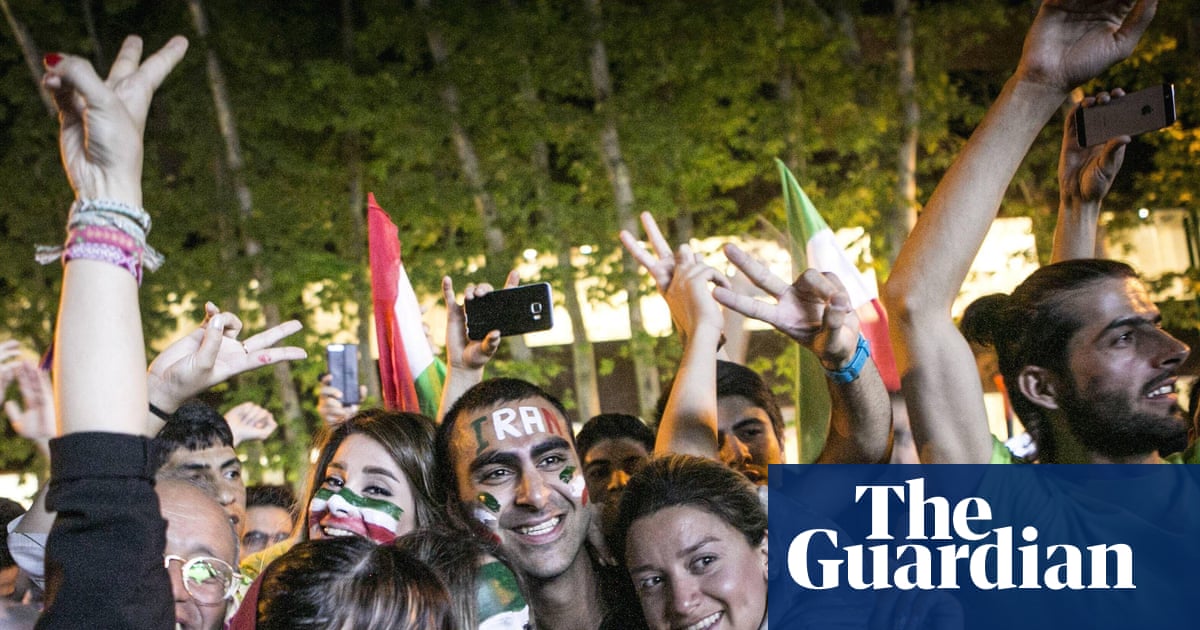
The World Cup was once Iran’s great unifier. Now, it’s a geopolitical minefield—and the team’s journey to the tournament is a microcosm of the country’s fractured identity.
Ten days before Iran’s opening match against New Zealand in Los Angeles, the team’s visa saga has become a proxy war between Tehran and Washington. The White House confirmed visas were issued for players just hours after Iran’s ambassador to Mexico insisted they had not arrived. Meanwhile, the squad’s base camp was uprooted from Arizona to Mexico’s Tijuana after political pressure and logistical chaos. What began as a sporting triumph—qualification for the 2026 World Cup—has become a test of defiance, with football caught between revolution and regime.
Visas, Diplomacy, and the World Cup as Battleground
The White House’s announcement on Friday that Iran’s players had received visas was met with immediate skepticism. Iran’s ambassador to Mexico, Abolfazl Pasandideh, had tweeted late Thursday that the team still lacked travel documents. But within hours, a White House official and U.S. Ambassador to Turkey Tom Barrack confirmed the visas had been processed overnight. The contradiction underscores how deeply the World Cup has become entangled in the U.S.-Iran standoff.
Barrack’s post on X—“Proud of our outstanding team at the U.S. Embassy in Ankara for their work processing visas for Iran’s national football team”—was a rare public acknowledgment of the diplomatic effort. Yet the saga wasn’t over. The semi-official Fars news agency reported that visas for some members of Iran’s technical and administrative staff—including former Revolutionary Guard commander Mehdi Taj, president of Iran’s football federation—remained denied. The U.S. has explicitly barred individuals linked to the Islamic Revolutionary Guard Corps (IRGC) from entering, a policy Secretary of State Marco Rubio reaffirmed this week.
The visa issue forced Iran to abandon plans to train in Arizona, relocating to Tijuana just weeks before the tournament. The move was framed as a logistical necessity, but it also reflected the growing perception in Tehran that the U.S. was using the World Cup as leverage. “The regime’s team,” as one Iranian protester put it during the 2022 Qatar World Cup, has become a symbol of the regime’s survival—not its people’s aspirations.
The Team That Wasn’t Celebrated
Football in Iran used to be a unifying force. The 1998 World Cup qualification—won in a dramatic two-legged victory over Australia—sparked street celebrations that brought Tehran to a standstill. But that era ended with the 2022 protests following Mahsa Amini’s death in police custody. The Woman, Life, Freedom movement turned football into a battleground. When Iran’s players stood in silence before their match against England in Qatar, it was too little, too late for many protesters, who saw the team as complicit with the regime.
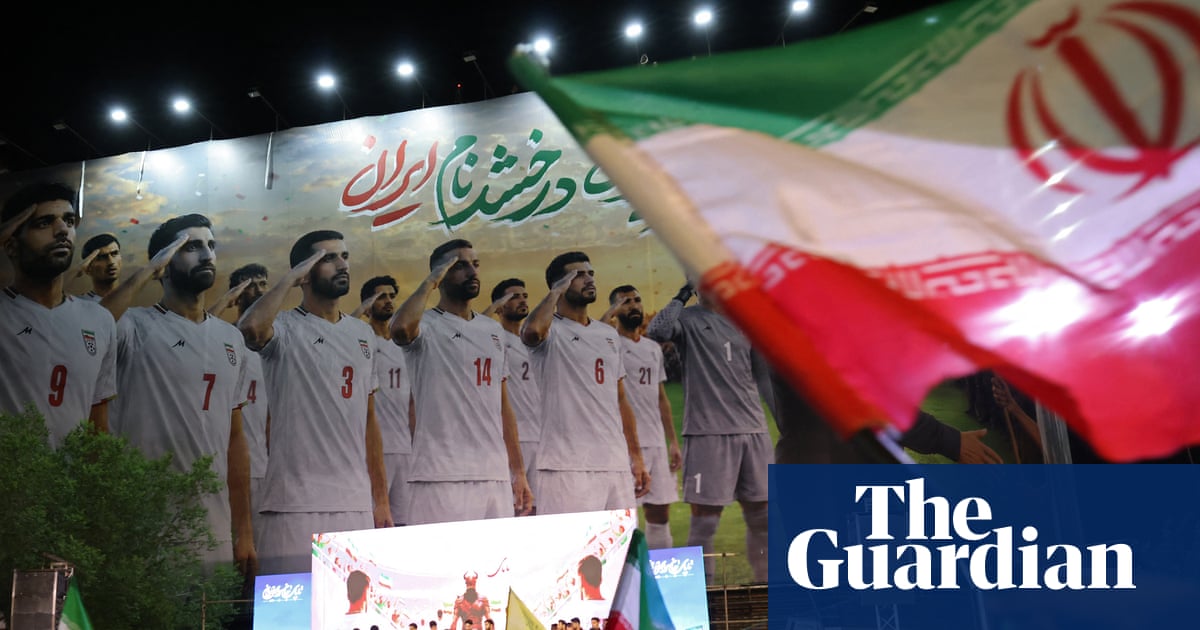
Today, there are no videos of Iranians flooding the streets to celebrate World Cup qualification. The silence speaks volumes. As Abbas Kiarostami’s 1998 film Life, and Nothing More captured, football in Iran has always been about more than sport—it’s a lifeline. But now, that lifeline is frayed. The team’s captain, Mehdi Taremi, may lead the line in Los Angeles, but he carries the weight of a nation divided.
The rift is personal. Sardar Azmoun, Iran’s star forward, was left out of the squad after photos surfaced of him with the UAE’s ruler, whose country has aligned with the U.S. and Israel. The exclusion wasn’t just tactical—it was political. Azmoun’s omission sent a message: the team is not just playing for points, but for survival.
A Manager’s “Defensive Plan B” and the Tactics of War
Amir Ghalenoei, Iran’s manager, has spent months preparing for a World Cup unlike any other. His team’s two March friendlies—against Nigeria and Costa Rica—revealed a tactical flexibility born of necessity. Against Nigeria, Iran deployed a 3-6-1 formation, which Ghalenoei called their “defensive plan B,” likely designed for the Group G showdown with Belgium. Against Costa Rica, they switched to a 4-4-2, showing they’re willing to adapt. But the real challenge isn’t just the opposition—it’s the context.

The U.S. is hosting Iran for the first time in World Cup history while the two nations are technically at war. The games in Los Angeles and Seattle are not just matches; they’re political statements. Iran’s desire to compete underscores Tehran’s broader strategy: use the World Cup as a diplomatic cover. As Pasandideh told reporters, “Iran’s desire to compete in the World Cup underscores its efforts to reach a resolution in the war with Washington.”
Yet the regime’s gambit is risky. The team’s presence in the U.S. could provoke backlash at home, where hardliners see the trip as normalization. The fact that the squad’s base camp is now in Mexico—rather than Arizona—suggests Iran is treating the World Cup as a necessary evil, not a celebration.
What Happens Next: The Games, the Politics, and the Aftermath
Iran’s first match against New Zealand on June 15 in Los Angeles will be more than a football game. It will be a test of whether the regime can still command loyalty, whether the players can transcend politics, and whether the World Cup can remain apolitical in a region on fire.
The stakes are higher than points. If Iran advances, it will be a rare bright spot in a dark chapter. If they fail, the regime’s team will have failed in its dual mission: to play, and to survive.
One thing is certain: the World Cup will not bring Iranians together as it once did. But it may force them to confront a harder truth—football, like everything else in Iran today, is no longer just a game.
For now, the team is in Tijuana, preparing for a tournament that feels more like a war zone than a stadium. The question isn’t just whether they’ll win—but whether they’ll even be allowed to play.
