
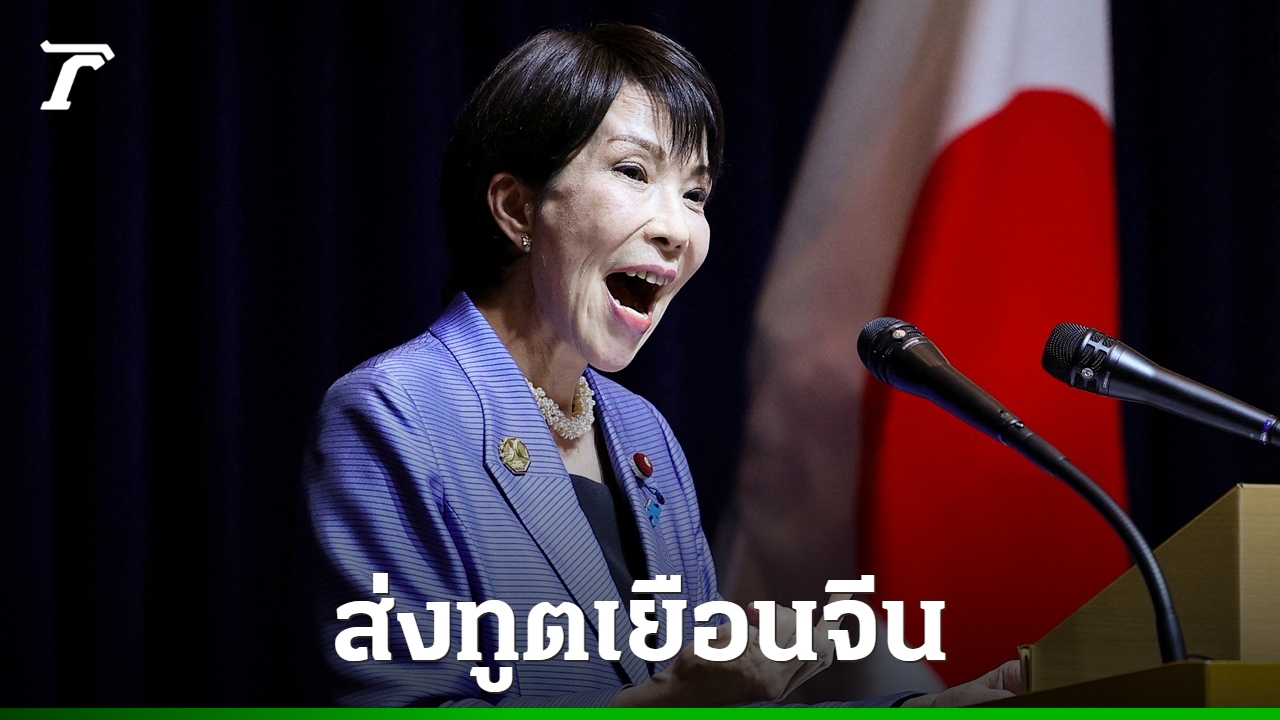
Tokyo dispatched a special envoy to Beijing Monday as diplomatic tensions rise following controversial remarks by a Japanese lawmaker regarding potential military intervention in a conflict over Taiwan. The move comes amid increasingly assertive Chinese military activity near the island and a broader debate over the future of regional security [[1]]. The diplomatic dispatch aims to clarify Japan’s position and de-escalate the situation after China issued a strongly-worded response, including a travel advisory for its citizens visiting Japan, impacting key sectors of the Japanese economy.
Japan Dispatches Envoy to China Amidst Rising Tensions Over Taiwan
Tokyo sent a special envoy to Beijing on Monday, November 17, 2024, in an effort to de-escalate a diplomatic dispute sparked by recent comments regarding Taiwan. The situation highlights the delicate balance of power in East Asia and the potential for miscalculation in the region.
The friction began after Sanae Takaichi, a Japanese parliament member, suggested that Japan could respond militarily if a Chinese attack on Taiwan threatened its survival. “If China were to attack Taiwan in a way that would pose an existential threat to Japan, it could trigger a response from our country,” Takaichi stated earlier this month.
Her remarks represented a departure from Japan’s traditional policy of avoiding explicit discussion of potential military responses to scenarios involving China and Taiwan, a stance intended to avoid provoking Beijing, which claims Taiwan as its own territory.
Footage released by Kyodo News on Monday showed Masakazu Kanai, a Japanese Foreign Ministry official responsible for Asian and Oceanian affairs, arriving in Beijing to meet with Foreign Minister Liu Jinzong.
Kanai is expected to clarify to Chinese officials that Japan’s security policy remains unchanged and to urge restraint from actions that could further damage bilateral relations.
“Communication channels remain open,” said Minoru Kihara, Japan’s Chief Cabinet Secretary, when questioned about Kanai’s visit. “We have strongly requested that the Chinese side take appropriate measures.” Kihara also added that China’s travel advisory against visiting Japan was inconsistent with efforts to promote a strategic and mutually beneficial relationship.
However, the Chinese Foreign Ministry indicated that Prime Minister Li Qiang has no plans to meet with Takaichi on the sidelines of the upcoming G20 summit in South Africa this week.
“Japan should retract its erroneous remarks,” said Mao Ning, a spokesperson for the Chinese Foreign Ministry, during a daily press briefing.
The dispute escalated on November 13, when China summoned the Japanese ambassador for the first time in over two years to protest what they called Takaichi’s “extremely irresponsible” statements.
The following day, November 14, China warned that Japan would face “devastating” military defeat if it intervened in the Taiwan issue and expressed “serious concern” over the direction of Japan’s security policy. Beijing also advised its citizens against traveling to Japan, raising fears of a downturn in tourism.
The concerns impacted Japanese stocks sensitive to tourism. Isetan Mitsukoshi Holdings, a department store operator, fell 11.3%, while Japan Airlines dropped 3.7%.
The development underscores growing regional tensions and the potential economic fallout from escalating geopolitical risks.
Follow foreign news: https://www.thairath.co.th/news/foreign
Source: cna
