
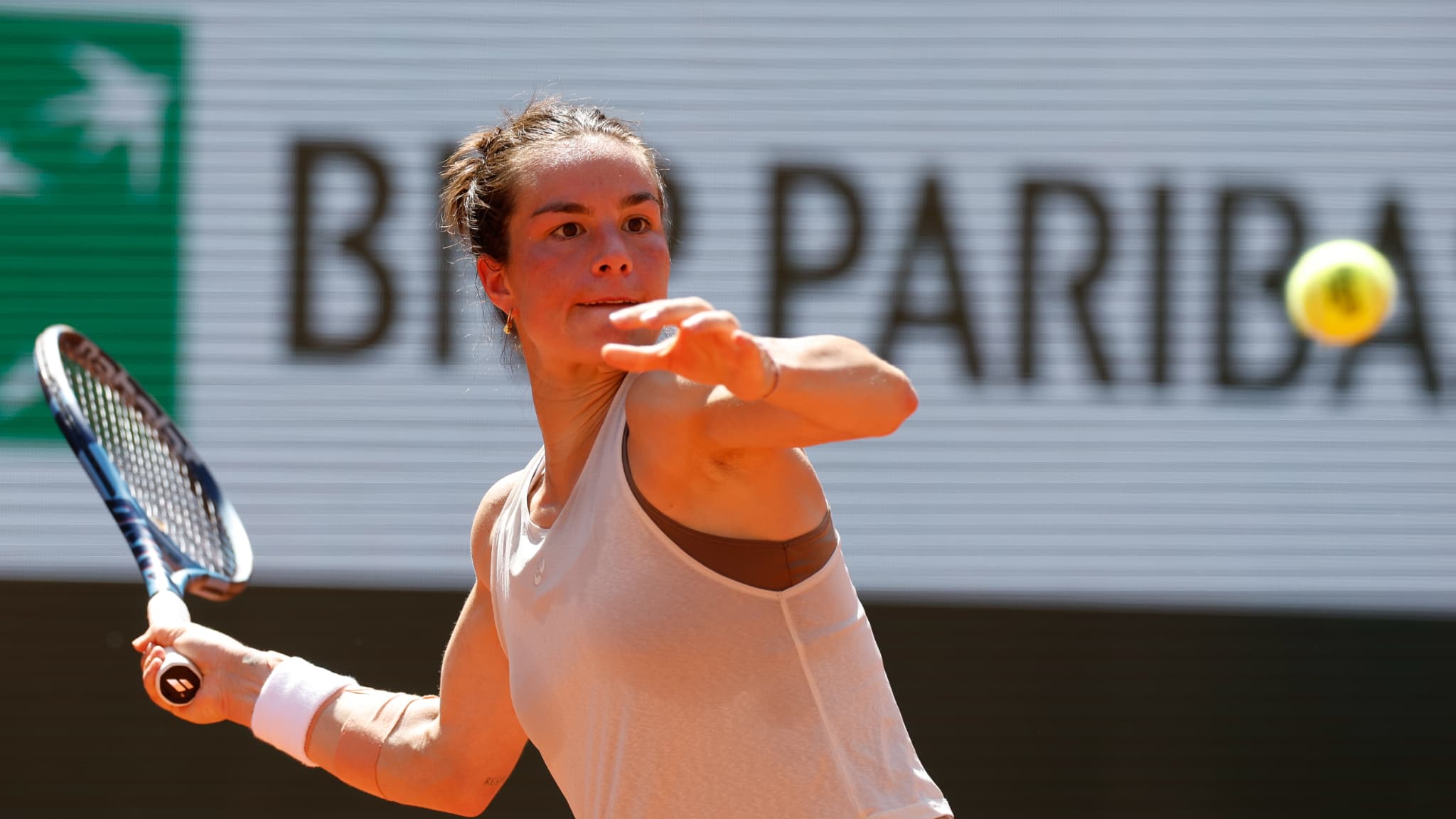
Roland-Garros reached a fever pitch on Tuesday, May 26, 2026, as the first round of the tournament concluded at Porte d’Auteuil. While top seeds like Aryna Sabalenka and Jannik Sinner began their campaigns, the day was defined by the breakout performance of 17-year-old French prospect Moïse Kouamé, who stunned Marin Cilic in straight sets.
A Star Is Born: Moïse Kouamé’s Milestone Victory
In one of the most significant upsets of the early tournament, 17-year-old Moïse Kouamé announced his arrival on the Grand Slam stage by defeating former world number three Marin Cilic. The young Frenchman triumphed in a three-set clash, winning 7-6 (7-4), 6-3, 6-1 on the Simonne-Mathieu court.

The match, which lasted two hours and 35 minutes, saw Kouamé display composure beyond his years. After securing a tightly contested opening set in a tie-break, the teenager dominated the remaining frames. By the time he broke Cilic’s serve to take a 3-1 lead in the third set, the crowd at the Simonne-Mathieu court sensed an impending landmark result for the French contingent. For Kouamé, the victory serves as a definitive statement in his debut, positioning him as a player to watch as the draw moves into the second round.
Sabalenka and Top Seeds Launch Campaigns
While the focus was on the next generation, world number one Aryna Sabalenka maintained her status as a tournament favorite with a clinical performance. Sabalenka defeated Jessica Bouzas Maneiro 6-4, 6-2 in just 76 minutes. The Belarusian player, currently ranked number one, encountered minor resistance when her opponent clawed back to 5-4 in the opening set, but she ultimately regained control to seal the victory. Sabalenka’s ability to close out the match efficiently highlights her intent to avoid the early-round volatility often seen on clay courts.

The men’s draw also saw high-stakes action as Daniil Medvedev navigated a challenging match against Adam Walton. The Russian, a known force on clay, was forced into a five-set marathon, mirroring the high-intensity atmosphere that has characterized the opening days of the 2026 edition of the tournament. The endurance test provided a stark contrast to the more straightforward victories for other top seeds. Meanwhile, the schedule remains packed for the evening, with top-ranked Jannik Sinner slated for a night session appearance against French invitee Clément Tabur, a match that carries significant weight for the local crowd hoping for a home-grown upset.
Emotional Farewells for Legends
The tournament’s start has been marked by poignant goodbyes to two stalwarts of the sport. Stan Wawrinka, the 2015 champion and 2017 finalist, played his final match at Roland-Garros after announcing his retirement at the age of 41. Despite a spirited effort, Wawrinka fell to Jesper de Jong in four sets, ending his long-standing association with the Parisian clay.
“On n’a jamais envie de dire au revoir quand on est passionné par quelque chose. Je sais que c’était la fin, je sais que c’était le bon choix. Je rêvais de pouvoir rejouer ici, devant vous, mais malheureusement c’était mon dernier match à Roland-Garros donc merci beaucoup.”
Stan Wawrinka, former Roland-Garros champion, via Franceinfo
In a final act of sportsmanship, Wawrinka urged the Parisian crowd to continue their support for Gaël Monfils, who also exited the tournament following a grueling five-set defeat. Monfils, a long-time fan favorite, had rallied from two sets down before ultimately succumbing to his opponent in the deciding set. The departure of both veterans marks a transition period for the tournament, as the spotlight shifts firmly to the younger generation of competitors.
Tournament Outlook and French Hopes
As the first round concludes, the pressure shifts to the remaining French players. Loïs Boisson, the breakout star of 2025, is preparing to defend her semi-final run against Anna Kalinskaya. With nine French players in action today, including Corentin Moutet and Clément Tabur, the home crowd remains deeply invested in the tournament’s progress. The performance of these players in the coming days will determine the depth of the French presence in the second week of the competition.
For the favorites, the next 48 hours will be critical as they transition from the unpredictability of the first round into the more established rhythm of the second. The tournament organizers have monitored the court conditions closely, and with the weather holding steady, the schedule has proceeded without the interruptions that plagued previous editions. As the draw thins out, the top seeds face the challenge of maintaining their focus against lower-ranked opponents who have already proven their ability to push them to the limit. Roland-Garros 2026 is shaping up to be a compelling mix of established dominance and the rise of new talent, with the first-round results providing a clear signal of the shifting power dynamics in professional tennis.
