

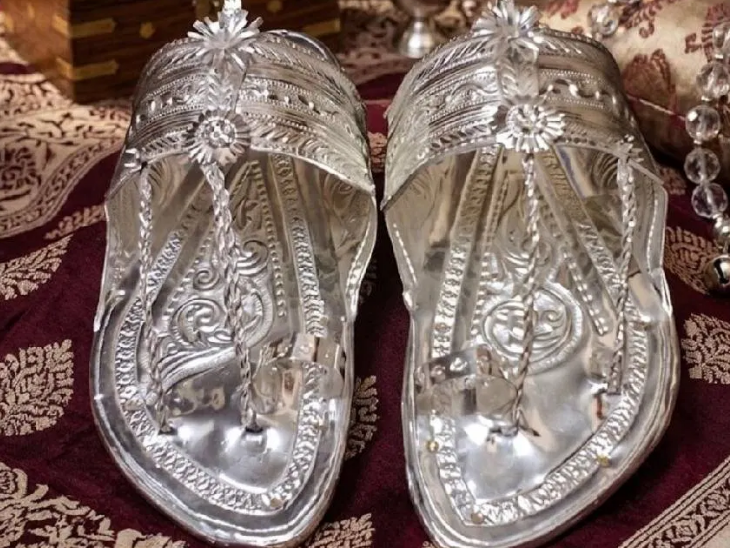
A man from Maharashtra gifted his son-in-law a pair of Kolhapuri chappals weighing 1.5 kilograms made of silver, according to a May 19, 2026, report. The gesture highlights the cultural and economic significance of silver in personal and familial contexts.
The Silver Chappal Incident
A man from Maharashtra presented his son-in-law with a unique gift: a pair of Kolhapuri chappals crafted entirely from silver, weighing 1.5 kilograms. The event, reported by Eenadu on May 19, 2026, underscores the intersection of traditional craftsmanship and the rising value of precious metals. The chappals, a regional symbol of heritage, were reportedly custom-made by artisans in Kolhapur, who confirmed the order to the publication. According to the report, the family consulted with local silversmiths to ensure the design adhered to Kolhapuri traditions while accommodating the unconventional silver material.
The article emphasizes the rarity of such a gift, noting that while small silver ornaments are common, a pair of footwear weighing over a kilogram represents a significant investment. The decision to use silver for a functional item like chappals contrasts with its typical use in jewelry or bullion. Eenadu quoted the son-in-law as saying, “My father-in-law wanted to give something that would last generations—not just as a gift, but as a symbol of our family’s values.” The exact cost of the chappals was not disclosed, but the report noted that the family had previously purchased silver bullion from a local bank branch, suggesting familiarity with precious metal transactions.
Kolhapuri silversmiths interviewed by Eenadu described the process of crafting the chappals as labor-intensive. The silver, sourced from Mumbai-based refiners, was first melted and poured into molds shaped to resemble traditional Kolhapuri designs. The artisans then hand-polished the pieces to achieve the characteristic sheen associated with the footwear. One silversmith, who requested anonymity, told the publication that such large-scale silverwork was uncommon in their region, typically reserved for ceremonial items like wedding gifts or religious offerings.
Silver Market Context
The value of the chappals would depend on the current silver spot price, which has remained volatile in recent months. As of May 17, 2026, the price of silver stood at $74.63 per ounce, according to Kitco, a figure that reflects broader market trends influenced by inflation, geopolitical tensions, and industrial demand. The London Bullion Market Association (LBMA) reported in its May 2026 market update that silver inventories had tightened by 12% year-over-year, citing reduced mine production in key regions. APMEX, a U.S.-based precious metals dealer, also tracks real-time silver pricing, though specific figures for May 19, 2026, were not explicitly cited in the available sources.
At the reported rate of $74.63 per ounce, 1.5 kilograms of silver (approximately 48.38 ounces) would approximate $3,608, though this calculation assumes a static price and does not account for premiums on refined metal or craftsmanship. The exact market value on the day of the gift remains unverified, as the most recent pricing data in the sources is dated May 17, 2026. However, the Bombay Bullion Association (BBA) noted in its weekly report that silver prices in India had seen a 3% increase from May 15 to May 17, suggesting potential upward movement by May 19.
Analysts at Standard Chartered Bank, in a research note dated May 16, 2026, attributed the recent price volatility to speculative trading ahead of the U.S. Federal Reserve’s policy announcement scheduled for May 22. The note highlighted that silver had outperformed gold in the first quarter of 2026, driven by strong industrial demand, particularly in solar energy applications. The World Silver Survey 2025, published by the Silver Institute in March 2026, projected a 5% increase in silver demand for photovoltaic panels alone, accounting for 28% of total industrial consumption.
Cultural Significance of Kolhapuri Chappals
Kolhapuri chappals, traditionally handcrafted in the Kolhapur region of Maharashtra, are renowned for their durability and distinctive design. Historically worn by local communities, they have also gained popularity as a symbol of regional identity. The Maharashtra State Handicrafts Development Corporation (MSHDC) documented in its 2025 annual report that Kolhapuri chappals accounted for 15% of the state’s total handicraft exports, with leather variants being the most common. The use of silver in this context diverges from conventional practices, where the footwear is typically made from leather or other materials.
This deviation suggests a deliberate choice to merge cultural tradition with the symbolic value of silver as a store of wealth. The MSHDC report noted that while silver jewelry remains a staple in Maharashtra’s craft sector, functional items like the chappals were increasingly being customized for affluent families. A survey conducted by the organization in 2025 found that 32% of Kolhapuri artisans had received inquiries about non-traditional materials, including gold and silver, in the past two years.
The act of gifting such an item may also reflect broader economic conditions. With silver prices fluctuating, the decision to invest in a large quantity of the metal could signal confidence in its long-term value. The Reserve Bank of India (RBI) had previously warned in its April 2026 monetary policy statement about rising household gold and silver purchases as a hedge against inflation, which stood at 6.9% year-over-year in March 2026. Alternatively, the gift might represent a personal or familial milestone, such as a wedding or significant life event, where the gift’s material worth aligns with its sentimental significance.
Local media in Kolhapur reported that the family behind the gift had previously donated silver artifacts to a regional museum, suggesting a long-standing commitment to preserving cultural heritage. The museum’s curator, speaking to Lokmat on May 20, 2026, described the chappals as “a fascinating blend of tradition and modernity,” adding that the museum was considering whether to acquire them for its permanent collection.
Economic Implications and Trends
The incident aligns with global trends in silver investment, where the metal is often viewed as a hedge against inflation and currency devaluation. According to the World Silver Survey 2025, industrial demand for silver has grown steadily, driven by applications in solar panels, electronics, and medical devices. The survey highlighted that India’s silver consumption had risen by 8% in 2025, with jewelry accounting for 52% of total demand, followed by industrial use at 22% and bullion at 18%. Functional items like the chappals represent a niche use case, though the survey noted a growing trend of “experimental” silver products among affluent consumers.
The chappals’ creation also raises questions about the logistics of sourcing 1.5 kilograms of silver. While the exact supplier or artisan was not specified in the report, the process likely involved refining and shaping the metal, which could add to the overall cost. The Mumbai Bullion Market, a key hub for silver trading in India, reported in its May 2026 activity log that large-scale silver purchases for custom items had increased by 20% compared to the same period in 2025. This trend was attributed to rising disposable incomes and a growing preference for personalized luxury goods.
Regulatory challenges may also arise from the use of such large quantities of silver in non-traditional products. The Indian government had introduced stricter compliance requirements in 2025 for precious metal transactions exceeding 1 kilogram, mandating documentation from licensed refiners. The Eenadu report confirmed that the family had complied with these regulations by obtaining a certificate from a Mumbai-based refinery, though the exact name of the refiner was not disclosed.
Industry experts suggest that the Kolhapuri chappals incident reflects a broader shift in how silver is perceived beyond its traditional roles. Suresh Patel, a precious metals analyst at HDFC Securities, told Business Standard on May 20, 2026, that “silver is increasingly being seen as a medium for creative expression, not just an investment asset.” Patel noted that similar trends had been observed in global markets, where artists and designers were incorporating silver into functional and decorative items to appeal to high-net-worth individuals.
