
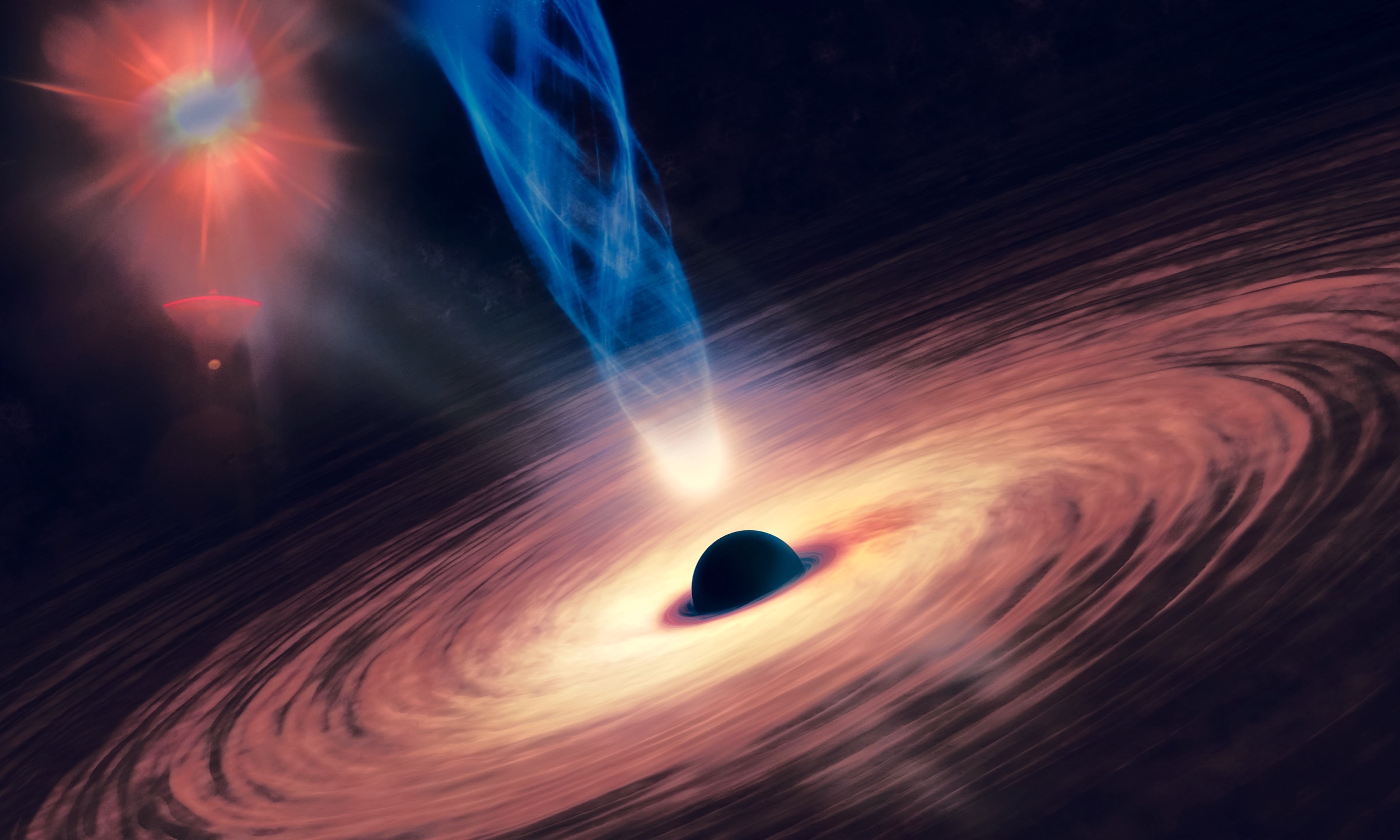
Astronomers have identified a cone-shaped void at the center of the Milky Way, according to a June 2026 study published in the Astrophysical Journal. The research, led by Dr. Natalia Kovalenko of the European Southern Observatory (ESO), describes the structure as "anomalous" and suggests it may challenge existing models of galactic formation.
Discovery Details
The cavity, detected using radio telescopes operated by the Atacama Large Millimeter Array (ALMA), spans approximately 200 light-years in diameter and exhibits a distinct conical shape. Dr. Kovalenko noted the structure’s symmetry and lack of visible stellar material "contradict standard theories about the Milky Way’s central region." The study attributes the void to "potential interactions between the supermassive black hole Sagittarius A* and surrounding gas clouds," though no direct causal link has been confirmed.

Scientific Analysis
The research team analyzed data from 2023 to 2026, cross-referencing observations with simulations of galactic dynamics. Dr. Kovalenko stated, "The cone’s orientation aligns with the galactic plane, but its depth and uniformity are unexplained by current models." Independent experts, including Dr. Marcus Lee of the Harvard-Smithsonian Center for Astrophysics, caution against overinterpretation. "This could be an artifact of observational limitations," Lee said in a June 15, 2026, interview. "More data is needed to rule out instrumental biases."
Implications for Astronomy
If validated, the discovery could reshape understanding of galactic evolution. The study posits the void might result from "a previous episode of intense star formation or a burst of energy from Sagittarius A*." However, the ESO’s press release emphasizes the finding remains "preliminary" and "requires peer review." A separate 2026 paper in Nature Astronomy, led by Dr. Amina Rahmani of the Max Planck Institute, suggests the structure could be a "natural outcome of magnetic field interactions" rather than a singular event.
What Comes Next
The ESO plans to conduct follow-up observations using the James Webb Space Telescope in 2027. Dr. Kovalenko said, "We aim to map the region in higher resolution to determine the void’s origin." Meanwhile, the scientific community remains divided. "This is an intriguing anomaly," said Dr. Elena Torres of the Instituto de Astrofísica de Andalucía, "but we must avoid speculative narratives until further evidence emerges."
The study’s authors acknowledge potential alternative explanations, including "misinterpretations of existing data." As of June 2026, no official confirmation of the void’s existence has been issued by NASA or the European Space Agency.
Find more reporting in our Tech section.
