
Despite facing internal challenges including workforce reductions, NASA delivered a year of remarkable scientific advancements in 2025. From potential biosignatures on Mars to the discovery of a new moon orbiting Uranus, the agency’s latest findings-detailed in the following report-underscore the continued importance of space exploration and its potential to reshape our understanding of the universe. These breakthroughs demonstrate NASA’s resilience and ongoing commitment to innovation even amidst budgetary and leadership transitions.

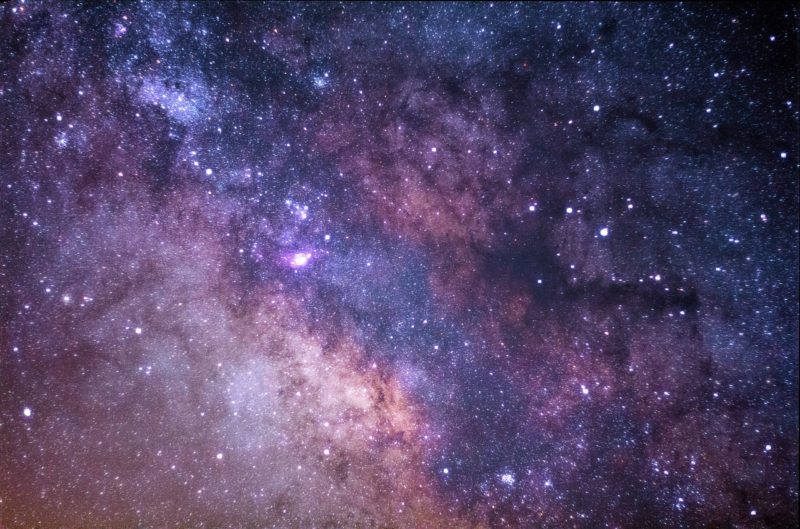
Despite facing unprecedented challenges in 2025 – including significant workforce reductions, budget cuts, and leadership transitions – NASA achieved remarkable scientific breakthroughs. The agency’s researchers, robotic explorers, telescopes, and spacecraft delivered insights that underscore the importance of maintaining its core mission: exploring the air and space, innovating for the benefit of humanity, and inspiring the world through discovery.
Before diving into the seven most groundbreaking discoveries of 2025, it’s worth noting that these findings not only demonstrate NASA’s scientific prowess but also pave the way for future exploration. These advancements highlight the continued relevance of space exploration in expanding our understanding of the universe and our place within it.
1. Potential Biosignatures Detected in Martian “Sapphire Canyon” Rock Formation
NASA’s Perseverance rover, while exploring the Jezero Crater on Mars in July 2024, identified a rock sample dubbed “Sapphire Canyon” exhibiting evidence of past water, organic molecules, and potential chemical reactions produced by microbial activity. Subsequent analysis confirmed the presence of potential biosignatures within the sample, offering new evidence for the possibility of life on Mars.
2. Discovery and Study of Interstellar Comet 3I/ATLAS
In June 2025, the Asteroid Terrestrial-impact Last Alert System (ATLAS), funded by NASA, discovered comet 3I/ATLAS, the third interstellar object ever identified. The comet’s high carbon dioxide content and estimated age provide astronomers with a rare opportunity to study planetary systems beyond our own.

▲ 3I/ATLAS as captured by the Hubble Space Telescope on July 21, 2025. (Source: Images taken by David Jewitt/NASA/ESA/Space Telescope Science Institute (STScI), processed by Nrco0e., Public domain, via Wikimedia Commons)
3. Confirmation of a Companion Star to Betelgeuse
Astronomers confirmed in 2025 a hypothesis proposed in 2024 that Betelgeuse, a well-known red supergiant star, possesses a smaller companion star. This discovery helps explain the variations in the star’s brightness.
4. New Uranus Moon, S/2025 U1, Discovered by James Webb Space Telescope
The James Webb Space Telescope discovered a new moon orbiting Uranus in 2025, designated S/2025 U1. The small satellite, measuring just 6 miles in diameter, suggests that Uranus may harbor additional undiscovered moons.
5. Potential Discovery of the Largest Black Hole to Date
Scientists identified a black hole residing within the “Cosmic Horse” galaxy, located 5 billion light-years from Earth. With a mass 36.3 billion times that of the Sun, the discovery challenges existing theories of black hole formation.
6. Analysis of OSIRIS-REx Mission’s Bennu Asteroid Sample
In 2023, NASA’s OSIRIS-REx mission returned a sample from the asteroid Bennu. Analysis of the sample in 2025 revealed the presence of key ingredients for life, including amino acids and nucleobases, further supporting the hypothesis that asteroids may have delivered the building blocks of life to Earth.
7. Parker Solar Probe Sets Record for Closest Approach to the Sun
NASA’s Parker Solar Probe achieved a record-breaking close approach to the Sun in 2024, providing unprecedented detail of the solar corona. These observations will help scientists improve space weather forecasting and protect Earth’s infrastructure.
(Image source: pixabay)
Read More:



科技新知,時時更新
jQuery(document).ready(function(){
jQuery('iframe').each(function(i){ var $this = jQuery(this); if ( $this.attr('data-src') ) { var data_src = $this.attr('data-src'); data_src += '&v=' + (new Date()).getTime(); $this.attr('data-src', data_src); } });
setIframe();
//lazy-iframe jQuery(window).scroll(function(){ setIframe(); }); });
