
Delegations from the United States and Iran are scheduled to sign a 14-point framework agreement this Friday, June 19, 2026, at the Bürgenstock resort in Switzerland. The memorandum, which aims to end the current conflict and establish a path for regional stability, includes provisions for a ceasefire, the lifting of maritime blockades, and a 60-day window for follow-up negotiations.
The 14-Point Framework and Operational Terms
The agreement, which has been circulated in advance of the official ceremony, outlines immediate de-escalation measures. According to reporting from the Neue Zürcher Zeitung, the document mandates an immediate ceasefire across all fronts, including Lebanon, and requires both nations to cease hostile actions.
Operational logistics are tied to specific timelines. The United States is obligated to lift its naval blockade and restore full shipping traffic within 30 days of the signing. Furthermore, the framework stipulates that U.S. forces must withdraw from surrounding regions within 30 days following the conclusion of a final, comprehensive deal. The parties have set an initial 60-day period to negotiate that final agreement, though the document allows for this deadline to be extended by mutual consent.
The selection of Switzerland as a neutral venue reflects a long-standing tradition of Swiss “Good Offices,” where the Swiss Confederation facilitates dialogue between nations that lack formal diplomatic relations. This role, historically overseen by the Swiss Federal Department of Foreign Affairs (FDFA), has often served as a critical conduit for communication during periods of heightened tension between Washington and Tehran. The Bürgenstock resort, known for its seclusion and high-security infrastructure, has previously hosted high-level international summits, making it a preferred location for sensitive diplomatic breakthroughs.
Nuclear Policy and the Status Quo
A central, yet contested, element of the framework involves Iran’s nuclear program. While the memorandum includes a pledge from Tehran to refrain from producing an atomic bomb, analysts note that such promises have been made for over a quarter-century with limited international verification. The NZZ reports that Iran has committed to maintaining the current nuclear status quo for the next 60 days, meaning no new construction or repairs to damaged facilities will occur during this time.

For more on this story, see Trump to Iran: June 14 Signing Deal on Strait of Hormuz Closure.
The agreement notably sidesteps the immediate resolution of the most sensitive issues, such as the disposition of Iran’s stockpile of 60 percent enriched uranium. While the International Atomic Energy Agency (IAEA) has tracked roughly 440 kilograms of such material produced between 2021 and 2025, the framework defers the complex technical and security discussions regarding these stocks to future sessions. The IAEA, as the primary intergovernmental forum for nuclear cooperation, typically requires robust access to monitoring sites to verify compliance with non-proliferation standards. The ambiguity regarding these existing stockpiles remains a point of contention for international observers who monitor the “breakout time”—the theoretical period required for a state to produce enough weapons-grade material for a single nuclear device.
Political Reception in Tehran
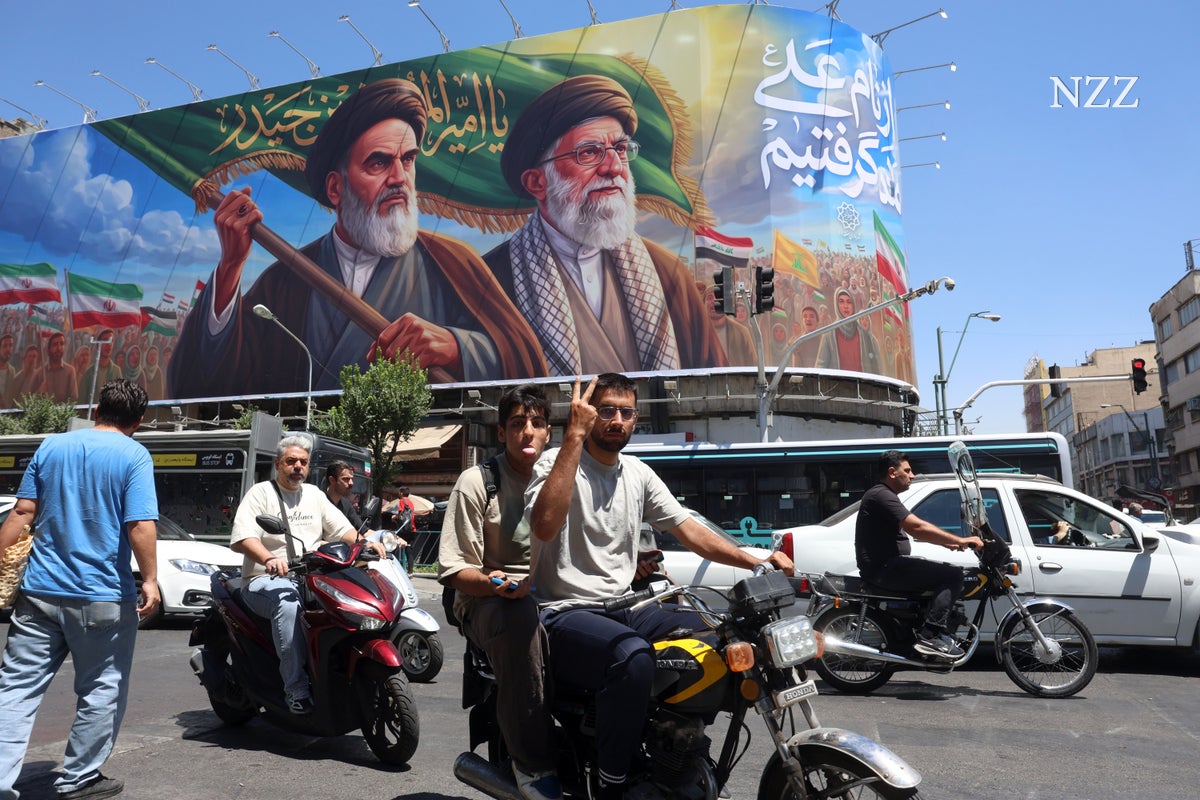
Inside Iran, the framing of the deal is being carefully managed by the leadership to ensure public and political buy-in. According to SRF, the government is characterizing the framework as a victory for its policy of resistance, asserting that the state remains intact and the leadership has not been toppled.
- Parliamentary Leadership: Mohammed Ghalibaf, representing the Revolutionsgarden, has framed the deal as a significant step forward and a partial success.
- Moderate Faction: President Massud Peseschkian has highlighted the potential for the deal to alleviate economic pressure on the Iranian population through the expected easing of sanctions.
- Hardline Opposition: While some elements within the Revolutionsgarden harbor deep-seated distrust toward the United States—citing historical instances of attacks occurring during prior negotiations—open dissent remains muted due to the support of Supreme Leader Modschtaba Chamenei.
The internal political dynamics in Tehran are characterized by a delicate balance between the executive branch’s desire for economic relief and the influence of the Islamic Revolutionary Guard Corps (IRGC) regarding security policy. The Supreme Leader’s endorsement is widely viewed as the final arbiter in such matters, effectively neutralizing organized opposition from factions that view engagement with the United States as ideologically incompatible with the core tenets of the 1979 revolution.
This follows our earlier report, Trump-Iran Deal Opens Strait of Hormuz, Sets 60-Day Nuclear Negotiation Window.
Regional and Diplomatic Implications
The broader implications of this framework extend beyond the bilateral relationship, impacting the wider Middle East. Regional stakeholders have historically viewed U.S.-Iran engagements through the lens of their own security concerns. The prospect of a ceasefire and the lifting of maritime blockades is expected to impact shipping insurance rates and energy transit through the Persian Gulf, a critical artery for global oil and gas supplies. The diplomatic process remains fragile, as previous attempts at long-term de-escalation have been frequently disrupted by proxy conflicts and shifting regional alliances.
Read also: Trump Announces Iran War Nearing End.
Security Protocols at the Bürgenstock
The selection of the Bürgenstock resort for the signing ceremony has necessitated significant security preparations within the canton of Nidwalden. The local government of Nidwalden has confirmed that strict access controls will be in place from June 18 through June 20, 2026.
| Facility | Status |
|---|---|
| Bürgenstock Funicular | Closed until June 20, 20:00 |
| Hammetschwand Lift | Closed until June 20, 20:00 |
| Hiking/Bike Paths | Restricted/Closed in the immediate vicinity |
| Public Bus (PostAuto) | Terminal moved to Obbürgen, Old Post |
While local residents will maintain access to their properties, they are advised to carry identification, as checkpoints will regulate traffic on the roads leading to the resort. Authorities have requested that transit traffic on the North-South axis utilize the Axenstrasse to bypass the Nidwalden region during the event. These measures reflect the logistical requirements for hosting delegations protected by international diplomatic protocols, where the host nation is responsible for ensuring the safety and privacy of the visiting dignitaries.
Find more reporting in our World section.
