
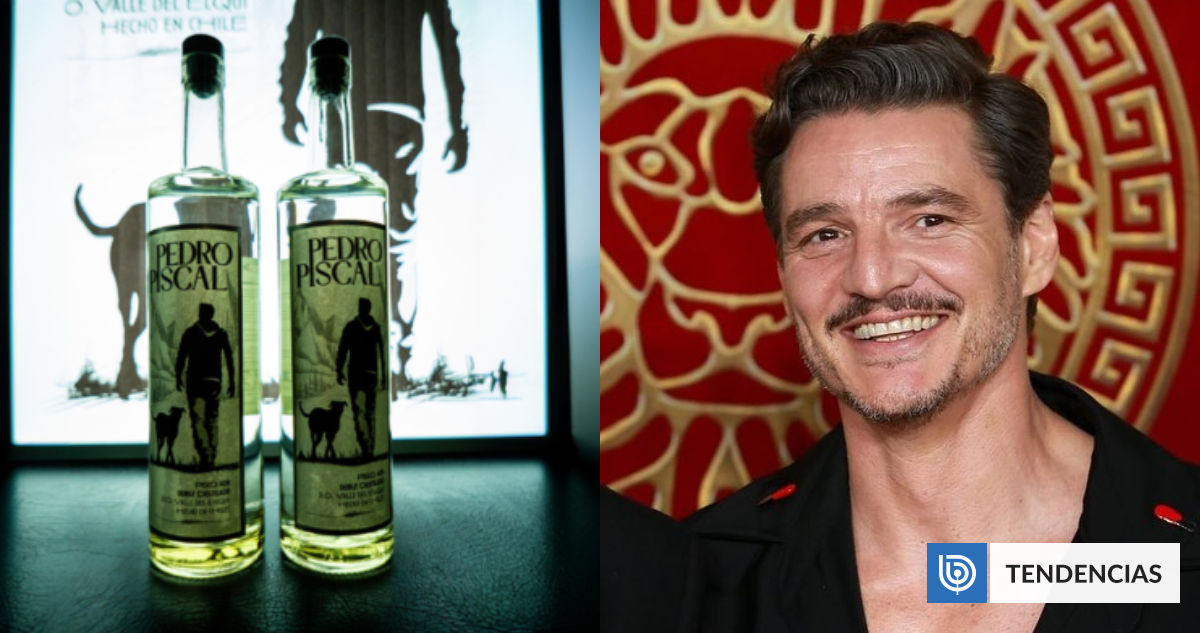
A Chilean entrepreneur has successfully defended his brand, “Pedro Piscal,” after legal representatives for actor Pedro Pascal formally withdrew a nullity lawsuit before the National Institute of Industrial Property (INAPI) on June 5, 2026. The dispute, which lasted nearly three years, centered on intellectual property rights and allegations of commercial confusion.
The Origins of a Contested Brand
The conflict began with an informal idea among friends. According to David Herrera, the creator of the brand, the concept for “Pedro Piscal” emerged in late 2022 during a year-end celebration while he was drinking a piscola. Recognizing the potential for a catchy, marketable name, Herrera officially registered the trademark with INAPI in June 2023.

Following the standard legal process, the brand was published in the Official Gazette. After a 30-day window passed without any third-party opposition, Herrera was declared the owner of “Pisco Pedro Piscal” for a 10-year term in August 2023. The registration covered class 33 for grape brandy and class 35 for business administration. Herrera subsequently moved to professionalize the venture, establishing a production partnership with Pisquera Alba in the Elqui Valley to refine the quality of the spirit.
Legal Escalation and Settlement
The situation shifted in October 2023 when Herrera was contacted by legal representatives for José Pedro Balmaceda Pascal, known globally as Pedro Pascal. The actor’s legal team initially requested the surrender of digital domains associated with the brand to preempt potential litigation. Herrera, viewing the project as a personal venture on the verge of market entry, refused the request. A subsequent financial offer of 2,000 dollars for the brand and the domain “pedro-piscal.cl” was also rejected.

In March 2024, the Silva law firm filed a formal demand for nullity with INAPI on behalf of the actor. The legal argument posited that the brand was exploiting the actor’s fame and posed a risk of consumer confusion. The legal proceedings required Herrera to provide extensive documentation regarding the brand’s intent, the origin of the name, and the scope of his commercial activities in the Chilean market.
“La verdad es que todo esto es abrumante,” Herrera stated regarding the pressure of the multi-year legal battle. The entrepreneur noted that the process forced him to navigate complex intellectual property regulations that are typically reserved for much larger corporate entities.
The dispute concluded this week not through a judicial ruling, but through the voluntary withdrawal of the lawsuit by Pascal’s legal team. This decision ensures that Herrera retains full validity and ownership of his trademark, ending the long-standing uncertainty surrounding his business. According to documentation filed with INAPI, the withdrawal by the actor’s representatives effectively closes the case file, leaving the trademark registration in its original, active status.
Regulatory Context in Chilean IP Law
The resolution of the “Pedro Piscal” case highlights the complexities inherent in the Chilean trademark system, which is governed by the National Institute of Industrial Property. Under current regulations, a trademark owner is granted exclusive rights to the use of a name within specific classifications, such as those Herrera secured for spirits and business administration. When a third party challenges a registration, they must prove that the mark induces confusion or unfairly leverages a pre-existing reputation.
In this instance, the actor’s legal team had sought to invalidate the mark under the premise that the similarity in naming conventions could mislead consumers into associating the product with the internationally recognized actor. However, Herrera’s defense maintained that the name was an original creation based on the popular Chilean cocktail, the piscola, rather than an attempt to mimic the identity of the Hollywood star. The withdrawal of the lawsuit marks the end of a period where Herrera’s business operations were effectively frozen due to the pending legal uncertainty.
Technical Infrastructure for Modern Management
While small business owners navigate intellectual property disputes, large-scale software management has increasingly relied on standardized tools like the Windows Package Manager, or WinGet. This command-line utility, which is managed by Microsoft, allows users to automate the installation and configuration of applications on Windows 10, 11, and Windows Server 2025.
The tool functions through two primary sources: the “msstore,” which hosts apps rated “e” for everyone, and the “winget” community repository. For developers, the tool provides a streamlined way to handle dependencies, such as the VC++ v14 Desktop Framework Package, which may be required on older system builds. The Microsoft.WinGet.Client PowerShell module further enables native interaction with the package manager, allowing users to perform complex tasks like repairing the installation or updating specific software, such as “Visual Studio Code,” via command-line arguments.
Deployment and Troubleshooting
Installation methods for WinGet have evolved to offer flexibility for different user environments. On Windows 11 and 10, users can typically acquire the tool through the App Installer in the Microsoft Store. However, for environments where the store is restricted, such as Windows Sandbox, administrators can manually deploy the tool using the latest appxbundle from GitHub. Other specialized environments, such as “thumbdrive edition” portable builds for Git, are also maintained to ensure compatibility across diverse hardware setups.
As of April 2026, the most recent maintained build of Git for Windows is version 2.54.0. Users looking to integrate these tools into their workflow can verify their installation by invoking the “winget” command in a terminal. If the tool is missing, the Git for Windows installer provides a direct path to implement version management, ensuring that developers can maintain their environments without manual configuration overhead.
