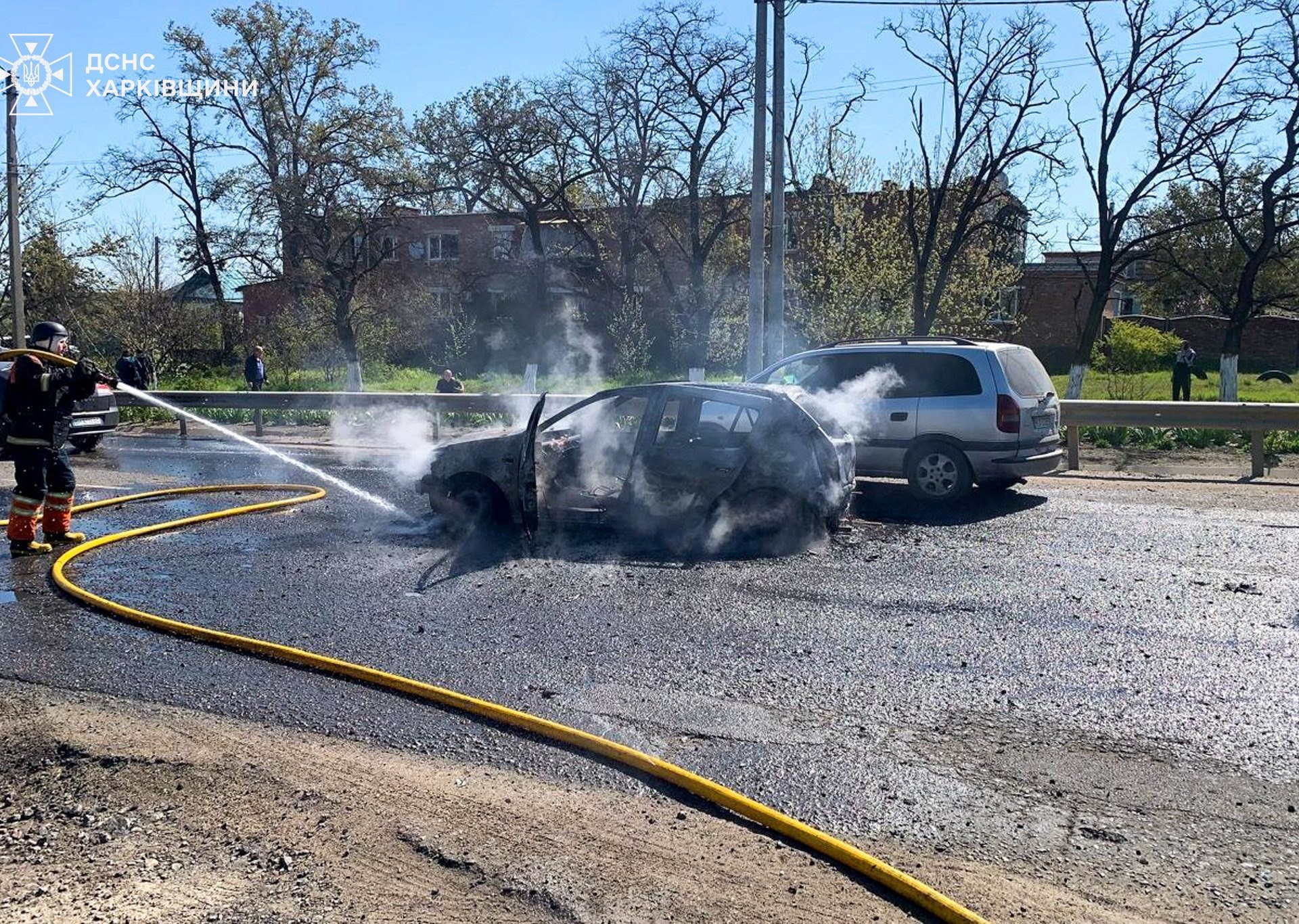
Russian missile attacks struck civilian infrastructure in the town of Merefa in Ukraine’s Kharkiv region on Monday, May 4, 2026, killing at least eight people. The strikes occurred following an unusual overnight drone attack on residential neighborhoods in Moscow, heightening regional tensions just days before Russia’s annual Victory Day parade.
Deadly Missile Strike in Merefa
The mid-morning assault on Merefa resulted in significant civilian casualties and property damage. According to regional officials, the attack hit at least 10 houses and four shops. Governor Oleh Syniehubov confirmed that two men and three women died at the scene, while another man succumbed to his injuries after being transported to a hospital. Two additional men were killed in separate attacks within the Kherson region, as reported by the regional prosecutor’s office.
Governor Syniehubov described the nature of the escalation on Telegram, noting the distance of the target from the front lines:
“Today during the day, the occupiers attacked civilian infrastructure of a town quite far from the front with a missile,” Governor Oleh Syniehubov, Kharkiv Region, via Al Jazeera
cluster (priority): ordsmyth.net
While Russian forces have not issued a formal comment regarding the Merefa strike, the attack appeared to involve an Iskander-type ballistic missile. This event adds to a pattern of daily reports of deaths and injuries since the conflict began in February 2022, despite Moscow’s persistent denial of intentionally targeting non-combatant populations.
Local emergency crews, supported by state rescue services, spent the remainder of Monday working to locate survivors beneath the rubble of the destroyed residential properties. The regional administration indicated that the intensity of the strike caused structural instability in surrounding buildings, forcing local authorities to cordoned off several streets in the center of Merefa to prevent further civilian injuries from collapsing masonry.
Drone Incursions in the Russian Capital
Concurrent with the violence in Ukraine, Moscow experienced a rare series of drone strikes. The Moscow Mayor Sergei Sobyanin reported that drones targeted an upscale neighborhood on Mosfilmovskaya Street, situated approximately 10 kilometers (6.2 miles) southwest of the Kremlin.
Russian missile strikes killed at least six at apartment in Kharkiv
Though the attack on the high-rise building caused visible structural damage—including collapsed walls and broken doors as documented by Russian state broadcaster Rossiya-1—officials stated there were no casualties. Two other drones were intercepted by local air defense systems. The incident underscores a shift in the conflict’s reach; while Kyiv has focused recent efforts on Russian oil refineries and ports, direct drone strikes on the heavily guarded capital remain infrequent.
Russian municipal authorities in Moscow deployed emergency vehicles to the Mosfilmovskaya Street site, where investigators were seen reviewing the debris for components that might indicate the origin of the unmanned aerial vehicles. The breach of the capital’s airspace resulted in temporary flight restrictions at regional airports, according to local aviation monitoring services, as security protocols were elevated in response to the unexpected intrusion.
Strategic Implications for Victory Day
The security environment in Moscow is under intense scrutiny as the country approaches its annual Victory Day commemorations. President Volodymyr Zelenskyy, speaking from a summit in Armenia, linked the drone activity to changes in Russia’s ceremonial plans. This year, the parade will proceed without the traditional display of military hardware or cadets, a decision widely interpreted as a response to the perceived threat of further Ukrainian strikes.
Zelenskyy remarked on the atmosphere in the Russian capital:
“They fear drones may buzz over Red Square,” President Volodymyr Zelenskyy, via Al Jazeera
The decision to modify the Victory Day schedule reflects a broader tactical reassessment within the Russian security apparatus regarding the vulnerability of high-profile public events. Military analysts and regional observers have noted that the absence of heavy equipment in the Moscow parade marks a significant departure from the standard display of state power, signaling a prioritization of defensive measures over traditional pageantry.
As recovery efforts continue in Merefa, where officials state it will take several days to clear the debris, the broader conflict shows little sign of stabilization. The massive scale of infrastructure destruction and the persistent threat of long-range strikes continue to define the reality for civilians on both sides of the border. For observers, the events of May 4 highlight a volatile transition period, where the massive scope of military operations—ranging from ballistic missile barrages to targeted drone flights—continues to challenge existing defenses and diplomatic postures.
ail: emily.johnson@headlinez.news
Bio:
Emily Johnson serves as News Editor at Headlinez.News, overseeing the publication’s coverage of national and breaking stories. She has worked in journalism for more than 12 years, building a reputation for precision, credibility, and rapid-response reporting. Emily’s editorial philosophy focuses on clear, fact-based writing that helps readers understand the full context behind the day’s most important events. Her expertise bridges traditional reporting and modern digital news strategies.
Expertise: Breaking news, political reporting, fact-checking, newsroom coordination, public affairs.
Location: Washington, D.C., USA