
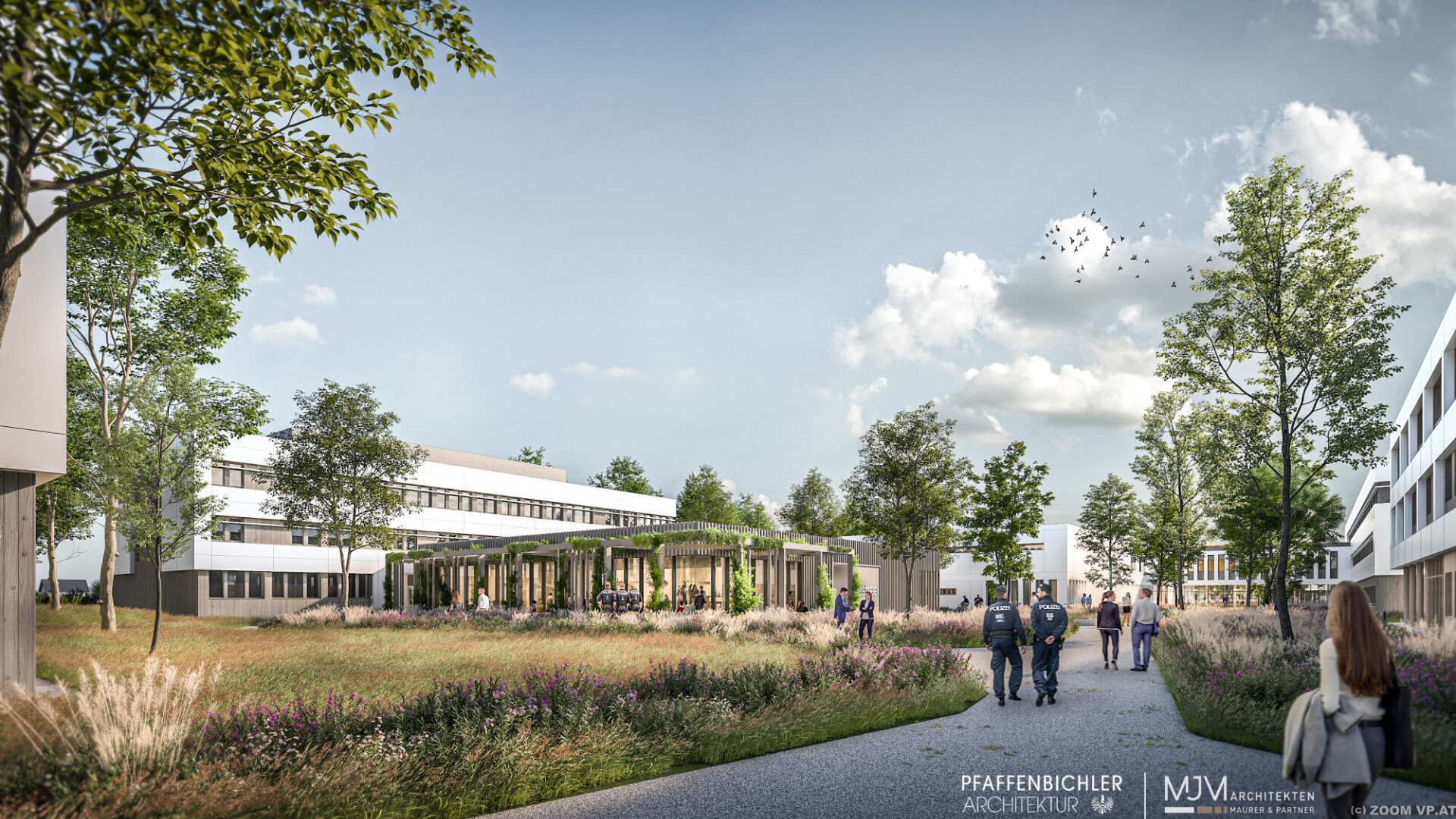
The state of Lower Austria has officially approved the preliminary design for a new centralized police headquarters in St. Pölten, marking a significant milestone in a long-term infrastructure project. Scheduled for a 2027 construction start, the facility will consolidate multiple law enforcement units into a single, modern hub by 2030.
Consolidating Police Operations in St. Pölten
The project, located at the “Schanze” on the western outskirts of the provincial capital, represents one of the largest construction initiatives in the region. By moving various police departments—which are currently scattered across different locations—into a unified complex, the government aims to increase operational efficiency. According to reporting by ORF, the project has already cleared several regulatory hurdles, including a formal determination that it does not require a complex Environmental Impact Assessment (UVP), a factor that officials say will expedite the timeline.
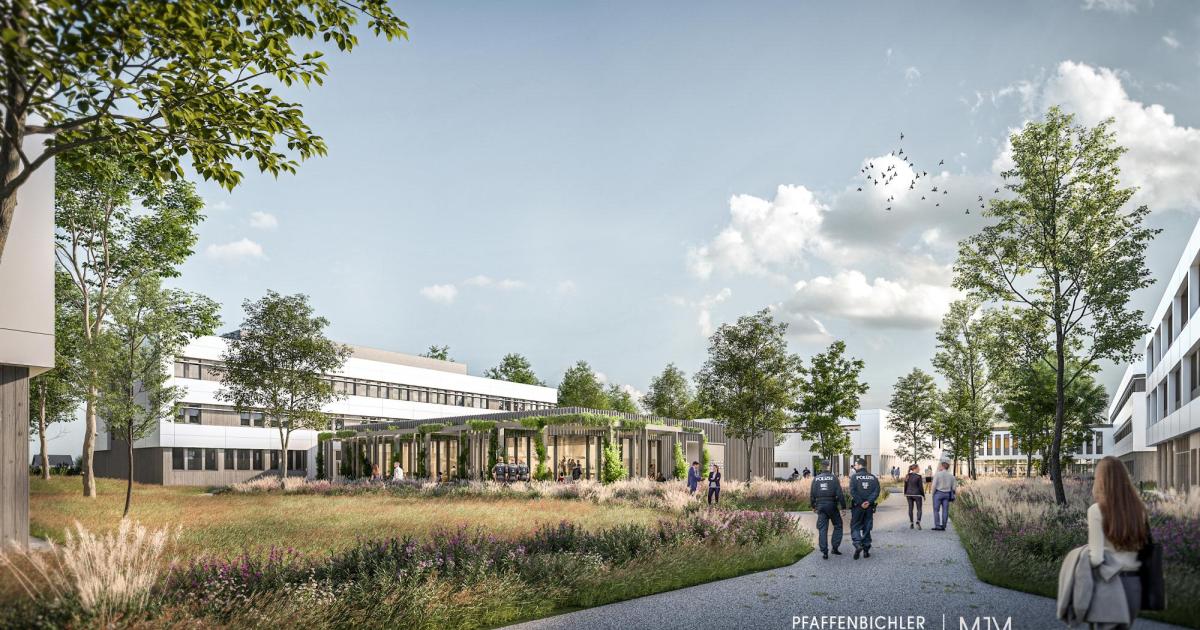
The facility is designed as an ensemble of nine buildings covering approximately 36,000 square meters of gross floor area. The architectural plans were developed by the consortium ARGE Pfaffenbichler, Maurer and Partner. The site layout is specifically engineered to accommodate high-security requirements and the logistical demands of rapid deployment. The complex will house:

- The Lower Austrian State Police Directorate
- The State Office for State Protection and Extremism Combating
- The State Criminal Police Office
- The Einsatzabteilung (Operational Department) with a dedicated training center
- The State Traffic Department and Logistics Division
- The St. Pölten City Police Command
Beyond standard office space, the facility will include secure underground parking, specialized forensic laboratories, and a centralized communications hub. Documentation from the Lower Austrian state government indicates that the site selection at the “Schanze” was chosen specifically for its proximity to major transit arteries, facilitating faster response times for the State Traffic Department and the operational units, which currently face congestion issues due to their dispersed urban locations.
Project Timeline and Regulatory Progress
The path to the current design approval began in earnest with the signing of an organizational and financing agreement in December 2024 involving the federal government, the state of Lower Austria, and the city of St. Pölten. Following that, the city council moved to adjust land-use and development plans in March 2026. As noted by the Kurier, the project is managed by the state’s Department of Building and Property Management in cooperation with NÖ Landeshauptstadt Planungsges.m.b.H. (NÖPLAN).
The regulatory trajectory remains on a tight schedule. With the preliminary design now cleared, the focus shifts to the detailed architectural planning phase. Current records from the St. Pölten municipal planning department indicate that the project is tracking toward an official submission in December 2026, with a targeted groundbreaking in the summer of 2027. The final handover to the State Police Directorate is projected for the first half of 2030, provided that the procurement of construction contracts proceeds without legal delays, a common risk factor in large-scale public infrastructure projects in Austria.
While the UVP exemption has shortened the administrative lead time, the project must still adhere to strict federal building codes regarding police facilities. The State Police Directorate has confirmed that the current design includes provisions for future scalability, allowing for potential expansion of the digital infrastructure and server capabilities as the needs of the State Office for State Protection and Extremism Combating evolve.
Official Reaction and Strategic Goals
State and federal officials have framed the project as a critical investment in public safety. Lower Austrian Governor Johanna Mikl-Leitner emphasized the necessity of modern infrastructure for effective security work. “Sicherheit zählt zu den wichtigsten Grundbedürfnissen der Menschen. Mit dem neuen Polizeisicherheitszentrum errichten wir gemeinsam mit dem Bund eine moderne und leistungsfähige Infrastruktur für die Sicherheitsarbeit in Niederösterreich. Die Freigabe des Vorentwurfs ist ein wichtiger Schritt auf dem Weg zur Umsetzung dieses bedeutenden Zukunftsprojekts,” said Mikl-Leitner, as reported by NÖN.

Federal Interior Minister Gerhard Karner echoed these sentiments, highlighting the tactical advantages of the centralized location. “Die Polizei-Inspektionen als Basis und ein neues zeitgemäßes Sicherheitszentrum in der Landeshauptstadt sind wesentlich für die Sicherheit in Niederösterreich. Im neuen Sicherheitszentrum sind viele Einheiten unter einem Dach. Das bedeutet noch mehr Schlagkraft und Effektivität im Kampf gegen die Kriminalität,” stated Karner, according to Heute.
Internal police communications released alongside the design announcement emphasize that the consolidation will allow for the retirement of several aging, inefficient, and seismically outdated buildings currently utilized by the provincial police force. The cost-sharing agreement between the Federal Ministry of the Interior and the state government is structured to prioritize the long-term reduction of maintenance costs associated with leasing and operating multiple disparate properties.
Managing Local Challenges
The current progress follows a period of localized friction. Early in the planning stages, protests from local residents led to a shift in the project’s specific site within the city. Having navigated these initial concerns, the project partners—the state government and the federal Interior Ministry—now emphasize the collaborative nature of the development. Christoph Reiter-Havlicek, representing the building authority, confirmed that the successful release of the preliminary design allows the team to accelerate the next phase of the project: “Mit der Freigabe des Vorentwurfs ist ein wichtiger Projektschritt abgeschlossen. Nun können wir die Entwurfsplanung vorantreiben und die nächsten Schritte für die Umsetzung setzen.”
Public records indicate that the St. Pölten city council addressed resident concerns regarding traffic impact by commissioning an independent traffic flow analysis for the Schanze area. The findings, presented in early 2026, suggest that the planned access points to the complex are sufficient to handle the anticipated surge in official police vehicle traffic during shift changes. Furthermore, the city has committed to integrating the site into the municipal transit grid to reduce the reliance on private vehicles for administrative staff, a move that has helped mitigate some of the environmental concerns raised during the preliminary public consultation period.
As of late 2026, the primary outstanding variables involve the finalization of long-term security protocols for the perimeter of the complex and the integration of advanced smart-building technologies. The State Police Directorate maintains that these systems are essential for protecting the sensitive data handled by the State Criminal Police Office, though specific technical specifications remain classified for security reasons.
