
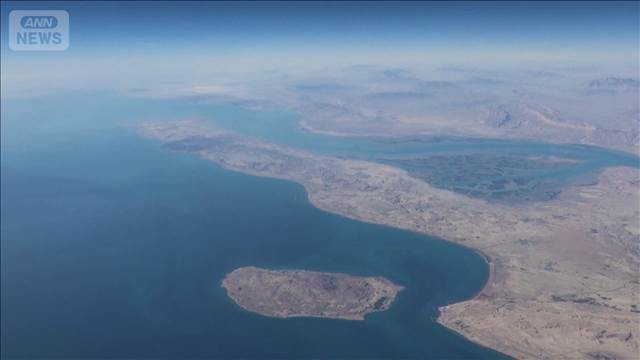
United States forces conducted a series of strikes against Iranian military facilities on May 27, 2026, targeting drone infrastructure in the southern region of the country. The operation, which followed the reported destruction of four unmanned aerial vehicles near the Strait of Hormuz, has triggered claims of retaliatory attacks against American bases in the Middle East.
Military Operations and the Strait of Hormuz
The escalation in hostilities occurred as diplomatic efforts to resolve the ongoing conflict between the United States and Iran continued. According to reporting by Yahoo! News, American officials confirmed that military units engaged in defensive actions on May 27. The engagement involved the destruction of four Iranian suicide-model drones that were identified as a threat to maritime navigation near the Strait of Hormuz.
The Pentagon’s press secretary, Major General Patrick Ryder, stated during a briefing on May 27 that the U.S. Central Command (CENTCOM) directed the strikes following “persistent and aggressive maneuvers” by the Islamic Revolutionary Guard Corps (IRGC) Navy. According to CENTCOM’s official log, the engagement began at approximately 04:15 local time when U.S. Navy destroyers patrolling the Strait detected the drones exiting Iranian territorial waters on an intercept course toward commercial tankers. U.S. officials asserted that the drones were configured with explosive payloads, a claim consistent with previous intelligence reports regarding the Shahed-136 series.
Beyond the drone interceptions, the military operation extended to ground-based infrastructure. Officials stated that a ground control facility in Bandar Abbas was targeted as it prepared to launch a fifth drone. Local reports from the area corroborated the strikes, with media outlets noting that residents heard explosions and observed air defense systems being activated in the vicinity of Bandar Abbas.
Satellite imagery analyzed by the Institute for the Study of War (ISW) and released on May 28 indicates significant structural damage to the primary hangar at the Bandar Abbas facility, which serves as a logistics hub for IRGC drone operations. While the U.S. maintains the facility was an active military site, the Iranian Ministry of Foreign Affairs issued a formal protest through the Swiss Embassy in Tehran—which represents U.S. interests in the country—denying that the site was an active launch point, characterizing it instead as a “civilian-dual use communication hub.”
This action follows a similar pattern of engagement earlier in the week. On May 25, American forces reported conducting strikes against missile launch sites and vessels involved in mining operations in southern Iran, characterizing those actions as necessary for self-defense. Military analysts tracking the region noted that these strikes targeted mobile coastal defense cruise missile (CDCM) launchers located near Qeshm Island, which the U.S. military alleged were being prepared to target international shipping lanes.
Claims of Retaliation and Regional Tensions
The situation took a volatile turn following the strikes on Iranian facilities. NNN reported that Iranian media outlets announced a retaliatory response, claiming that forces had struck United States military installations elsewhere in the Middle East. While the specifics of these counter-strikes remain fluid, reports indicate that a drone attack occurred at an American base in Kuwait.
For more on this story, see Iran Threatens New Retaliation After U.S. Strikes in Strait of Hormuz.
The Kuwaiti Ministry of Interior issued a statement on May 27 confirming that security forces responded to an “aerial intrusion” near the Ali Al Salem Air Base. However, the Kuwaiti government stopped short of confirming a successful strike, noting only that “defensive fire was discharged to neutralize an unidentified object.” In contrast, the Iranian Tasnim News Agency claimed that a “successful precision strike” had been carried out against U.S. logistics depots at the base, citing an anonymous IRGC commander. The U.S. Department of Defense has officially denied these claims, stating that no casualties or significant infrastructure damage were sustained at any U.S. installations in the Gulf Cooperation Council (GCC) states.
Despite the intensification of military activity, American authorities maintain that their actions remain strictly defensive. Officials have explicitly stated that the strikes were intended to preserve the ceasefire rather than violate it, framing the military posture as an exercise in restraint aimed at neutralizing identified threats to regional stability.
The regional diplomatic fallout has been swift. Saudi Arabia and the United Arab Emirates both issued statements on May 28 calling for “maximum restraint” from all parties. Diplomatic sources in Riyadh indicated that the GCC is concerned that the U.S.-Iran tit-for-tat exchanges could disrupt the ongoing regional de-escalation efforts that had previously led to the restoration of diplomatic ties between Tehran and Riyadh in 2023.
Diplomatic Stance and Future Negotiations
Amid the exchange of fire, the broader context remains the stalled negotiation process. The U.S. executive leadership has publicly addressed the state of these discussions, signaling that while an agreement is desired by the Iranian side, the current terms are insufficient.

This follows our earlier report, US-Iran Tensions Escalate in Hormuz Amid Military Strikes and Truce Talks.
“Iran is strongly hoping for an agreement. But we are not there yet. We are not satisfied, but we will be satisfied eventually. Otherwise, we will do what we must until it is finished.” — U.S. President, via NNN
The Iranian lead negotiator, Ali Bagheri Kani, responded to the President’s comments during a televised address on May 28, accusing the U.S. of “bad faith” and arguing that the military strikes were timed specifically to undermine the progress made during the latest round of indirect talks held in Doha. The European Union’s External Action Service (EEAS), which serves as the coordinator for these negotiations, issued a statement urging both sides to return to the table, warning that “the window for a sustainable diplomatic solution is narrowing rapidly.”
The administration has also clarified its position regarding the Strait of Hormuz, emphasizing that while the United States will maintain a surveillance presence in the waterway, it does not seek to exercise unilateral control over the route. This stance appears to be a core component of the ongoing diplomatic leverage strategy.
Senior officials at the U.S. State Department, speaking on condition of anonymity, explained that the strategy is designed to ensure the flow of global energy supplies while simultaneously signaling that the U.S. will not tolerate the “weaponization of maritime corridors.” On May 28, the International Maritime Organization (IMO) expressed “grave concern” over the safety of commercial shipping, urging member states to avoid the Strait of Hormuz until a formal de-confliction mechanism is established.
The strategy reflects a dual-track approach: maintaining the capacity for a full-scale resumption of hostilities while simultaneously pressuring Tehran to make concessions at the negotiating table. As of May 28, the situation remains precarious, with the threat of further escalation dependent on the next moves of both military commands and the progress of the stalled diplomatic talks. Intelligence assessments from the British Ministry of Defence suggest that the IRGC is currently repositioning its naval assets, a move that the U.S. military is monitoring closely as a potential indicator of further retaliatory operations.
