
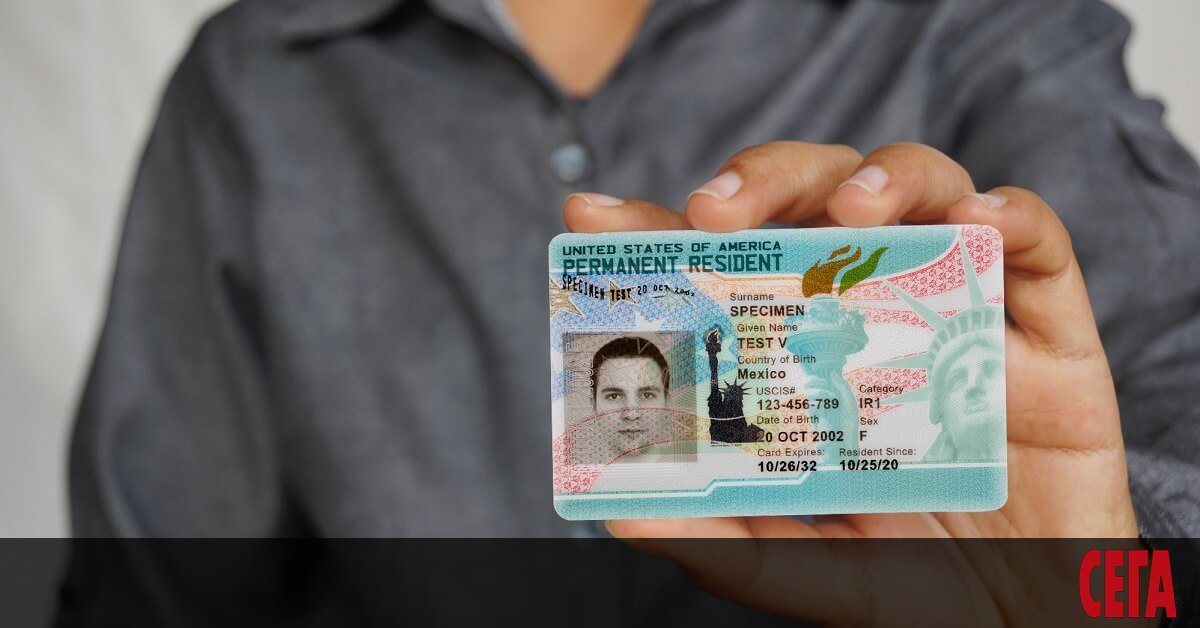
The U.S. Department of Homeland Security has partially eased restrictions on green card applicants, allowing some to remain in the country while their applications are processed, according to multiple reports. The shift marks a reversal of earlier policies that required most foreign nationals to return to their home countries to apply for permanent residency. The change, announced by the agency, aims to streamline immigration processes and reduce backlogs, though it has sparked mixed reactions from advocacy groups and industry leaders.
Policy Shift: Who Is Affected?
The revised guidelines, first reported by Bloomberg, exempt certain categories of applicants, including those deemed to be in the national interest or those contributing economically. “Most qualified specialists will no longer need to leave the U.S. to obtain permanent residency,” the department stated, emphasizing that the adjustment would prioritize cases involving “national benefit or economic advantage.” However, the rule still mandates that others—particularly those on temporary visas—must return to their home countries to apply.
This policy change reverses a 2024 directive under the Trump administration, which had barred applicants from submitting green card petitions while residing in the U.S. The previous rule, highlighted by Club Z, had faced criticism for creating logistical hurdles for employers and employees alike. “The system was designed to ensure temporary visitors leave after their stay,” a department spokesperson said, adding that the new approach would free up resources to focus on “priority cases like victims of crime or human trafficking.”
Industry Reactions and Concerns
The adjustment has drawn both relief and skepticism. The New York Times reported that the policy shift could ease pressures on tech and healthcare sectors, which rely heavily on foreign workers. However, industry experts caution that the exemptions are narrowly defined. “Over half of green cards issued annually were previously processed from within the U.S., and the new rules risk leaving many in limbo,” noted a spokesperson for a business advocacy group, citing data from BNT News.
The U.S. Citizenship and Immigration Services (USCIS) acknowledged that the policy would “prioritize processing for cases involving national security, economic growth, and humanitarian needs.” Yet, the agency stopped short of fully reinstating the pre-2024 system, which allowed applicants on temporary visas—including students and tourists—to apply for green cards while in the country. “The goal is to balance efficiency with enforcement,” a USCIS official said, without providing further details.
Historical Context and Unanswered Questions
The U.S. green card system has long been a flashpoint in immigration debates. For over 50 years, legal residents—regardless of visa type—could apply for permanent residency from within the country. The 2024 rule change, as Club Z detailed, disrupted this process, forcing millions to navigate complex procedures from abroad. The current adjustment, while welcomed by some, leaves many questions unresolved. For instance, the exact criteria for “national interest” remain undefined, and the timeline for implementation is unclear.
“This is a partial fix, but it doesn’t address the root issues,” said an immigration lawyer quoted in BNR News. “Employers and workers still face uncertainty, and the backlog of applications is far from resolved.”
What’s Next for Immigrants and Employers?
The revised policy is expected to take effect in the coming months, but its impact will depend on how broadly the exemptions are applied. Advocacy groups are urging the government to expand the criteria for in-country applications, arguing that the current framework favors high-income earners over essential workers. Meanwhile, businesses are monitoring the changes closely, as the green card process is critical for hiring and retaining talent.

As the U.S. grapples with its immigration priorities, the latest shift underscores the ongoing tension between enforcement and practicality. For now, the policy offers a temporary reprieve for some, but the broader debate over how to manage migration remains unresolved.
