
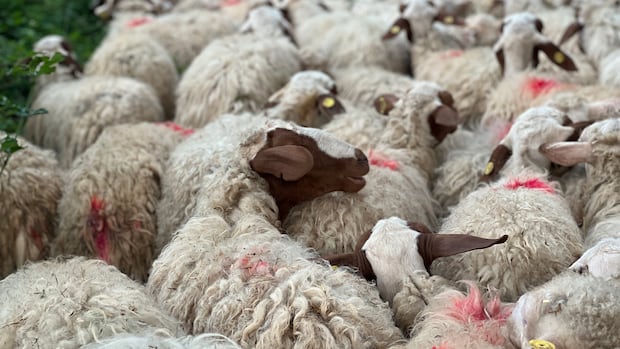
European Wool Industry Seeks Revival Amidst Rising Costs and Waste
A gathering of producers, designers, and activists in Italy this week signaled a growing movement to revitalize the European wool industry, which is facing economic pressures that lead to widespread waste of a sustainable fiber.
The event, hosted at the farm of Ilaria Venturini Fendi near Rome, brought together stakeholders to discuss solutions for making wool production local, ethical, and circular. Across Europe and North America, wool – a naturally fire-resistant and biodegradable material – is often burned or discarded due to processing costs exceeding returns. “It’s tough producing wool in Italy,” said Fendi, who keeps 600 sheep at her agriturismo. “It’s become a waste product. We need to change ideas — to start reshaping economies.” This decline in local wool processing has significant implications for rural communities and traditional farming practices.
Experts at the World Hope Forum highlighted the need for clearer fiber origin regulations and increased support for producers. Blátnaid Gallagher, founder of Ireland’s Galway Wool Co-op, is advocating for the EU to implement regulations that allow consumers to identify the origin of wool products, reducing reliance on cheaper imports. “We’re hoping the EU will give the consumer the chance to know where fibre actually grows,” Gallagher said. Others, like Netherlands-based Canadian designer Cynthia Hathaway, are using “soft mob walks” – leading sheep into cities – to raise awareness about the ecological and cultural value of wool and the practice of transhumance, the seasonal migration of livestock.
Innovative approaches to wool processing, such as those employed by Manteco in Italy, are also gaining traction. The company’s MWool, made from recycled post-consumer garments, significantly reduces carbon emissions compared to virgin wool. CEO Matteo Mantellassi believes recycled wool can rival the quality of virgin fibers and is advocating for a carbon tax on textiles with a large environmental footprint. The push for sustainable practices comes as the industry faces a stark reality: less than one per cent of global textile fibres come from wool, according to World Animal Protection. Isabella Rossellini, actor and farmer, emphasized the need for “slowdown money” – long-term investment – rather than solely focusing on startup funding to support these initiatives.
Organizers say the forum’s discussions will inform policy debates ahead of the UN’s International Year of Rangelands and Pastoralists in 2026 and the first meeting of the EU Focus Group on sustainable wool value chains, with a focus on securing public-private partnerships to support producers and ensure the long-term viability of the European wool industry.
