
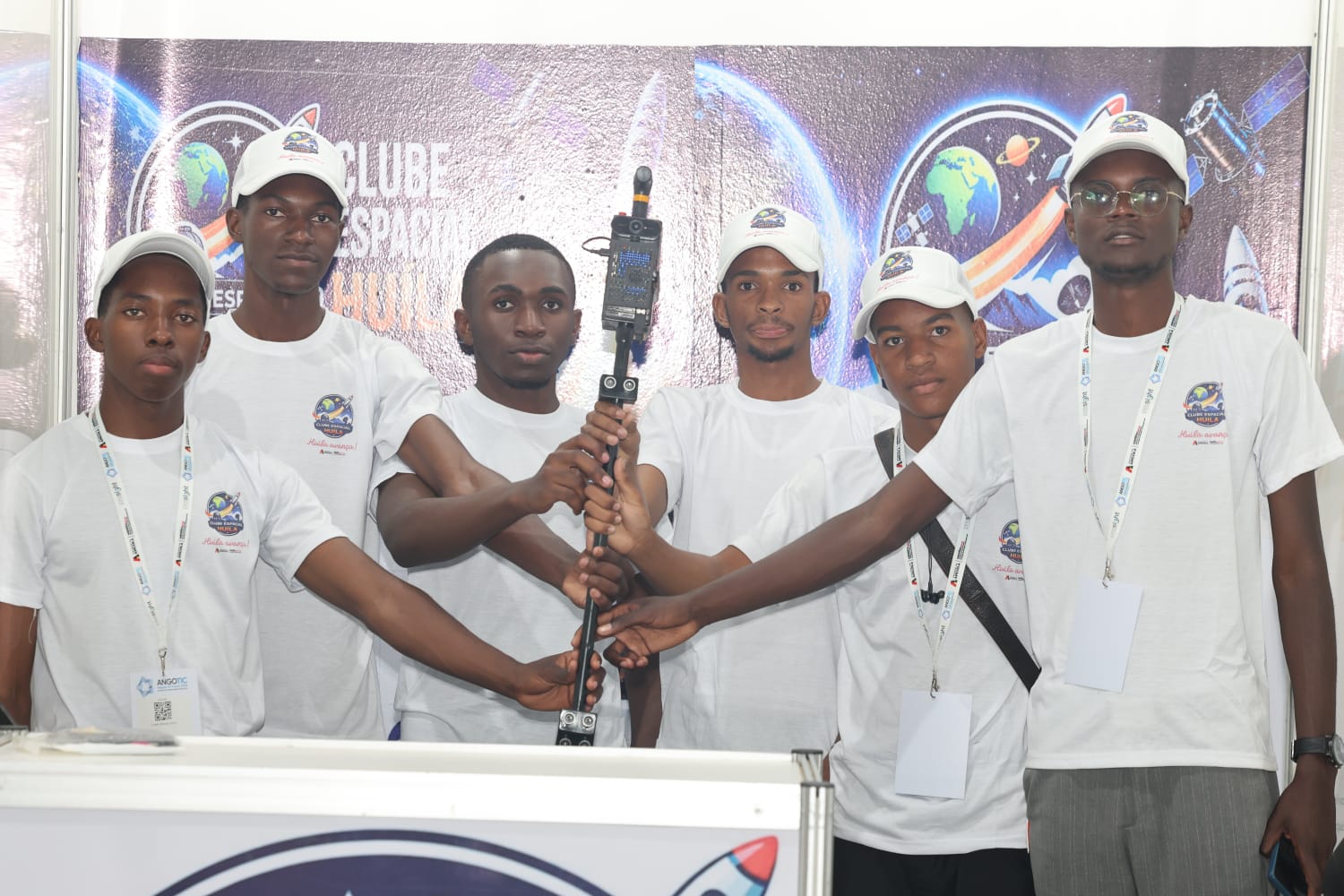
Students from the Huíla province in Angola unveiled a prototype “intelligent assistive cane,” known as BIA, at the ANGOTIC 2026 technology conference. The device integrates artificial intelligence and proximity sensors to assist users with visual impairments, providing real-time navigation support and emergency communication features without requiring an active internet connection.
How the BIA Technology Functions
The BIA device, developed by student researchers Angelino Kapangue, António Chimuco, Kelson Lopes, and Misael Lutembo, is designed to function as an extension of the user. According to reporting by SAPO, the cane operates independently of mobile phone networks or cellular data, relying instead on onboard processing to guide users through their environment.
“The idea was to create a tool that is not just a support, but a guide that understands the environment and communicates with the user in a natural way,” said Kelson Lopes, via Forbes África Lusófona.
Kelson Lopes, via Forbes África Lusófona
The system is designed to identify hazards that traditional white canes might miss, such as obstacles located above the waistline. By utilizing ultrasonic or millimeter-wave radar, the device provides haptic or audible feedback to the user, alerting them to nearby objects or structural irregularities in their path. Unlike standard canes, which rely on physical contact to detect terrain changes, the BIA employs sensors to map the immediate surroundings in three dimensions, allowing the user to anticipate obstacles before making contact.
Safety Features and Emergency Response
Beyond navigation, the development team prioritized user safety through automated communication protocols. The cane is programmed to transmit location data via SMS in emergency situations, ensuring that users can request assistance even when they are unable to operate a standard mobile device. This functionality is critical in regions where consistent internet connectivity may not be guaranteed, providing a reliable safety net for users in both urban and rural settings.
“We focused on the reality of our users, ensuring that the device remains functional in areas without data coverage,” added Kelson Lopes, via Forbes África Lusófona.
Kelson Lopes, via Forbes África Lusófona
The integration of voice communication in Portuguese is a central feature of the project, aimed at increasing accessibility for the local population. By combining GPS mapping with these emergency triggers, the team intends to provide a higher degree of autonomy for people with visual disabilities living in urban centers. This localization is a significant departure from many imported assistive technologies that often lack linguistic support for regional dialects or specific cultural contexts.
Innovation and Academic Impact
The presentation of the BIA at ANGOTIC 2026 highlights a broader trend of youth-led innovation within the Angolan technology sector. ANGOTIC, the Angolan International Information and Communication Technologies Forum, serves as a primary stage for showcasing national digital transformation projects. The project serves as an academic response to the practical challenges faced by individuals with limited mobility. By repurposing the traditional cane into a smart system, the developers are attempting to bridge the gap between high-tech AI solutions and everyday assistive tools.
In the field of assistive robotics, the transition from laboratory prototypes to consumer-ready hardware typically involves rigorous testing for durability, battery life, and sensor accuracy. The BIA project reflects a growing global interest in “frugal innovation”—the practice of creating high-impact, low-cost technological solutions that address specific societal needs without requiring expensive infrastructure. By focusing on onboard processing, the team avoids the latency issues often associated with cloud-based AI, which is a common limitation in assistive navigation tools.
While the project is currently framed as an academic solution, its debut at a major technology event signals potential interest in the scalability of low-cost, offline AI hardware. The team’s stated focus remains on increasing safety and inclusivity, positioning the BIA not just as a tool for movement, but as a comprehensive navigation assistant for those who need it most.
Find more reporting in our Tech section.
