
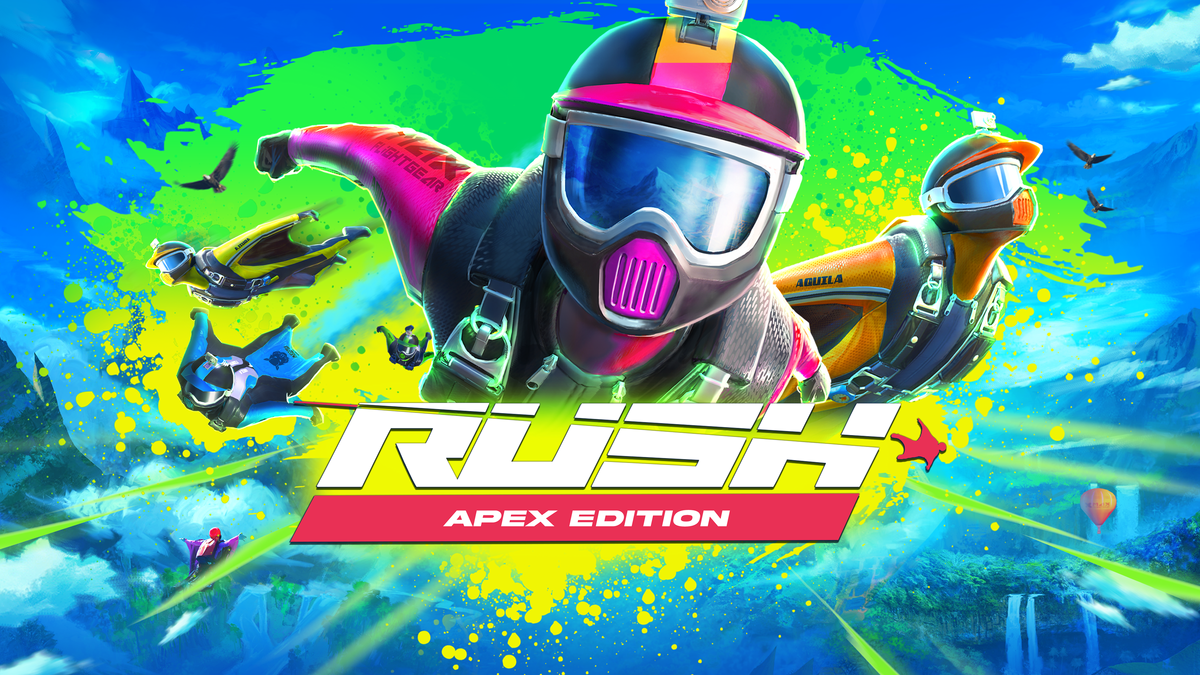
Wingsuit Racing Game ‘RUSH: Apex Edition’ Launches on PlayStation VR2
The wingsuit racing game RUSH has returned today with the release of RUSH: Apex Edition on PlayStation VR2, bringing updated visuals and expanded multiplayer to the virtual reality platform.
Developed by The Binary Mill, the new edition features revamped lighting and textures, and supports online multiplayer matches for up to 12 players – a significant increase from previous versions. The game offers four solo modes including ‘Races,’ ‘Time Attack,’ ‘Score Challenge,’ and ‘Free Flight,’ alongside the expanded online component. Performance reaches a native 120fps on the PlayStation 5 Pro, and 90fps on the standard PS5.
Gameplay utilizes arm movements for steering and altitude control, with speed boosts awarded for navigating close to terrain and reaching checkpoints. Adaptive trigger support on the PlayStation VR2 controller enhances immersion. The game’s initial platform jump uses gaze tracking, though some reviewers noted the game’s foundations show its age. The availability of VR titles like this is crucial as the virtual reality market continues to expand.
RUSH: Apex Edition is available now on PlayStation VR2, while previous versions remain available on PC VR, Pico, PSVR, and Quest. This release provides a second life for the title, as the PlayStation VR2 lacks backward compatibility with the original PlayStation VR.
Developers stated they are pleased to be delivering the best way to play RUSH, and will continue to monitor player feedback for potential updates.
RUSH: Apex Edition brings the 2017 wingsuit racer back today on PlayStation VR2, read on for our full impressions.
The Binary Mill has been going all in on PlayStation VR2 this last year, delivering high quality ports for Into Black and Resist while taking full advantage of PS5 Pro enhancements. More than eight years since RUSH first appeared on Gear VR, later followed by subsequent ports and updates, it’s now returned with some welcome changes, like expanding online multiplayer to support 12 players.
RUSH: Apex Edition adds some appreciated visual upgrades like revamped lighting and textures, and it looks great in motion. Subtle touches like your mask showing frost in the corners as you glide through this icy mountain are rather nice, though I do wish the landings were smoother as you reach the end. Performance feels great at a native 120fps on PS5 Pro, while the base PS5 supports 90fps.
Four solo modes are included alongside online multiplayer. Standard ‘Races’ against the AI earn medals for a top three finish, and those convert into points, unlocking more courses and wingsuit customization options. ‘Time Attack’ involves beating your own scores, ‘Score Challenge’ adds an interesting twist where gliding through a specific part of a checkpoint ring gets a better score. Finally, ‘Free flight’ mode lets you explore without any course restrictions.
Races are RUSH’s biggest draw. Visually diverse environments set the scene well and each hosts dozens of courses that follow different paths, though said courses begin feeling very similar after a while. Even still, there’s an initial rush (no pun intended) as you descend, gliding your way across these courses in hopes of being first. Failing to reach a checkpoint adds a five second penalty, forcing you to follow a specific path to have any chance of winning.
The initial platform jump uses gaze tracking to determine you’re looking forward, asking you to hold this for three seconds before the race begins. That’s tracked by a pointer and while you can swap to a less noticeable one, not using eye tracking for this feels like a missed opportunity. It’s moments like this that show the game’s aging foundations, something that also applies to the control scheme.
Gliding through and steering involve lifting your arms up to different positions. Raise both at once to ascend, down to descend, or alternate your hand movements here for going left and right. A functional but basic approach that leaves you holding your arms out, though it’s a better choice than using analog sticks. For greater immersion, putting a fan on feels great as the cold “wind” hits you while racing.
You can build up speed boosts in two ways: either reaching checkpoints or gliding close to a wall and the ground, and I enjoy how RUSH: Apex Edition rewards risk takers with the latter. It’s a critical balancing act as those boosts can be the difference between 1st and 2nd, but a single collision is all it takes to end your run. Boosting also benefits from adaptive trigger support on PlayStation VR2.
Descending through these courses remains satisfying, though that feeling becomes fleeting in longer stints. I’m having plenty of fun messing around in the lobbies where you can shoot some hoops, or shoot other players with dart guns; I’m just not compelled to stick it out much longer with the main game.
Given that PlayStation VR2 lacks backward compatibility with the original PlayStation VR, I’m pleased more games are getting a second life, though RUSH’s aging gameplay makes it a harder recommendation in 2025. Still, Apex Edition is a great remaster effort from The Binary Mill that’s the best way to play.
RUSH: Apex Edition is out now on PlayStation VR2, while previous versions remain available on PC VR, Pico, PSVR, and Quest.
