
The global race for artificial intelligence dominance is increasingly reliant on a single company: ASML, a Dutch manufacturer of advanced semiconductor equipment. With a market capitalization of roughly $385 billion, ASML’s lithography systems are essential for producing the high-end microprocessors powering the current AI boom, making the company a critical, and increasingly scrutinized, player in international tech policy [[1]]. As CEO Christophe Fourquet navigates shifting geopolitical pressures and a complex global market,the future of chipmaking – and potentially AI itself – hangs in the balance.
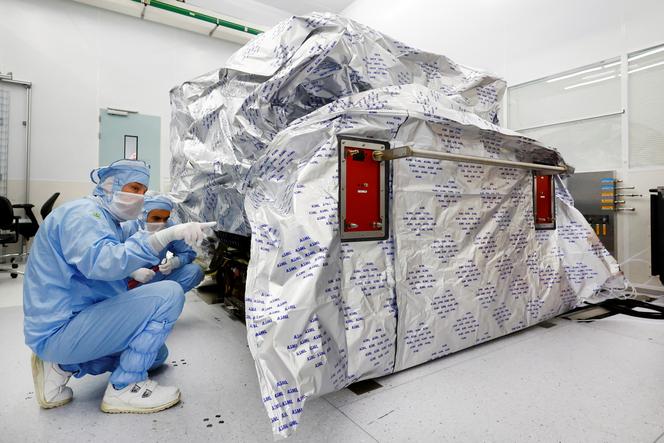
ASML, a Dutch tech giant with a market capitalization of €355 billion (approximately $385 billion USD), is at the center of the escalating competition between the United States and China for dominance in the artificial intelligence (AI) market. The company’s strong financial performance, including €2.1 billion in profits for the third quarter of 2025, has made it a critical player in the global semiconductor industry, and the Netherlands – and the city of Eindhoven where it originated – are keen to prevent any potential relocation of its operations.
The company’s extreme ultraviolet (EUV) lithography systems, priced at $340 million each, are essential for etching the most advanced microprocessors. Without ASML’s technology, the production of processors needed for generative AI would be impossible. This positions ASML as a key enabler of the current AI boom.
Christophe Fourquet, 52, took the helm of ASML in 2024, succeeding Peter Wennink. He recently acknowledged the company is facing “growing uncertainties,” despite having joined ASML seventeen years prior. A potential decline in sales to China, which currently accounts for more than 30% of ASML’s production, is a key concern for the CEO. While investments in data centers for AI by primarily American tech giants are substantial – totaling tens of billions of dollars – it’s unclear whether these will fully offset any slowdown in the Chinese market.
Il vous reste 74.9% de cet article à lire. La suite est réservée aux abonnés.
