

A phase 2 clinical trial published last month showed that the experimental drug elraglusib, when combined with standard chemotherapy, doubled one-year survival rates for patients with metastatic pancreatic cancer—a disease with a historically grim prognosis. Researchers at Northwestern University reported a 38% reduction in death risk, marking one of the few recent breakthroughs in a cancer type that has long resisted treatment advances.
A Rare Win in Pancreatic Cancer Treatment
Pancreatic cancer remains one of the deadliest malignancies, with fewer than 10% of patients surviving beyond five years. Yet, findings from a randomized trial published in Nature Medicine on April 14, 2026, offer cautious optimism: the drug elraglusib, developed by Northwestern University researchers, demonstrated a significant survival benefit when paired with standard chemotherapy.
The study, led by Devalingam Mahalingam, professor of Medicine in the Division of Hematology and Oncology at Northwestern’s Feinberg School of Medicine, enrolled 233 patients with metastatic pancreatic cancer across 60 sites in six countries. Participants were randomly assigned to receive either chemotherapy alone or chemotherapy combined with elraglusib. After one year, those in the combination group were twice as likely to be alive compared to the chemotherapy-only group. The drug also reduced the overall risk of death by 38%—a stark improvement in a disease where median survival often hovers around six to 12 months.
“Pancreatic cancer remains one of the most challenging solid tumors to treat,” Mahalingam said in a statement. “But these findings provide cautious optimism for patients. While phase 3 trials are needed to confirm these results, observing a survival benefit in such a difficult-to-treat cancer is encouraging.”
How the Drug Works—and Why It Matters
Elraglusib targets a molecular pathway involved in tumor growth and resistance to therapy. Unlike traditional chemotherapy, which damages cells indiscriminately, elraglusib appears to selectively inhibit signals that promote cancer cell survival. This mechanism may explain why it enhanced the efficacy of chemotherapy—a combination that could prove critical in a disease where resistance is rampant.
The trial’s design was rigorous: patients were stratified by key clinical factors, and the primary endpoint was overall survival. The 38% reduction in death risk is particularly notable because it aligns with the threshold often considered meaningful in oncology. For context, many approved pancreatic cancer therapies yield survival benefits in the single digits or low teens.
“This is one of only a few successful randomized trials in the last decade to show a survival benefit applicable to a broad population of pancreatic cancer patients,” Mahalingam noted. The study’s international scope—spanning the U.S., Canada, and Europe—also strengthens confidence in its generalizability.
What Comes Next: Phase 3 Trials and Broader Implications
The results are preliminary, and elraglusib is not yet approved for clinical use. Phase 3 trials are underway to confirm whether the survival benefit holds in larger, more diverse patient groups. If successful, the drug could become the first major advance in pancreatic cancer treatment in years.
Beyond pancreatic cancer, researchers speculate that elraglusib’s mechanism—targeting a pathway involved in multiple tumor types—could have applications in other aggressive cancers, such as colorectal or lung cancers. However, such extrapolations remain speculative until further testing is completed.
The National Cancer Institute (NCI) has not yet issued formal guidance on elraglusib, but its findings align with broader efforts to develop precision therapies for pancreatic cancer. In May 2026, the NCI highlighted a four-marker blood test that may enable earlier detection of the disease—a complementary strategy to improving treatment outcomes.
The Broader Context: Why Pancreatic Cancer Remains a Crisis
Pancreatic cancer is the third leading cause of cancer-related death in the U.S., with over 60,000 new cases diagnosed annually. Its late-stage presentation and resistance to conventional therapies have made it a priority for cancer research funding. The recent trial results, while promising, underscore the urgent need for continued investment in early detection and novel treatments.
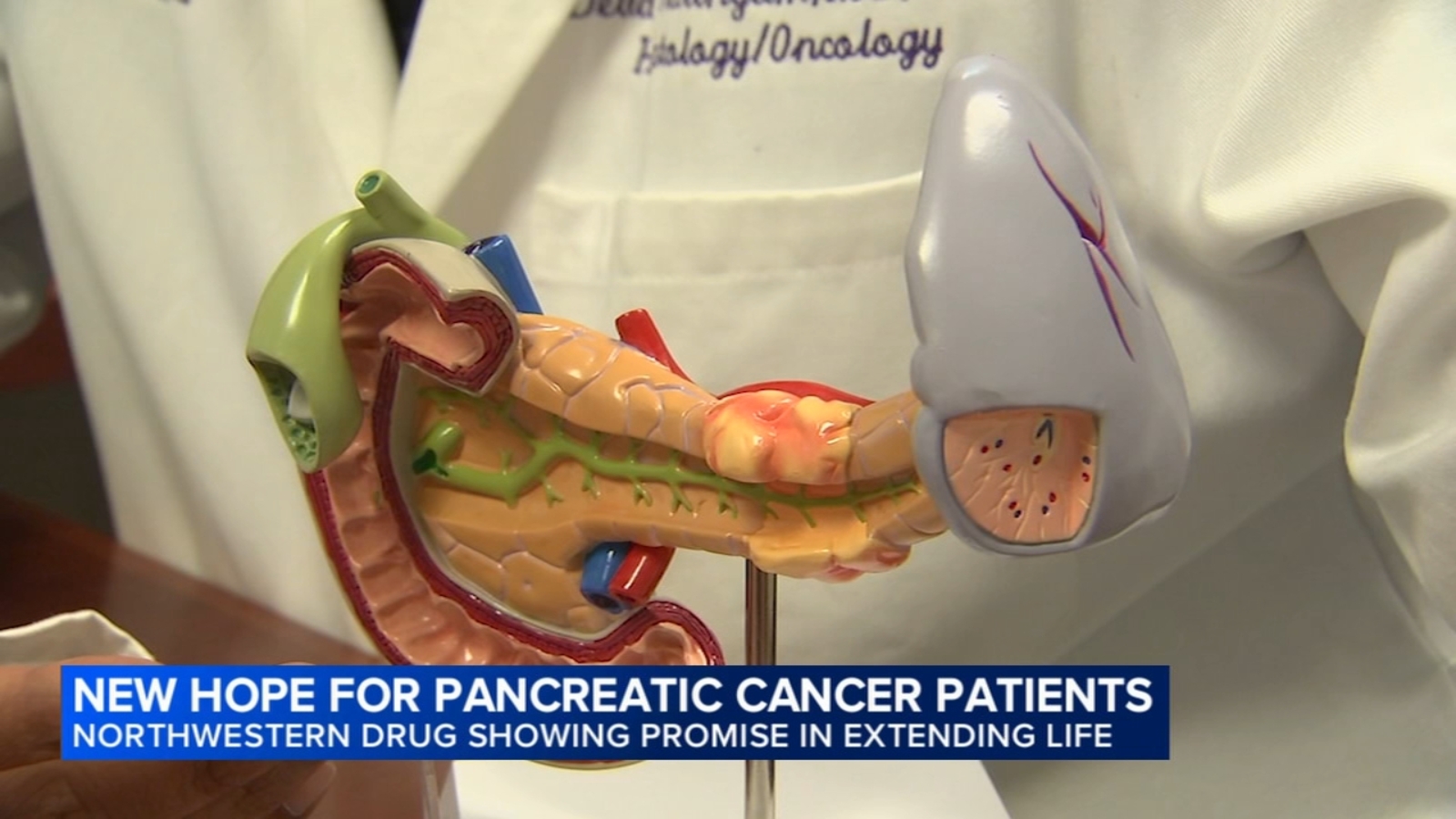
For patients, the news offers hope but also underscores the importance of clinical trials. “While these results are encouraging, they do not yet change standard care,” cautioned an NCI spokesperson. “Patients should continue working with their oncologists to explore all available options, including participation in clinical trials.”
Key Questions Remain
- Will phase 3 trials replicate the survival benefit? The phase 2 results are robust, but larger studies are needed to rule out chance findings.
- What are the long-term side effects? Early data suggest elraglusib is tolerable, but its safety profile over extended use remains unproven.
- How will cost and accessibility factor in? If approved, elraglusib’s price and insurance coverage will determine its real-world impact.
- Could this drug work in early-stage pancreatic cancer? The trial focused on metastatic disease; its efficacy in earlier stages is unknown.
For now, the Northwestern study stands as a landmark in pancreatic cancer research—a rare instance where a targeted therapy has demonstrated meaningful survival gains. The next year will be pivotal in determining whether elraglusib can fulfill its promise.
Patients and clinicians should consult their healthcare providers for personalized advice on treatment options, including clinical trial participation. For more information on pancreatic cancer and ongoing research, visit the National Cancer Institute.
