

Europe’s electric vehicle market surged 30% in the first quarter of 2026, with March alone seeing a record spike as rising fuel prices pushed buyers toward affordable EVs, according to Bloomberg Business reporting.
Europe’s EV Boom Accelerates as Fuel Costs Drive Record Demand
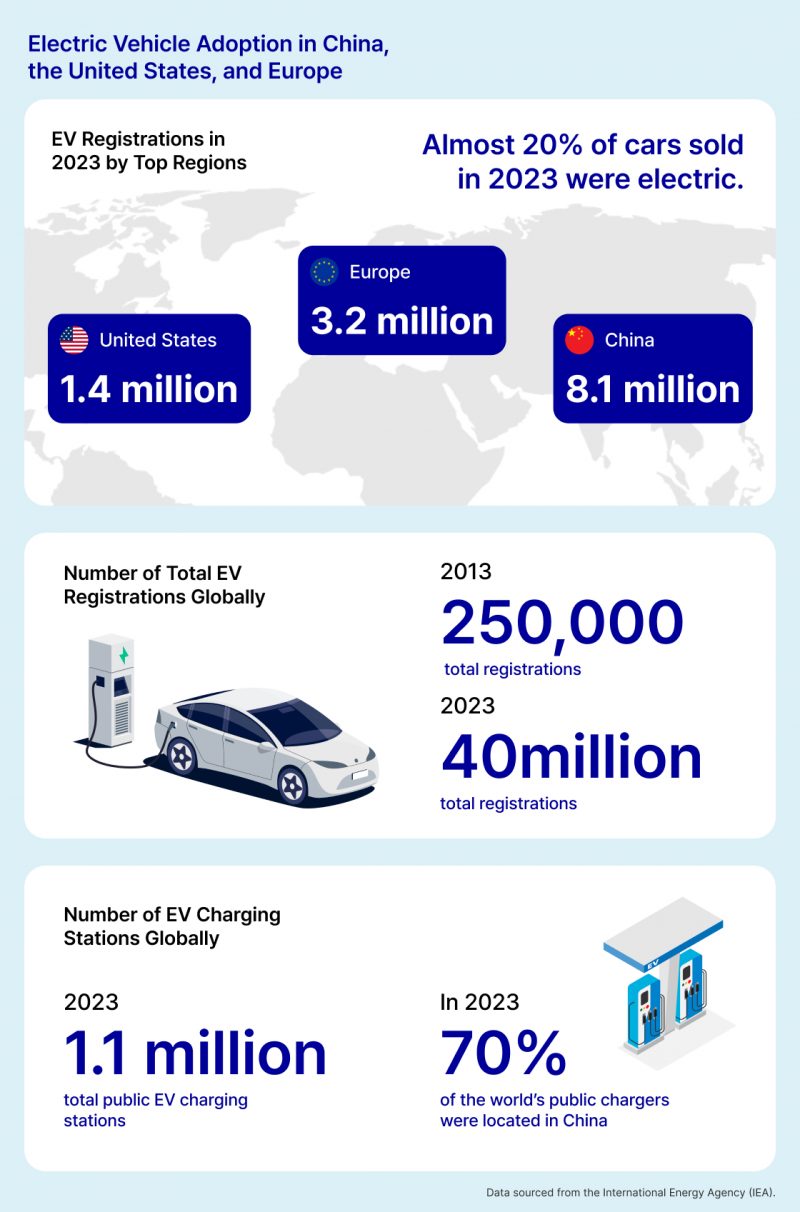
Europe’s transition to electric vehicles is accelerating at a pace unseen in recent years, with demand for affordable models skyrocketing as fuel prices climb. Data from the first quarter of 2026 shows a 30% increase in EV sales across the continent, with March marking the sharpest surge yet. While the exact drivers behind the spike remain under analysis, industry observers point to a combination of economic pressure, regulatory incentives, and shifting consumer priorities.
The surge comes as Europe’s automotive sector faces mounting pressure to decarbonize, with the European Union’s 2035 ban on new internal combustion engine vehicles looming. The bloc’s push for sustainability has already reshaped manufacturing, supply chains, and consumer behavior, but the latest sales figures suggest the shift is now reaching mainstream adoption beyond early adopters.
Fuel Price Shock Fuels EV Adoption
Bloomberg Business reported this week that the 30% rise in Q1 2026 EV sales—with March alone seeing an even sharper increase—directly correlates with soaring fuel costs. As traditional gasoline and diesel prices remain volatile, buyers are increasingly turning to EVs as a long-term cost-saving measure. The trend is particularly pronounced in Western and Southern Europe, where fuel prices have risen by double digits over the past year.
While exact figures for the quarter are not yet available from official EU sources, the data aligns with broader industry trends. Automakers and analysts have long predicted that affordability would be the key to mass-market EV adoption, and the current price gap between electric and combustion-engine vehicles—though narrowing—remains a barrier for some consumers. However, the urgency created by fuel inflation appears to be overcoming hesitation.
Industry executives have noted that the demand surge is not limited to premium brands. Mid-range and budget EV models, particularly those under €30,000, are seeing the most significant uptick. This suggests that the market is expanding beyond the early adopters who previously dominated EV purchases.
Regulatory and Market Forces Shaping the Shift
The EU’s ambitious climate goals continue to play a critical role in accelerating EV adoption. The 2035 ICE ban, combined with stricter emissions regulations, has forced automakers to accelerate their electrification strategies. In parallel, national governments have introduced subsidies, tax breaks, and infrastructure investments to support the transition.
Spain, Romania, and Cyprus—three countries that have recently faced severe climate-related disasters—are also benefiting from EU solidarity funds aimed at recovery and resilience. While these funds are primarily focused on rebuilding infrastructure damaged by wildfires and flooding, they indirectly support the broader shift toward sustainable transportation by reinforcing the case for green investments.
Meanwhile, the European Commission’s recent proposal to simplify cross-border train travel—part of a broader push to reduce reliance on fossil-fuel-dependent transport—could further boost demand for EVs by making alternative mobility options more accessible. The new rules, which aim to enable single-ticket bookings across multiple rail operators, are expected to enhance connectivity and reduce the need for short-haul flights and car trips.
Challenges Remain as Demand Grows
Despite the positive momentum, challenges persist. Supply chain bottlenecks, battery raw material shortages, and the ongoing semiconductor crisis continue to constrain production. Automakers are racing to expand capacity, but the transition from combustion to electric is not without hurdles.
Another critical factor is charging infrastructure. While Europe has made significant strides in expanding charging networks, rural and less densely populated regions still lag behind urban centers. The EU’s recent €144 million allocation to support climate disaster recovery in Spain, Romania, and Cyprus includes provisions for upgrading infrastructure, but the long-term rollout of charging stations remains a work in progress.
Financially, while EV prices are dropping, they still represent a higher upfront cost for many consumers compared to traditional vehicles. However, as fuel savings accumulate over time, the total cost of ownership for EVs is becoming increasingly competitive. Industry analysts suggest that the current demand surge will likely persist as long as fuel prices remain elevated.
What’s Next for Europe’s EV Market?
The next few months will be pivotal in determining whether the current sales surge translates into sustained long-term growth. Automakers are expected to ramp up production of affordable EV models, while policymakers will continue to push for expanded charging infrastructure and additional consumer incentives.
One area to watch is the potential impact of the EU-US trade deal, which was finalized this week. While the agreement focuses primarily on industrial goods and agricultural products, it could indirectly benefit the EV sector by reducing tariffs on key components and raw materials. This could lower production costs and make EVs even more accessible to European consumers.
For now, the data is clear: Europe’s EV market is in the midst of a historic shift. The combination of economic pressure, regulatory momentum, and consumer demand is driving adoption at a pace that could reshape the continent’s automotive landscape within the next decade. Whether this momentum can be maintained will depend on addressing the remaining challenges—particularly in supply chains, infrastructure, and affordability.
One thing is certain: the era of the internal combustion engine is drawing to a close in Europe, and the transition to electric is well underway.
