
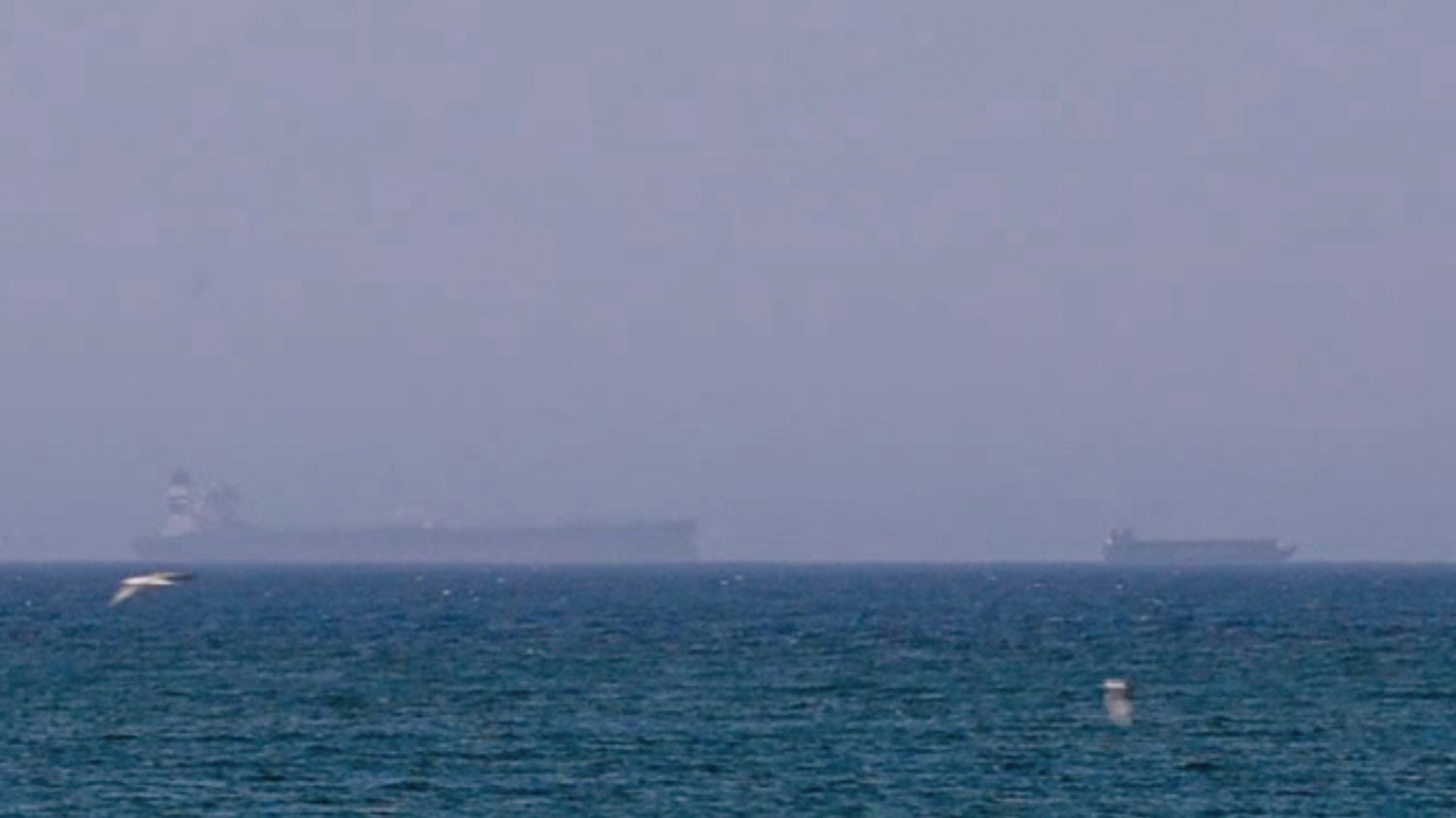
A U.S. airstrike disabled the tanker Settebello in the Gulf of Oman on June 10, 2026, leaving three Indian crew members dead and 21 others rescued. The incident follows a series of regional escalations, including Iranian missile strikes on U.S.-linked military bases and Tehran’s subsequent announcement that the Strait of Hormuz is closed to all maritime traffic.
The Settebello Incident and U.S. Naval Blockade
The Settebello, a 182-meter tanker built in 1997 and flying the flag of the Palaos, was struck by precision munitions while sailing approximately 20 nautical miles northeast of Sohar, Oman. According to the United States Central Command (CENTCOM), the vessel was targeted after the crew repeatedly refused to comply with orders to halt. Washington maintains that the tanker was attempting to export Iranian oil in violation of an ongoing U.S. blockade on Iranian ports, as reported by Mer et Marine.
The strike caused a fire in the ship’s engine room. While initial reports indicated missing crew members, the Indian Ministry of External Affairs later confirmed that three marins were killed in the attack, as noted by Le marin. CENTCOM claims this is the eighth vessel “neutralized” since the blockade began, a strategy intended to restrict Iranian oil exports. Maritime security analysts note that the use of precision munitions against commercial tankers represents a significant departure from standard maritime interdiction procedures, which typically involve boarding teams or warning shots rather than kinetic strikes on the hull.
The blockade, enforced by the U.S. Navy’s Fifth Fleet, is designed to choke off the primary revenue source for the Iranian government. By targeting tankers identified as carrying Iranian crude, the U.S. seeks to enforce international sanctions that have been in place for years. However, the efficacy of this strategy is a subject of ongoing debate among international legal scholars, who point to the complexities of the Law of the Sea regarding the right of innocent passage and the use of force in international waters.
For more on this story, see U.S. strikes Iranian drone bases after Strait of Hormuz intercepts.
Iran’s Response and Strait of Hormuz Closure
Tehran has responded to the U.S. actions by intensifying its posture in the Strait of Hormuz. The Iranian General Staff declared the waterway “completely closed to all types of vessels, including tankers and merchant ships,” according to the state-linked Tasnim agency. The Islamic Revolutionary Guard Corps (IRGC) naval forces further warned that any approach to the strait would be viewed as collaboration with the “enemy,” as reported by L’essentiel.

The Strait of Hormuz is a critical global chokepoint, connecting the Persian Gulf to the Gulf of Oman and the Arabian Sea. Historically, any threat to close this narrow passage—which is only 21 miles wide at its narrowest point—has triggered immediate spikes in global oil prices and prompted urgent diplomatic interventions from the UN Security Council and major energy-importing nations. The current closure declaration by the Iranian General Staff creates a direct confrontation with the international community’s requirement for freedom of navigation.
This maritime escalation is tied to broader hostilities across the region. In the early hours of June 11, Iran launched ballistic missiles at a U.S. command center in Jordan and other military bases in Kuwait and Bahrain. These strikes were described by Tehran as retaliation for U.S. “defensive strikes” that targeted Iranian air defense systems, communication networks, and military surveillance installations, according to franceinfo. The U.S. Department of Defense has not provided an immediate damage assessment for these facilities, though regional military analysts emphasize that the targeting of bases in Jordan, Kuwait, and Bahrain suggests a coordinated Iranian attempt to degrade U.S. power projection capabilities throughout the Gulf Cooperation Council (GCC) states.
This follows our earlier report, US Launches Strikes on Multiple Targets in Iran.
International Reactions and Regional Impact
The International Maritime Organization (IMO) has called for a full and transparent investigation into the Settebello strike. Secretary-General Arsenio Dominguez condemned the violence, stating: “I condemn firmly any act, from wherever it comes, that puts in danger the lives of seafarers and the safety of international navigation. It is simply unacceptable.” IMO data indicates this was the 43rd attack on international shipping in or near the Strait of Hormuz since February 28, resulting in 11 total deaths. The IMO, as a specialized agency of the United Nations, maintains that merchant mariners must be treated as non-combatants under international humanitarian law, regardless of the cargo their vessels carry.
Read also: US Strikes Iran After Apache Helicopter Downed..
Diplomatic tensions are also rising between Washington and New Delhi. India has formally summoned the U.S. chargé d’affaires to express a “strong protest” regarding the death of its nationals, as detailed by 20 Minutes. The Indian Ministry of External Affairs has emphasized the safety of its citizens serving in the global merchant marine, a workforce that plays a significant role in the maritime industry. Meanwhile, U.S. President Donald Trump has expressed public frustration with the stalled negotiations, telling reporters that officials are “playing cat and mouse” with the administration.
As of June 11, the regional landscape remains volatile. While Kuwait announced that its airspace has reopened and traffic has returned to normal, the closure of the Strait of Hormuz—a transit point for approximately one-fifth of global oil and gas supplies—continues to threaten energy markets and shipping stability. Global markets are currently monitoring the situation for signs of a prolonged cessation of tanker traffic, which typically forces vessels to take longer, more expensive routes around the Arabian Peninsula, thereby increasing the costs of energy and consumer goods globally.
Find more reporting in our World section.
