
Japanese Town Implements Smartphone Usage Limits for Residents
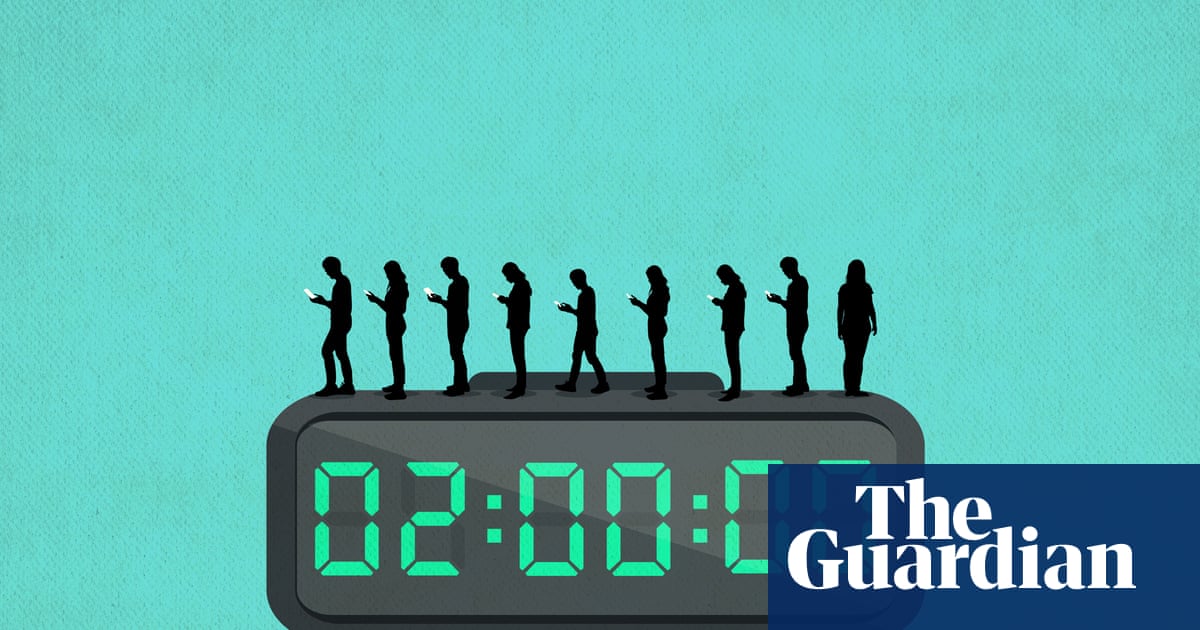
The town of Toyoake, Japan, yesterday introduced a non-binding ordinance limiting residents’ daily smartphone use to two hours, a move intended to address growing concerns about online addiction and its impact on well-being.
The ordinance, passed by the town assembly last month, does not carry penalties for non-compliance but aims to encourage self-reflection on screen time habits. Authorities are increasingly worried about the physical and psychological effects of excessive smartphone use, particularly among young people. A recent survey by the Children and Families Agency found young Japanese people spend an average of just over five hours a day online on weekdays. This initiative comes as digital wellbeing becomes a global concern, with potential implications for productivity and mental health.
Several residents participated in a challenge to limit their smartphone use to two hours, with mixed results. Shoki Moriyama, a 25-year-old working in Tokyo, stated, “I spend around eight hours a day on my phone, so two hours is way too little… and not enough time for me to stay up to date with everything.” However, he managed to reduce his usage to an hour and 50 minutes, using the extra time for reading, studying, and exercise. Another resident, Yuri, noted the importance of self-regulation, stating, “If the goal is to encourage people to rethink their usage, they should be encouraged to set their own rules.” You can learn more about the effects of screen time on mental health from the World Health Organization.
Toyoake’s mayor, Masafumi Koki, defended the measure, explaining that his hope is that simply hearing the two-hour limit will prompt residents to consider their current usage. “This is about sleep, family and wellbeing,” Koki said. “If the ordinance makes even a few people stop and talk about their habits, then it’s working.” The town is monitoring the impact of the ordinance and considering further steps to promote healthy digital habits, as detailed in this report on digital wellbeing initiatives.
Despite working full-time for a company in Tokyo, Shoki Moriyama manages to eke out eight hours a day to devote to his smartphone.
“I need my phone to navigate my way through the information wars,” says Moriyama, who at 25 is part of a generation that can’t imagine life without scrolling through news and social media, messaging apps and off-the-wall video clips.
He is not alone. While excessive smartphone use is a worldwide phenomenon, authorities in Japan are taking action, amid growing concern over its physical and psychological toll, particularly on children and young people.
Last week, the town of Toyoake in central Japan introduced a measure limiting smartphone use among its 69,000 residents to two hours a day, in what officials say was an attempt to tackle evidence of online addiction and sleep deprivation. The ordinance – passed by the town assembly last month – does not carry penalties for those who ignore it.
Moriyama was among several people, all in their 20s, who accepted the Guardian’s challenge to keep their smartphone use to a maximum of two hours and share their experiences.
There were resounding successes and abject failures.
Moriyama, who habitually checks LINE – an instant-messaging, news and entertainment “super app” popular in Japan – as well as TikTok, Instagram and X, conceded that staying off the sites, or at least dramatically curtailing his usage, had been a struggle.
“I spend around eight hours a day on my phone, so two hours is way too little … and not enough time for me to stay up to date with everything,” he says. “In the end I used my smartphone for an hour and 50 minutes, which is a massive reduction on my usual screen time. I used the extra time to read a book, study a little and go to the gym, so my day wasn’t wasted.”
His colleague Tomomi Hanaoka also managed to rein in her habit. “I spend about three hours on my phone on weekdays and six or seven hours at weekends, so two hours felt very short. Most people need at least three to four hours,” says Hanaoka, who usually “can’t do” without LINE, TikTok and Instagram.
“I kept my usage to two hours and used the free time to read and do other things.”
Akari Saito, a university student, got her caveats in early, “because my personality is such that setting limits on something makes me want to do it more”.
While Saito welcomed the Toyoake initiative as a starting point for a wider discussion of smartphone use, she says the focus should be on the quality, not quantity, of screen time. “Although setting a boundary between learning and entertainment could be difficult.”
Despite a valiant effort, Saito struggled to make inroads into her daily three to four hours of phone time. “I found it especially hard to put it away during my train commute to school or while I was walking. But I can see that reducing my phone use might make the day feel longer and allow me to spend it more meaningfully.”
Yuri* has already tried to limit her smartphone use, usually when she has exams coming up, even going as far as to hide Instagram and set a password-activated lock for good measure.
She uses her device to check social media, search for recipes, send texts and access study materials, although too much screen time gives her headaches and tired eyes.
“I question why the ordinance directly recommends restricting smartphone use. If the goal is to encourage people to rethink their usage, they should be encouraged to set their own rules,” she says.
“But I broadly agree with the suggested way of smartphone use – this is because I don’t need my smartphone for my hobbies and interests. But people who mainly use theirs for entertainment and stress relief will find measures like this hard to accept.”
Toyoake’s mayor, Masafumi Koki, defended the measure, which drew dozens of complaints from residents who accused the local government of interfering in their private lives.
Pointing out that he regularly uses his smartphone to keep an eye on baseball scores and consult maps – but puts it to one side during dinner – Koki says he was worried that children and younger people were sacrificing sleep and family time in favour of scrolling, texting and posting.
After a wave of online criticism, some of which wrongly claimed the two-hour limit would be strictly enforced, he told the Mainichi Shimbun newspaper: “If someone hears two hours, they’ll stop and think about how long they really use their smartphone for. That’s the point.”
Young Japanese spend an average of just over five hours a day online on weekdays, according to a survey released this year by the Children and Families Agency.
Aya* spends considerably more time on her device than the national average, regularly clocking up eight hours a day.
“I couldn’t limit myself to just two hours, but just being conscious of the challenge made a difference. In the end, I was able to cut my usual smartphone use by about 60%, which felt significant,” the university student says, conceding that she had consulted a travel planner and checked her emails and texts.
She voiced support for the Toyoake initiative, speculating that the absence of penalties could be its biggest asset.
“That’s precisely what makes it meaningful … you have to set your own rules and adjust them accordingly. It’s an important opportunity to think concretely about our daily habits, rather than just in an abstract way.”
And she did not miss the hours she usually spends “aimlessly scrolling”.
“I spent more time enjoying conversations and taking notice of what was happening around me. It made my day feel more meaningful.”
That will be music to the ears of Koki. On the eve of his town’s controversial experiment in social engineering, the mayor insisted it would be worthwhile. “This is about sleep, family and wellbeing,” he says. “If the ordinance makes even a few people stop and talk about their habits, then it’s working.”
*Name has been changed on request.
