Researchers at George Mason University have developed an agent-based model to simulate human interactions for future lunar missions, including NASA’s Artemis program. By analyzing virtual astronauts in extreme lunar environments, the study identifies how crew size, mission duration, and psychological dynamics impact the success of long-term space exploration and permanent base operations.
Simulating the Human Factor in Lunar Environments
Researchers
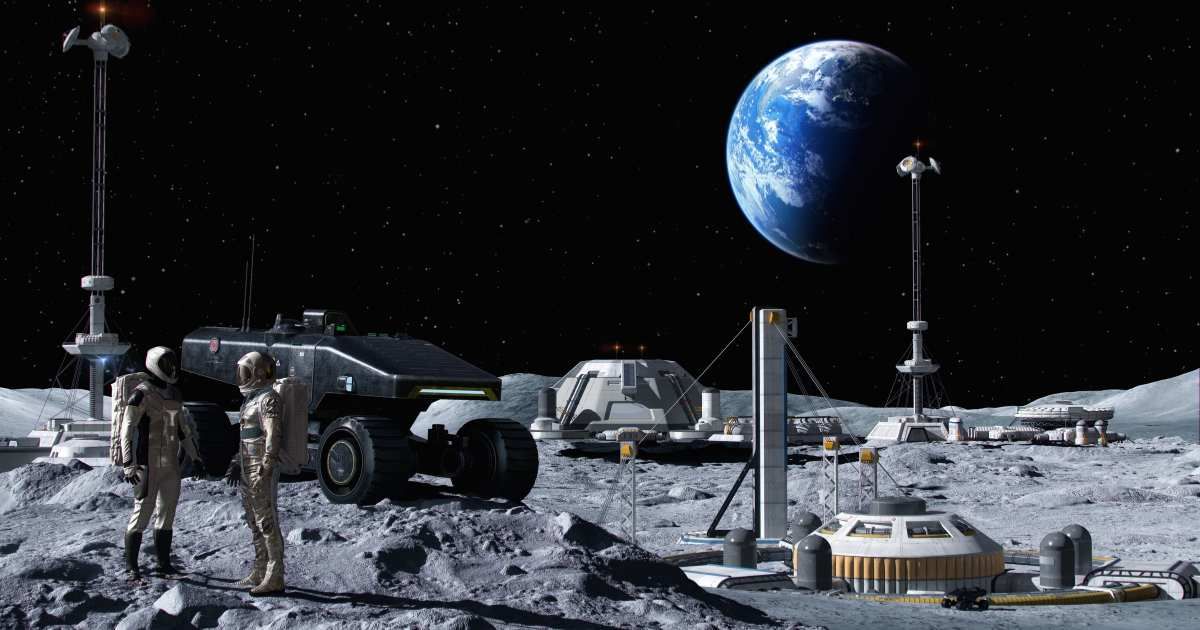
Establishing a permanent foothold on the Moon requires more than just advanced propulsion and life-support technology; it demands a deep understanding of the human element. As NASA works toward the Artemis program—an initiative supported by the international Artemis Accords—the agency aims to create a sustained human presence on the lunar surface and in deep space. To prepare for the psychological pressures of this environment, researchers at George Mason University in Virginia have launched an innovative project using agent-based modeling (ABM) to study how crew members interact under stress.
The team, led by Raymond Vera, utilized a virtual Moon base to examine how different variables influence the performance of virtual astronauts. These digital stand-ins were assigned unique personality traits, professional skills, and health profiles, then subjected to the harsh realities of lunar life, including equipment malfunctions, moonquakes, and radiation events. The study, published in the journal PLOS One, offers a look at how social dynamics might fluctuate during long-term stays.
The Impact of Crew Dynamics on Mission Success
cluster (priority): starlust.org
The simulations revealed that the success of a mission is not merely a product of technical expertise. According to the researchers at The Debrief, the outcome is heavily dependent on the interplay between cognitive skills, interpersonal relationships, and psychological states. When these elements align, teams are more likely to achieve their objectives; however, the model also highlighted significant risks.
The simulations found that smaller crew sizes and longer mission durations often negatively affected task completion. Conversely, frequent rotation of personnel and shorter mission cycles served as effective mitigation strategies. The researchers specifically noted that extreme events, such as radiation exposure or seismic activity, generated a measurable strain on the crew. As the team explained in their findings:
“emotional penalty that is applied multiplicatively”
Researchers at George Mason University, via The Debrief
This analysis from Universe Today highlights that while the simulations did not result in a complete breakdown of cooperation, they did expose the fragility of human performance under sustained isolation. The researchers emphasized that their work aims to identify the factors “that are more likely to lead to sustainable versus catastrophic scenarios on the Moon in the next couple of decades,” which is critical for planning upcoming missions to the Moon and Mars.
From Virtual Models to Real-World Artemis Planning
NASA's Artemis II Crew Rollout Media Event
The move toward simulation is a necessary evolution in space exploration. While historical data from Antarctic stations and submarine deployments provide some insight, a lunar base will exist in an entirely different class of extreme isolation. The reporting from Starlust notes that by running tens of thousands of simulations, the team at George Mason University has been able to bridge the gap between theoretical models and practical mission planning.
The researchers observed that technological advancements within the commercial space industry “have led to substantial leaps in planning for future space missions.” For mission planners, the value of the ABM tool lies in its ability to test various personnel combinations and environmental stresses before any human crew leaves Earth. By simulating a theoretical lunar mission environment—including the primary surface habitat and the Gateway station—the team provides a framework for evaluating how astronauts perform relevant space mission tasks under pressure.
Future Implications for Deep Space Operations
cluster (priority): The Debrief
As NASA moves forward with its Moon to Mars architecture, the lessons learned from these virtual simulations will likely influence how future crews are selected and managed. The ability to anticipate how psychological stress accumulates over time allows agencies to design mission parameters that prioritize the mental well-being of astronauts as much as the integrity of the lunar base itself.
While the model is still in its early stages, it demonstrates a sophisticated approach to managing the unpredictable nature of human behavior in deep space. For the architects of the Artemis program, the takeaway is clear: the success of humanity’s return to the Moon will depend on the ability to maintain a stable psychological state among those living in the most unforgiving environment ever attempted.
Sophie Williams is the Tech Editor at Headlinez.News, covering innovation, artificial intelligence, cybersecurity, and emerging technology trends. Before joining the publication, she worked as a technology correspondent and product analyst for multiple tech-focused media outlets. With a background in computer science and digital media, Sophie bridges technical depth with accessible reporting, bringing readers closer to the technologies transforming everyday life.
Expertise: Artificial intelligence, consumer tech, cybersecurity, startups, digital transformation.
Location: San Francisco, California, USA