
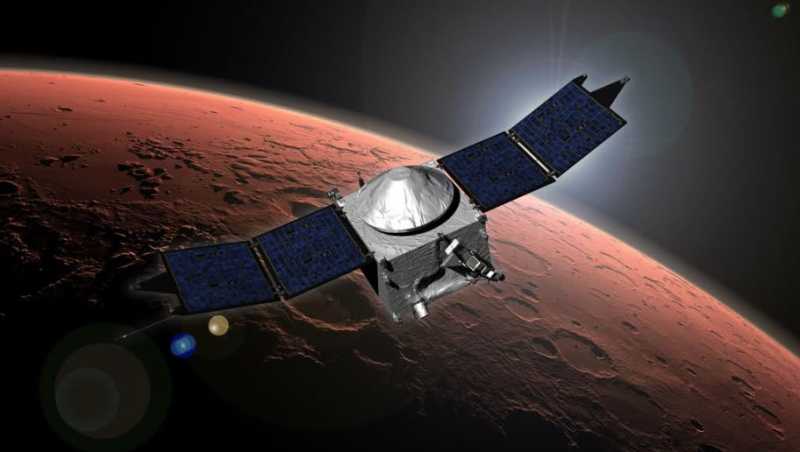
NASA’s MAVEN spacecraft, which lost contact with Earth in late 2025, has yielded a groundbreaking discovery about Mars’ interaction with the solar wind, according to a study published in Nature Communications on May 18, 2026. Researchers identified a phenomenon previously observed only around planets with strong magnetic fields, challenging assumptions about atmospheric dynamics on Mars.
The Zwan-Wolf Effect on Mars
Scientists analyzing MAVEN data observed fluctuations in Mars’ upper atmosphere that mirrored the Zwan-Wolf effect, a process where solar wind particles are redirected by a planet’s magnetic field. This effect, typically seen around Earth and other magnetized planets, was detected in Mars’ weak and fragmented magnetic field, according to a study led by Christopher Fowler of West Virginia University.
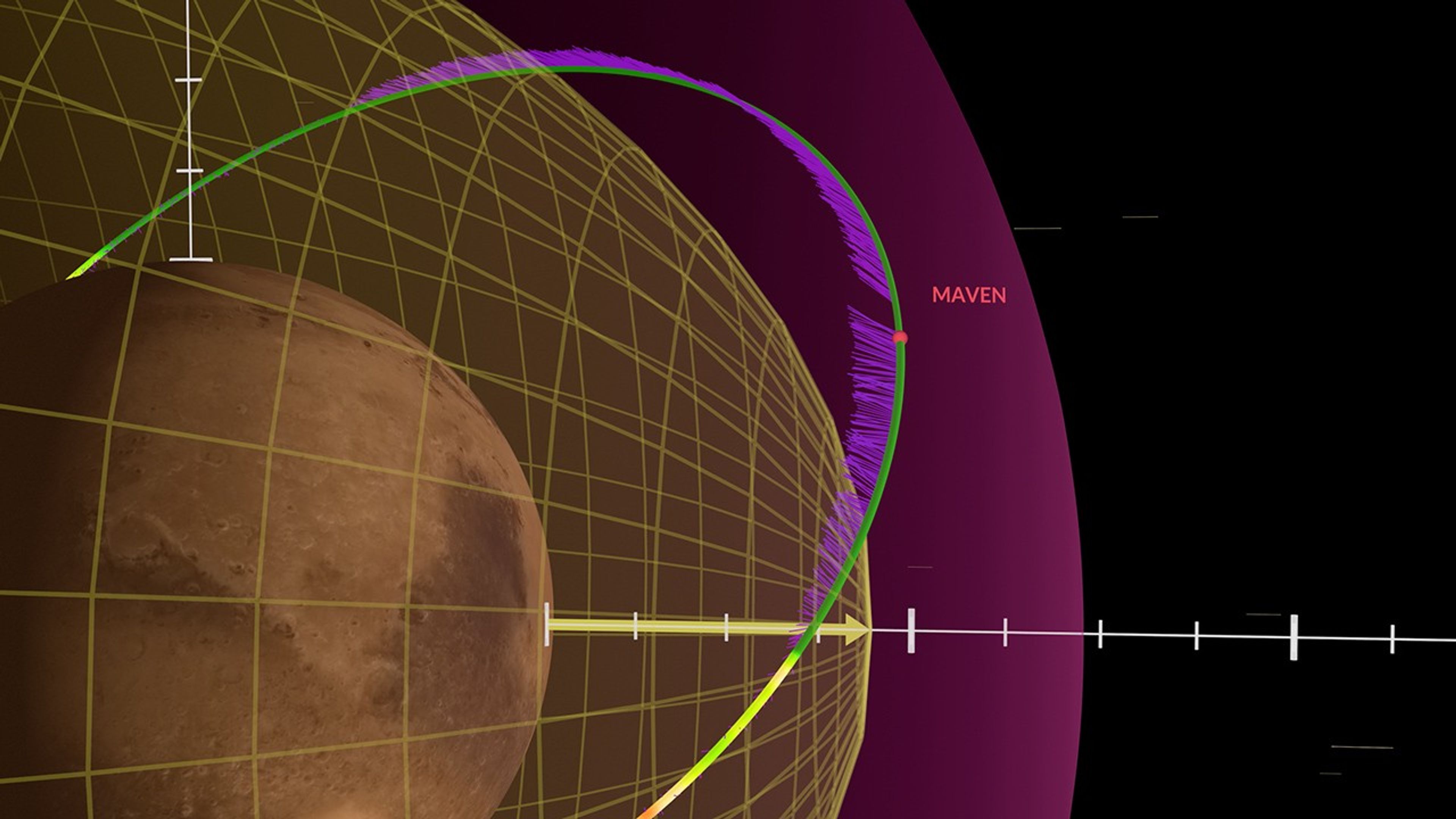
“No one expected this effect to occur even in a planet’s atmosphere,” Fowler said. “This discovery introduces new physics we haven’t explored yet and reveals a novel way the Sun and space weather can reshape Martian atmospheric dynamics.” The phenomenon was detected after a solar storm struck Mars in December 2023, causing unexpected particle compression patterns in the planet’s upper atmosphere.
Implications for Planetary Science
The finding has significant implications for understanding atmospheres on planets without global magnetic fields, such as Venus and Titan. Mars’ thin atmosphere, once thought to be largely unprotected from solar wind, now shows complex interactions previously attributed only to magnetized worlds. This challenges existing models of atmospheric evolution and space weather impacts on terrestrial planets.
“This could change how we approach planetary protection strategies for missions to Mars and beyond,” said the study’s lead researcher. The discovery also provides new insights into how solar storms can temporarily alter atmospheric conditions on planets without strong magnetic shields.
MAVEN’s Legacy Amid Communication Challenges
Despite losing contact with Earth in late 2025, MAVEN’s data continues to yield critical scientific insights. The spacecraft, launched in 2013 to study Mars’ atmospheric loss, has provided decades of data on solar wind interactions. Its recent findings highlight the enduring value of long-duration space missions, even when operational challenges arise.
<!