
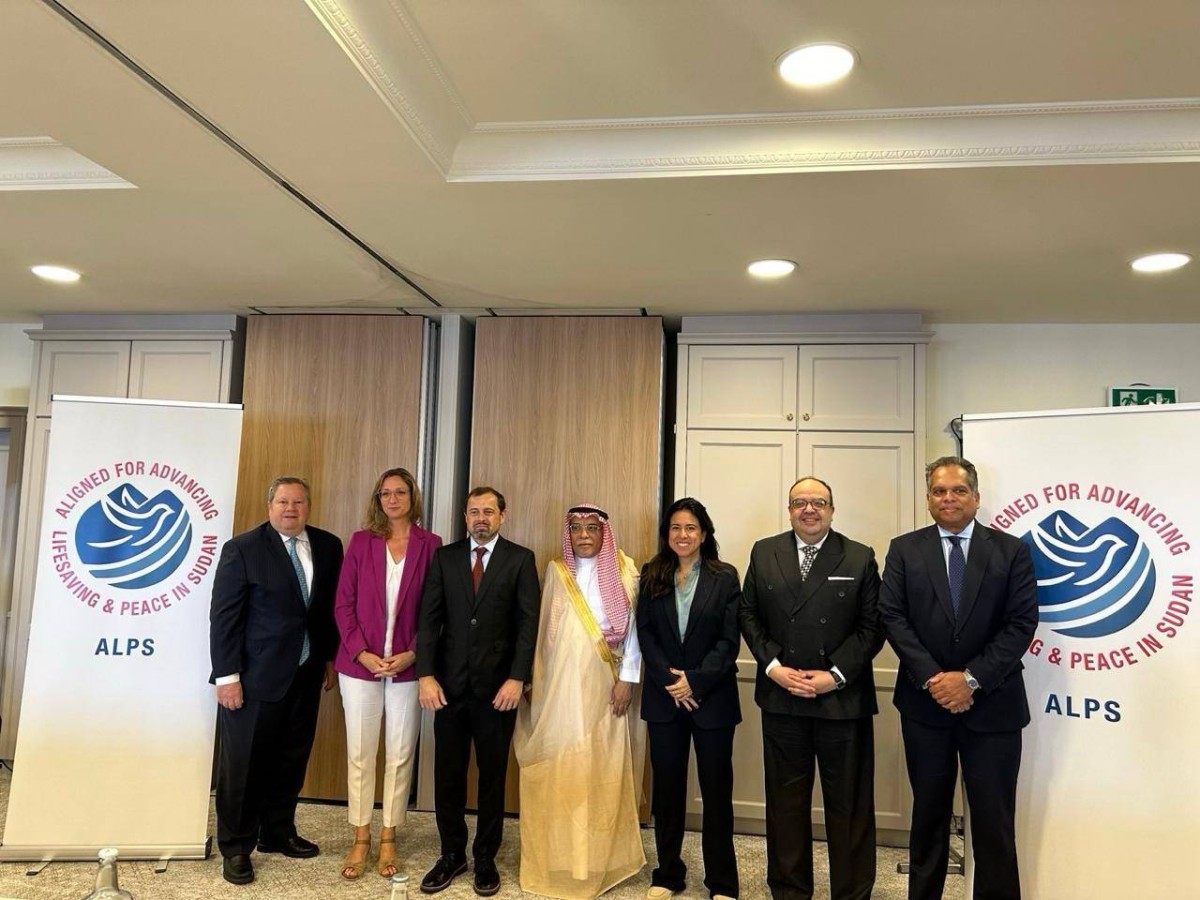
A renewed diplomatic push for peace in Sudan is gaining traction, fueled by recent engagement from former U.S. President Donald Trump and a coordinated effort by regional powers. The ongoing conflict, rooted in decades of political instability and recently escalating since April 2023 between the Sudanese Armed Forces and the Rapid Support Forces, has created a catastrophic humanitarian crisis and sparked concerns of wider regional destabilization [[3]]. With the involvement of the united Arab Emirates, Saudi arabia, Egypt, and the United States-collectively known as the “Quad”-there is renewed hope for a negotiated end to the fighting and a return to civilian rule.
A renewed push for peace in Sudan is underway, spurred by a shift in international engagement signaled by former U.S. President Donald Trump. The conflict, which has created a dire humanitarian crisis and threatens regional stability, may see a return to negotiations with the help of key Middle Eastern nations.
Trump announced his intention to work with the United Arab Emirates, Saudi Arabia, Egypt, and other partners in the region to bring an end to the fighting in Sudan. This move has reinvigorated diplomatic efforts, particularly those led by the UAE, which has been actively working to secure a ceasefire.
According to experts in African and international affairs, Trump’s public intervention marks a significant turning point in the international community’s approach to the Sudanese crisis. His call for an immediate end to the war and a comprehensive peaceful resolution has bolstered the efforts of the “Quad” – the UAE, the United States, Saudi Arabia, and Egypt – which have been attempting to bring the warring parties back to the negotiating table for months.
The renewed U.S. engagement provides momentum to the Quad’s roadmap for a sustainable peace in Sudan, one that envisions a civilian-led government and an end to military rule. Analysts say the increased diplomatic pressure could open a new window for serious negotiations, especially as the costs of continued conflict – both in terms of human lives and political gains – become increasingly apparent.
Since the beginning of the week, the Quad has reportedly intensified its coordination, working towards a monitored ceasefire followed by a binding negotiation process with clear implementation and accountability mechanisms. The focus is shifting from simply “managing the crisis” to actively “generating a solution,” according to specialists in U.S. foreign policy.
The roots of the current crisis are deeply embedded in Sudan’s tribal structures and historical political divisions, explained Jamal al-Din al-Bayoumi, a former assistant to the Egyptian Minister of Foreign Affairs and Secretary-General of the Arab Investors Union. He noted that generations of Sudanese have dreamed of a unified Egypt and Sudan, but internal fractures, even within prominent families like the Mahdi and Mirghani, have repeatedly undermined stability.
Following Sudan’s separation from Egypt, the country descended into further internal divisions and renewed conflicts, increasing the risk of fragmentation. The split within the Sudanese Armed Forces has severely impacted national unity and fueled a complex web of conflicts.
Efforts led by the UAE offer a “real glimmer of hope” for reconciliation, al-Bayoumi added, citing the Emirates’ long-standing commitment to Arab mediation and unity, a legacy dating back to the founding father Sheikh Zayed bin Sultan Al Nahyan. The UAE’s political, economic, and humanitarian influence, coupled with its perceived impartiality, has earned it the trust of regional and international actors.
Experts emphasize the UAE’s role in supporting peaceful solutions and strengthening Sudanese state institutions, independent of any particular faction in the conflict. This approach has bolstered its credibility with regional and international stakeholders, allowing it to provide immediate humanitarian assistance and lead efforts towards a civilian government.
Nourhan Sharara, a researcher specializing in Sudanese and African affairs, affirmed the UAE’s increasingly prominent role within the Quad. She highlighted the country’s consistent presence since the outbreak of the war, both politically and humanitarily, as one of the world’s largest donors. The UAE acts as a mediator, a regional influencer, and a primary provider of humanitarian aid to the Sudanese people, making it an indispensable player in any international mediation initiative.
Sharara explained that the UAE’s approach to the Sudanese file is informed by its broader vision for the security of the Red Sea and the Horn of Africa, positioning its intervention as part of a regional policy aimed at protecting shipping lanes and investment interests. The Quad’s efforts, she added, could enhance regional stability by reducing the risk of violence spreading across borders, limiting displacement, and preventing Sudan from becoming a haven for armed groups or a battleground for international competition.
However, success hinges on the Quad’s ability to implement robust enforcement mechanisms, including joint international and regional monitoring of the ceasefire, expanded political participation encompassing civil society, tribal components, women, and youth. The UAE, with its substantial humanitarian resources and extensive regional network, is well-positioned to drive this process forward, and the combined U.S.-Arab effort could mark a turning point in Sudan’s future, provided all parties adhere to ceasefire commitments and political transitions.
