
A London woman’s recent cancer diagnosis highlights teh importance of persistent advocacy for thorough medical investigation, even when initial tests return normal. Hannah Sheridan initially sought treatment for hormonal imbalances and digestive issues – later diagnosed as PCOS and IBS – before ultimately receiving a papillary thyroid cancer diagnosis in 2025. Her case underscores how seemingly unrelated symptoms can point to underlying conditions, and that standard bloodwork isn’t always sufficient for early cancer detection; a neck ultrasound proved critical in Sheridan’s diagnosis.
Hannah Sheridan, a London resident, noticed a significant swelling in her neck during an evening out with friends. Months later, she received a diagnosis of cancer.
Prior to her diagnosis, Hannah struggled for an extended period with hormonal imbalances and digestive issues. She had been diagnosed with Polycystic Ovary Syndrome (PCOS) and Irritable Bowel Syndrome (IBS). However, the underlying cause was different than initially believed.
The thyroid gland, a major hormone center in the body, regulates the ovaries. When thyroid balance is disrupted, it can also affect estrogen and progesterone levels, leading to irregular menstrual cycles – similar to those experienced with PCOS.
The thyroid also influences the speed and regularity of the digestive system. Research has identified connections between thyroid cancer and inflammatory bowel diseases.
Hannah also experienced persistent neck pain, fluctuating weight, and acid reflux. Doctors initially dismissed these symptoms as “muscle tension.”
Normal Blood Tests Couldn’t Detect the Cancer
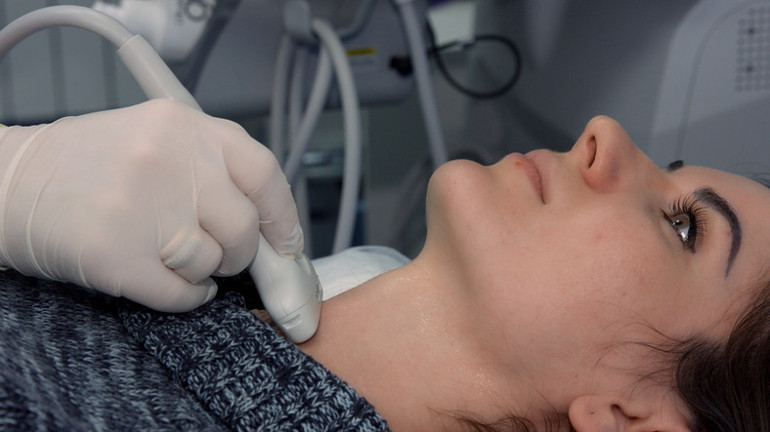
In May 2025, a mass was confirmed to be in Hannah’s thyroid gland, and she was placed on a list for cancer suspicion two weeks later. A biopsy and ultrasound were performed, along with blood tests; however, the blood test results came back ‘normal.’
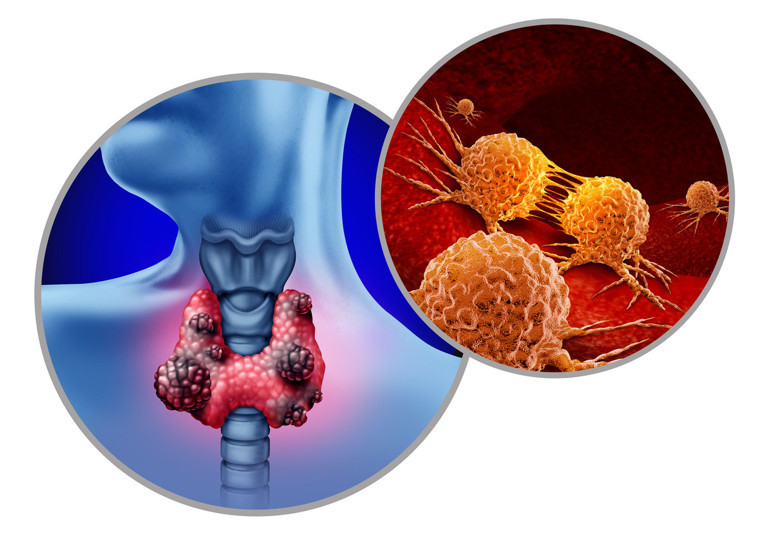
A month later, a surgeon confirmed she had papillary thyroid cancer (PTC), the most common type, accounting for 75 to 85 percent of all thyroid cancers.
PTC is the most frequent type of cancer found in the butterfly-shaped thyroid gland. Fortunately, Hannah’s diagnosis was a type with high recovery rates after treatment with surgery and radiotherapy.
This type of cancer typically grows slowly, and when detected early, surgical intervention and radioiodine therapy offer a high chance of recovery. It is most often seen in women between the ages of 30 and 50. Symptoms can include difficulty swallowing and swollen lymph nodes.
On June 3, Hannah had the right side of her thyroid gland removed, and the next steps were uncertain.
“At first, I felt completely broken. But once things calmed down, I strangely started to calm down too. The severe neck pain I’d been experiencing since the surgery completely disappeared. Whatever came next, I had to face it,” Hannah said.
While celebrating with friends in Ibiza in August, she received a concerning phone call: the tumor had grown.
This meant Hannah needed to have her entire thyroid gland removed and undergo radiotherapy. The young woman is currently awaiting this procedure.
Other Health Issues Began to Improve
Since her initial surgery, Hannah has seen improvements in her other health issues.
“For the first time in my life, my periods became regular. Doctors kept dismissing me with other conditions. But deep down, I knew something much worse was going on. None of my symptoms were taken seriously until it was too late,” Hannah explained.
“Because my hormonal problems were always dismissed and considered normal, I never knew I had a thyroid problem. Now I will need to take medication for life. Women’s health isn’t taken seriously enough. If you feel something is wrong, keep pushing for answers. I’m glad I trusted my instincts.”
Why Are Cases Increasing in Younger People?
Experts attribute the increase in cases, particularly in the under-40 population, to several factors.
Modern ultrasound and biopsy technologies can detect very small tumors that might have gone unnoticed in the past. Increased awareness of bodily changes is also leading to faster diagnoses.
Medical Oncologist Prof. Dr. Özcan Yıldız confirmed the rise in cases, stating, “Thyroid cancer, especially papillary carcinoma, which is the most common type, is frequently seen in young adults between the ages of 20 and 40. Gender is a determining factor in this disease; statistics confirm that thyroid cancer occurs approximately 3 to 7 times more often in women than in men.”
Is Thyroid Cancer the ‘Most Benign’ Type of Cancer?
Prof. Dr. Özcan Yıldız answered this question as follows:
“Thyroid cancer, especially types like papillary cancer, is often referred to as a ‘benign’ or ‘slow-growing’ cancer because it progresses very slowly and responds highly to treatment. 10-year survival rates exceed 95% in these types, meaning the chance of survival is quite high compared to many other types of cancer. However, it should be noted that more aggressive types, such as anaplastic thyroid cancer, are excluded from this definition.”
The Thyroid Isn’t the Only Danger
However, cancer isn’t the only disease that can cause serious problems in the thyroid gland. Thyroid disorders are a common issue. The thyroid gland produces two key hormones, triiodothyronine (T3) and thyroxine (T4), which help regulate important bodily functions, including heart rate, body temperature, and mood.
Hyperthyroidism (overactive thyroid) occurs when these hormone levels are too high and can cause symptoms such as palpitations, rapid weight loss, sweating, and itching.
However, hypothyroidism – where the thyroid gland produces too little hormone – is much more common, leading to weight gain, fatigue, feeling cold, constipation, and dry skin and hair.

Can Thyroid Disorders Turn Into Cancer?
“While the exact cause of cancer can’t always be determined, genetic transmission is an important risk factor, especially in cases of medullary thyroid cancer,” added Prof. Dr. Yıldız.
“Inflammatory conditions like Hashimoto’s thyroiditis or existing thyroid nodules may carry a risk of turning cancerous, but it’s known that more than 90% of nodules are actually benign. However, regular follow-up is recommended in cases like Hashimoto’s due to structural changes in the cells.”
Case Numbers in Turkey
Özcan Yıldız stated, “Looking at the data in Turkey, the incidence is approximately 4.2 per 100,000 people, with this rate around 0.7% in women and 0.25% in men.”
Yıldız also emphasized that blood tests measuring thyroid hormones (T3, T4, TSH) are not sufficient for early diagnosis on their own. “Because these values remain within normal limits in most cancer patients, a neck ultrasound is the cornerstone of diagnosis.”
