
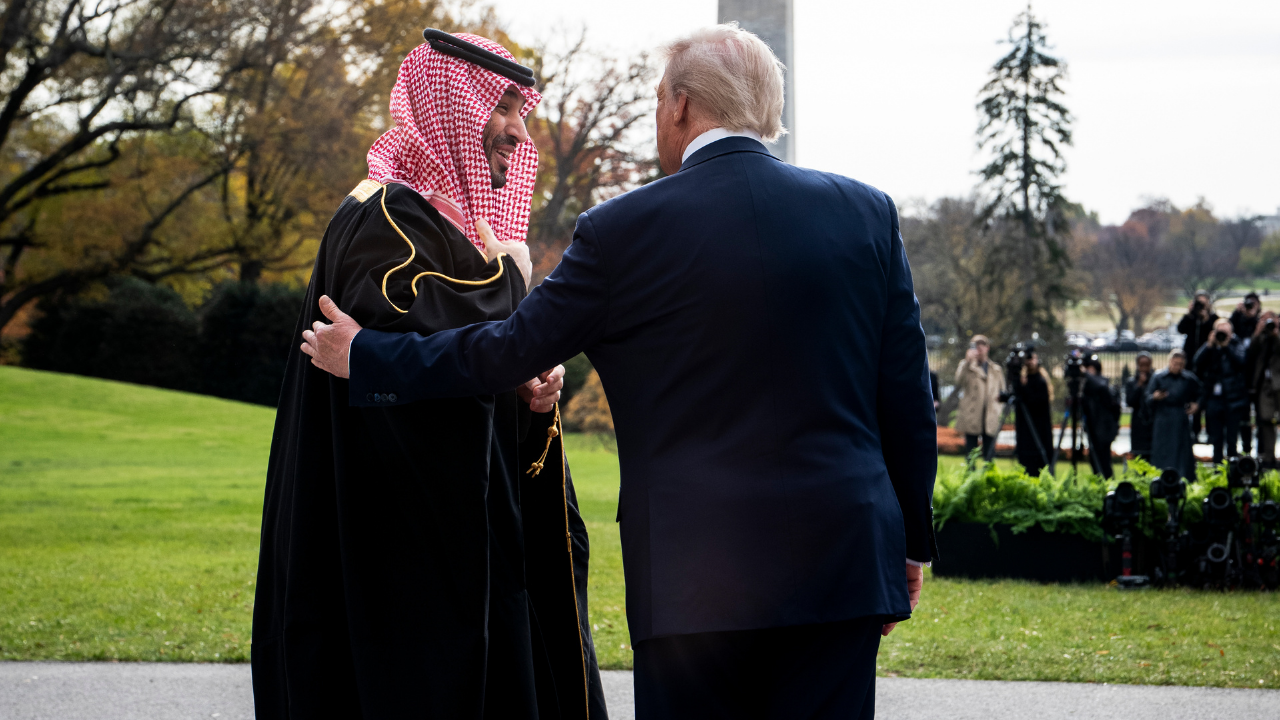
Saudi Crown Prince Mohammed bin Salman‘s enterprising economic vision for a diversified Saudi Arabia, including the headline-grabbing $1 trillion pledge to invest in the United States, is facing growing questions about its financial underpinnings. While projecting an image of immense wealth, the kingdom’s Public Investment Fund (PIF)-the vehicle for many of these initiatives-is reportedly experiencing a cash crunch due to substantial investments in struggling, high-profile projects like the futuristic city of NEOM. an inquiry reveals a widening gap between the PIF’s stated goals and its current financial realities, raising concerns among investors and prompting a strategic shift within the fund.
Rob Copeland and Vivian Nereim
Saudi Arabia’s Crown Prince Mohammed bin Salman’s visit to Washington this week mirrored a familiar scene: a leader from the oil-rich kingdom engaging in high-level meetings with President Donald Trump and prominent figures in the American business world.
This display of wealth is central to Saudi Arabia’s power and image, both within the country and on the global stage. Riyadh has pledged a sweeping economic transformation to its young population. During a Tuesday meeting in the Oval Office, the Crown Prince stated, without providing specifics, that his country would invest $1 trillion in the United States.
However, a different reality is circulating within the power corridors of Riyadh and Wall Street: the kingdom’s Public Investment Fund (PIF), lauded as the engine for these commitments, is facing a cash crunch for new investments.
According to 11 individuals with knowledge of the fund’s operations – including employees, board members, investors, and representatives – the shortfall stems from the Crown Prince and his team allocating a significant portion of the country’s wealth to financially struggling projects.
The ambitious Neom project, a futuristic city planned in the country’s north and touted for its features ranging from robotic workers to a ski resort and beaches made of crushed marble, is currently facing substantial delays.
Other PIF portfolio projects are also far from realization, including a coffee chain with only one branch currently operating and aspirations to export its beans to Austria; a cruise company consisting of a single ship; and an electric vehicle startup founded three years ago that has yet to deliver a single vehicle.
While the kingdom still possesses substantial oil reserves, production has been limited by geopolitical agreements aimed at curbing global supply and by lower crude oil prices. The government is facing a growing budget deficit and increasing borrowing to meet the Crown Prince’s domestic promises.
The PIF manages approximately $1 trillion in assets, but a significant portion is tied up in illiquid assets with no readily available public valuation. Six individuals familiar with the fund’s operations say PIF representatives have begun telling international investors they will have limited capacity to allocate new funds in the near future.
Unlike similar sovereign wealth funds, the PIF publishes only a brief, one-and-a-half-page financial statement annually.
PIF spokesperson Marwan Bakrali stated the fund holds $60 billion in cash and similar financial instruments, describing the PIF as “very liquid by regional standards.”
Behind the scenes, the PIF’s operations are undergoing restructuring under the Crown Prince’s close supervision. Sources familiar with confidential plans say the Prince has removed at least one leader of the troubled Neom project. The fund is also aggressively lowering internal financial projections for a variety of investments, including largely vacant luxury resorts along the Red Sea coast.
The board is preparing for a shift in strategy, aiming to increase investment in publicly traded stocks and bonds. The goal is to grow the fund to $2 trillion within five years, though it remains unclear how much of that growth will come from investment gains versus new funds from the government.
Bakrali stated: “As a long-term investor, our investments will be evaluated over decades, not quarters. Returns will be measured in financial, economic, and societal impact.”
The world of sovereign wealth funds is typically discreet. Norway’s $2 trillion fund, the world’s largest, primarily invests in publicly listed equities.
In some countries, funds are limited to domestic investments, like India’s.
For years, the PIF operated similarly. Established in 1971, it was a tool used by the Saudi government to support local companies like national banks and utility services.
In 2015, the fund, with roughly $100 billion in assets and 50 employees, remained largely unknown. That year, the newly appointed Saudi King handed control of the fund to his 29-year-old son, Mohammed bin Salman.
The Crown Prince placed the PIF at the center of his power consolidation strategy. That year, the fund was said to have been “reborn.”
The Prince channeled government funds into the PIF, took on debt, and directed a portion of the country’s oil revenues – estimated at around $500 million per day, exceeding external predictions – to the fund. He also transferred assets seized from dissidents and some members of the royal family into the PIF.
The government claims PIF projects have created 1.1 million jobs for Saudi citizens, but this figure has not been independently verified.
Today, the PIF employs over 3,000 people. According to its annual report released in August, the fund’s revenue increased by 25% the previous year.
This growth has also given significant influence to Yasir al-Rumayyan, the governor of the PIF. Al-Rumayyan, whose career was largely in regional banking, recounted on a podcast how he initially presented the Prince with a list of potential fund managers, but the Prince was dissatisfied with most of them and appointed him to the role.
Al-Rumayyan enjoys the position – evidenced by instances like showing a visitor photographs of his yacht – and firmly corrects those who mispronounce the fund’s name, insisting on “Piff.”
Signs of Financial Strain
One symbol of the PIF and al-Rumayyan’s influence is the Future Investment Initiative, known as “Davos in the Desert.” The large-scale event, attracting thousands of attendees, is held annually in Riyadh.
A highlight of past events was a dinner hosted at al-Rumayyan’s villa, surrounded by palm trees. The villa was previously owned by a businessman imprisoned during a crackdown on dissent in 2017.
This year, however, the atmosphere was different. Participants noted the “old days” of Western businesspeople leaving Riyadh with bags full of funds were over.
PIF representatives indicated a change in the fund’s investment criteria: new investments would now be contingent on assistance in rescuing existing projects.
According to one attendee, the fund would only provide funding if a sum more than twice the investment was directed to private Saudi companies.
This arrangement would funnel international investor money into PIF projects, bolstering their outlook.
PIF spokesperson Rupert Trefgarne stated: “There are no requirements, but there are certainly incentives.”
© 2025 The New York Times Company
Source: Gazete Oksijen
