
China Launches Fujian Aircraft Carrier Amid Debate Over Naval Power
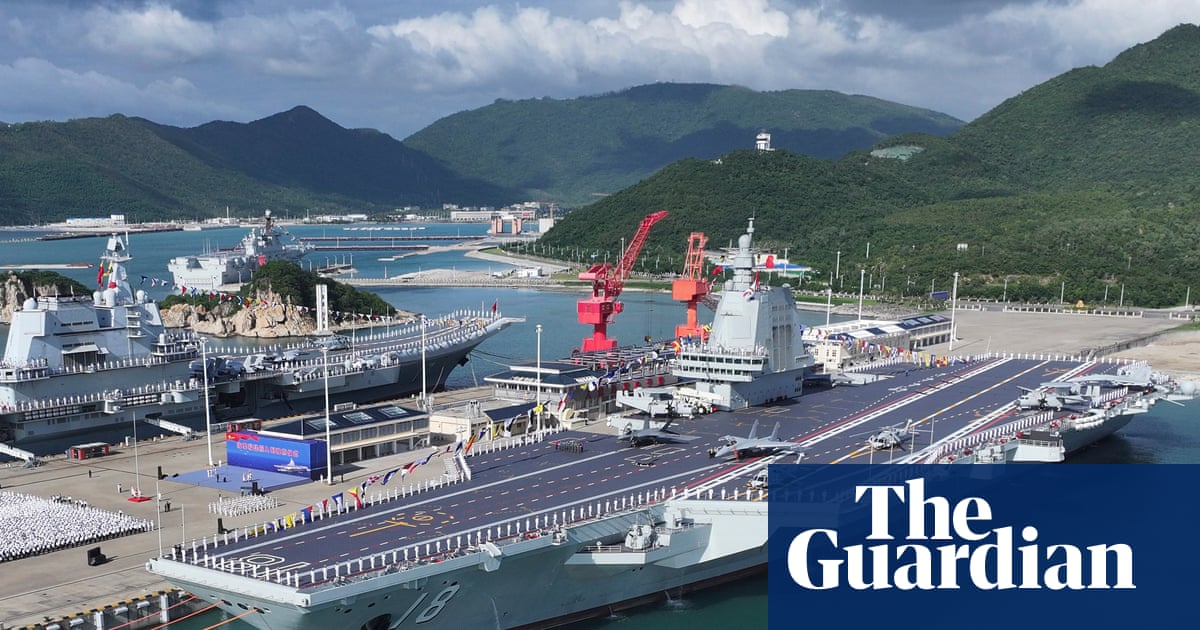
China formally launched its third aircraft carrier, the 80,000-tonne Fujian, earlier this week, signaling a continued expansion of its naval capabilities and ambitions, even as recent events demonstrate the evolving nature of modern warfare.
The £5.4 billion Fujian, capable of carrying approximately 60 aircraft and exceeding 300 metres in length, positions China as the second-largest navy globally, trailing only the United States with its 11 carriers. This development comes as the effectiveness of traditional naval power is being questioned following Ukraine’s successful use of sea drones to inflict a “functional defeat” on Russia’s Black Sea fleet. The launch underscores China’s growing assertiveness in the Indo-Pacific region and its long-term strategic goals.
Despite the investment in large warships, experts note their continued value in projecting power and conducting diplomacy. The United States, for example, recently deployed the USS Gerald R Ford – the world’s most expensive warship at $12.8 billion – to Venezuela in a move that raised questions about potential intervention. As Nick Childs of the International Institute for Strategic Studies notes, Beijing views aircraft carriers as “an indispensable element in building a navy that can independently project power and influence globally,” due to their “unrivalled flexibility” and utility in various conflict scenarios, potentially including a future attempt to reunify with Taiwan. For context, the UK completed construction of two carriers for £6.2bn four years ago, utilizing them primarily for diplomatic engagements, such as a visit to Tokyo in August.
While aircraft carriers remain formidable, they are not invulnerable, as demonstrated by recent incidents like Houthi rebel attacks on the USS Harry S Truman in the Red Sea, resulting in the loss of a $70 million fighter jet. Russia currently lacks a functioning aircraft carrier, with its last vessel, the Admiral Kuznetsov, undergoing repairs since 2017 and potentially facing decommissioning, highlighting broader weaknesses within the Russian military. You can learn more about modern naval strategy from resources like the International Institute for Strategic Studies. The Ukrainian success in the Black Sea also highlights the growing importance of asymmetric warfare, as detailed in this Council on Foreign Relations analysis.
Officials indicate that China will continue to develop and refine its naval capabilities, with further testing and integration of the Fujian expected in the coming months.
